Europe Urged to Prepare for Potential Conflict with Russia Without American Assistance
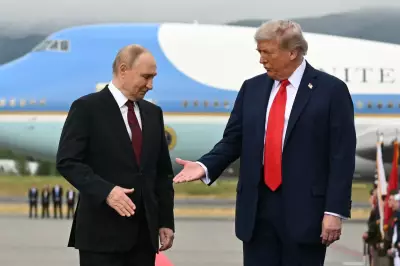
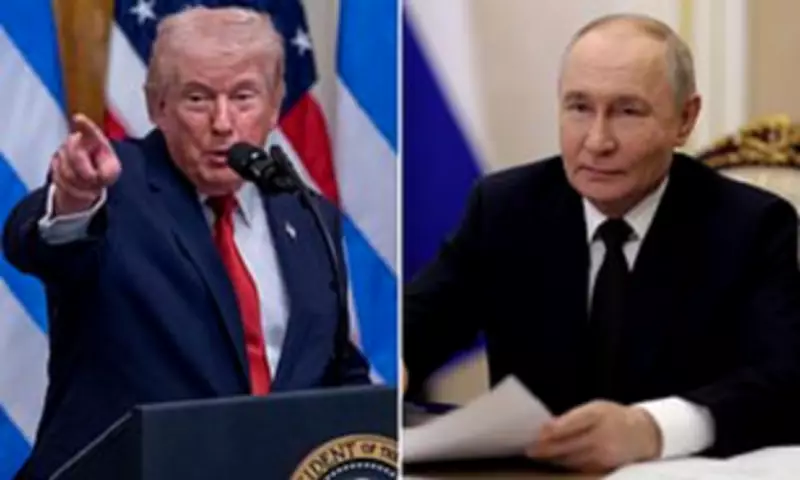
European nations must brace themselves for the "worst-case scenario" of confronting Russia without support from the United States, should Donald Trump and Vladimir Putin forge a strategic agreement, according to senior officials. This stark warning emerged alongside a parliamentary report published on Friday, highlighting escalating anxieties that a Trump administration might abandon its NATO obligations if Russia were to launch an attack on member states.
Mounting Fears Over American Commitment to European Security
A European official articulated the deepening concern, stating, "The Americans' withdrawal from European security affairs is no longer the worst-case scenario. The worst-case scenario is Americans withdrawing from European security and turning against us." The source elaborated that this could involve Trump "attempting to do a grand bargain with Russians over our heads - things that seemed possible five to six years ago."
Echoing these apprehensions, a separate British military source cautioned that the United States might not intervene to protect NATO's eastern flank in the event of an assault, as reported by The Times. These warnings coincide with reports that the Pentagon is considering redirecting weapons originally allocated for Ukraine to the Middle East, due to strains on critical munition supplies caused by the ongoing conflict involving Iran.

Weapon Diversions and Financial Implications of the Ukraine War
The Washington Post disclosed on Thursday, citing three informed individuals, that the Pentagon is evaluating whether to shift air defence interceptor missiles, procured through a NATO initiative launched last year, away from Ukraine. This initiative allows partner countries to purchase American arms for Kyiv under the Prioritised Ukraine Requirements List mechanism.
Meanwhile, the financial ramifications of the conflict continue to bolster Russia, with the Kyiv School of Economics Institute estimating that Vladimir Putin is generating at least £570 million daily from oil and gas sales. The war has driven up demand for Russian oil, exacerbated by Trump's temporary suspension of certain sanctions aimed at reducing fuel prices.
Escalating Tensions in the Middle East and Transatlantic Strains
US military operations in the Middle East have intensified significantly, with Admiral Brad Cooper, the Central Command chief, announcing on Wednesday that American forces have struck over 10,000 targets inside Iran. The objective is to curtail Iran's capacity to project power beyond its borders, according to Cooper.
A Pentagon spokesperson affirmed that the Defence Department would "ensure that US forces and those of our allies and partners have what they need to fight and win." In response to inquiries about weapon deliveries, NATO spokesperson Allison Hart stated that arms continue to be supplied to Ukraine, noting, "Everything that NATO allies and partners have paid for through PURL has been delivered or continues to flow to Ukraine."
Trump's Criticism of NATO Allies and British Military Capabilities
The concerns are amplified by recent remarks from Donald Trump, who declared at a cabinet meeting on Thursday that the United States will no longer "be there" for its allies due to NATO's perceived unwillingness to assist in the war against Iran. Trump expressed uncertainty about America's future commitment, stating, "At least we were. I don't know anymore, to be honest with you."
He further criticised the alliance's dynamics, arguing, "We are there to protect Europe from Russia, in theory, it doesn't affect us, we have a big fat beautiful ocean. We are there to protect NATO … to protect them from Russia. But they are not there to protect us. It doesn't make sense."

In a pointed swipe at the United Kingdom, Trump disparaged British aircraft carriers as "toys compared to what we have," lambasting the UK's lack of support for his military campaign in Iran. Speaking to reporters at the White House, he mocked an alleged offer to deploy carriers post-conflict, saying, "The British said 'we'll send our aircraft carriers' - which aren't the best aircraft carriers by the way, they are toys compared to what we have - 'we'll send our aircraft carrier when the war is over'. I said 'that's wonderful, thank you very much - don't bother'."
Trump also voiced disappointment over Prime Minister Keir Starmer's decision to deny the use of the UK-US Diego Garcia base for targeting Iran with B2 bombers at the conflict's outset. Downing Street has previously refuted claims that it proposed sending HMS Queen Elizabeth or HMS Prince of Wales to the Middle East.
Sir Keir Starmer is reportedly growing increasingly hesitant to involve the UK further in the conflict, which has already triggered a surge in global energy prices, adding another layer of complexity to the strained transatlantic relationship.