Iran's Firm Rejection Exposes US Strategic Failures in Middle East Conflict
The Iranian government's categorical dismissal of President Donald Trump's revived 15-point diplomatic plan represents the most significant indication yet that the United States is losing its strategic war against Tehran. This rejection, coming exactly one year after Iran initially declared the proposal unrealistic and coercive, reveals a profound disconnect between Washington's perception of its adversary and the reality on the ground.
Trump's Own Words Acknowledge Formidable Opponent
In a revealing moment of candor on March 7, President Trump described the confrontation with Iran as "a big chess game at a very high level" involving "very smart players" with "high-level intellect." This admission itself acknowledges that Iran represents a far more capable and complex adversary than previous Middle Eastern opponents like Iraq. Yet the administration's decision to resurrect a previously rejected plan suggests Washington fundamentally misunderstands the nature of this conflict.
Tehran has characterized Washington's diplomatic overture as "negotiating with itself," reinforcing perceptions that the United States seeks to impose terms rather than engage in genuine negotiation. This diplomatic impasse occurs against a backdrop of escalating military tensions, with the United States having reportedly struck thousands of targets within Iran since hostilities began.

Collapsing War Legitimacy and Intelligence Doubts
The resignation of Joe Kent as head of the National Counterterrorism Center on March 17 delivered a devastating blow to the war's legitimacy. In his resignation letter, Kent explicitly stated that Iran posed no imminent threat to American interests, directly contradicting one of the administration's primary justifications for military engagement.
This revelation compounds existing legitimacy problems. The conflict lacks authorization from either the United Nations Security Council or, in America's case, the United States Congress. Furthermore, intelligence assessments indicate Iran was not rebuilding its nuclear program following earlier strikes, undermining another key rationale for military action.
Domestic and International Support Eroding Rapidly
Public opinion has turned decisively against the conflict, with a majority of Americans expressing opposition reflecting deep war fatigue following prolonged engagements in Iraq and Afghanistan. Current polling shows Trump's Republican Party trailing Democrats ahead of crucial midterm elections, suggesting the conflict has become politically unsustainable.
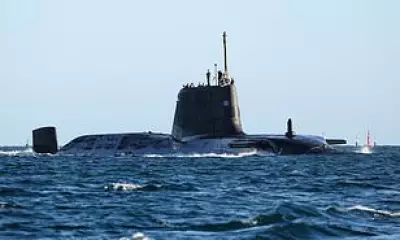
International support is similarly deteriorating. The United Kingdom, traditionally Washington's closest ally, has limited its involvement to defensive coordination. Germany and France have publicly distanced themselves from offensive operations, while European allies collectively declined a US request to deploy naval forces to secure the Strait of Hormuz. This represents not merely tactical disagreement but a fundamental erosion of trust in American leadership and strategic judgment.
Strategic Misjudgments and Asymmetric Realities
The conflict reflects a persistent imperial assumption that overwhelming military force can compensate for strategic misunderstanding. Unlike Iraq, Iran represents a deeply embedded regional power with resilient institutions, extensive influence networks, and sophisticated asymmetric capabilities. Tehran has demonstrated remarkable capacity to impose costs across multiple theaters while managing maximum pressure.
Assassinations of Iranian leaders, framed as tactical victories, have produced strategic failures by unifying rather than destabilizing Iran. Mass pro-regime demonstrations illustrate how external aggression can consolidate internal legitimacy, creating precisely the opposite effect intended by American strategists.
Economic Consequences and Global Realignments
The economic ramifications are already destabilizing global markets, driving oil prices and inflation to levels reminiscent of 1970s energy shocks combined with Ukraine war disruptions. The potential deployment of thousands of additional American troops to secure Iran's critical oil infrastructure represents a dangerous escalation that could further destabilize energy markets.

Gulf states are increasingly questioning America's ability to guarantee regional security, with some reportedly exploring partnerships with China and Russia. This mirrors post-Iraq war realignments, where American failures created opportunities for alternative powers to expand their influence.
Iran's Strategic Advantages and Endurance Calculus
Iran operates from a fundamentally different strategic position. Tehran does not require military victory but merely needs to endure, impose costs, and outlast its adversaries. This represents the core logic of asymmetric conflict: the weaker power wins by not losing, while the stronger power loses when continuing costs become unsustainable.
Having escalated rapidly, the Trump administration now appears to be searching for diplomatic off-ramps while signaling openness to negotiation. However, Washington operates from a position of diminishing leverage, while Iran's ability to threaten energy flows, absorb pressure, and control escalation tempo means Tehran increasingly holds strategic advantages.
History suggests empires rarely recognize when they begin to lose, instead escalating and insisting victory remains attainable. By the time costs become undeniable—through economic crisis, political fragmentation, and global isolation—reversal often proves impossible. The United States and Israel may continue winning tactical battles, but they risk losing the strategic war that ultimately matters: legitimacy, stability, and long-term influence in a rapidly changing global order.