Iranian Retaliation Wounds American Troops in Saudi Arabia
In a dramatic escalation of Middle East hostilities, Iran launched an attack on Prince Sultan Air Base in Saudi Arabia, wounding at least 10 United States service members. According to two U.S. officials speaking anonymously on sensitive military matters, two of those injured were seriously hurt, and several American refueling aircraft sustained damage during the assault.
Israel Targets Iranian Nuclear Facilities
This Iranian retaliation came just hours after Israeli strikes hit two key nuclear facilities in Iran. Iranian state media reported that the Shahid Khondab Heavy Water Complex in Arak and the Ardakan yellowcake production plant in Yazd Province were targeted. While no casualties or contamination risks were reported, the Israeli military claimed the strike dealt a major blow to Iran's nuclear program by disrupting raw materials processing for uranium enrichment.
Iranian Foreign Minister Abbas Araghchi swiftly threatened retaliation via social media, declaring "Iran will exact HEAVY price for Israeli crimes." The Islamic Revolutionary Guard Corps' Aerospace Force commander, Seyed Majid Moosavi, issued warnings to employees of companies linked to the U.S. and Israel, suggesting the conflict's rules were changing.

Humanitarian Breakthrough Amidst Conflict
In a potentially significant development, Iran agreed to permit humanitarian aid and agricultural shipments through the strategically vital Strait of Hormuz. Ali Bahreini, Iran's ambassador to the United Nations in Geneva, confirmed the nation would "facilitate and expedite" such movement in response to a UN request.
The Strait of Hormuz represents a crucial global chokepoint, typically handling approximately one-fifth of the world's oil shipments and nearly one-third of its fertilizer trade. While market concerns have largely focused on blocked energy supplies, the restriction of fertilizer ingredients poses severe threats to global farming and food security systems.
Diplomatic Maneuvering and Military Buildup
As attacks intensified early Saturday with witnesses reporting partial power outages in Tehran and explosions in Tel Aviv, diplomatic efforts continued amidst military escalations. Former President Donald Trump renewed calls for Israeli-Saudi normalization during an event sponsored by Saudi Arabia's sovereign wealth fund, though significant obstacles remain including Saudi insistence on a credible path to a Palestinian state.
The United States delivered a 15-point "action list" to Iran through Pakistani intermediaries proposing restrictions on Iran's nuclear program and reopening of the Strait of Hormuz. Iran rejected this offer and presented its own five-point proposal demanding reparations and recognition of its sovereignty over the waterway.
Meanwhile, U.S. military deployments increased substantially with ships carrying approximately 2,500 Marines moving closer to the region and at least 1,000 paratroopers from the 82nd Airborne Division ordered to the Middle East. Secretary of State Marco Rubio emphasized these deployments were designed to ensure "maximum opportunity to adjust to contingencies" while maintaining that the U.S. could achieve objectives without ground troops.
Economic and Humanitarian Consequences
Financial markets reacted negatively to the escalating conflict, with the S&P 500 sinking 1.7 percent to complete its worst week since the Iran war began and its fifth consecutive losing week. Crude oil prices continued their upward trajectory as U.S. gasoline prices approached $4 per gallon, prompting congressional discussions about suspending federal fuel taxes.
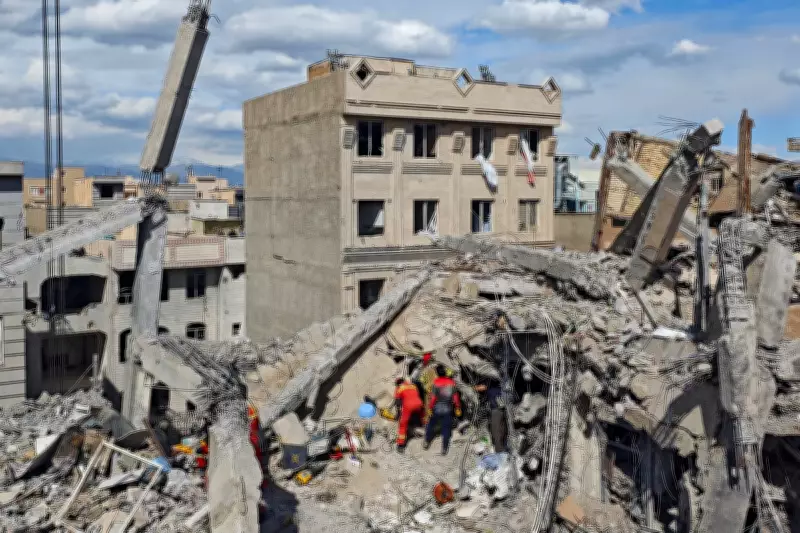
The humanitarian situation deteriorated significantly, with the U.N.'s International Organization for Migration reporting damage to 82,000 civilian buildings in Iran, including hospitals and homes affecting 180,000 people. Casualty figures mounted across the region, with authorities reporting over 1,100 deaths in Lebanon, more than 1,900 in Iran, 18 in Israel, 13 American troops killed, and additional fatalities in Gulf Arab states, the occupied West Bank, and Iraq.

Jan Egeland, secretary general of the Norwegian Refugee Council, warned of potential catastrophic consequences, stating "If this war continues, we risk a far wider humanitarian disaster. Millions could be forced to flee across borders, placing immense pressure on an already overstretched region."