Trump and Israel Eliminate Iran's Moderates, Hardline Military Seizes Power Vacuum
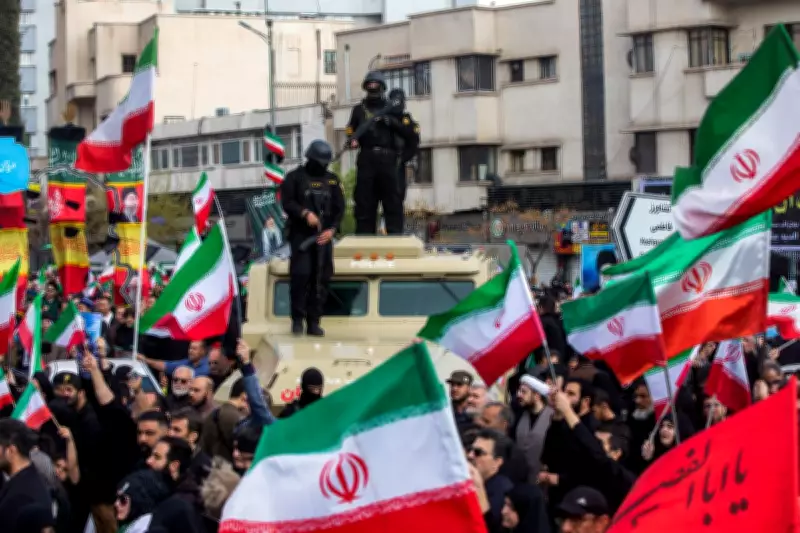
American President Donald Trump has publicly asserted that a significant regime transformation has occurred within Tehran, suggesting that hawkish elements have been supplanted by less radical figures. However, a detailed analysis presented to Maira Butt reveals a starkly contrasting reality unfolding on the ground. The coordinated military actions by the United States and Israel, which resulted in the deaths of several senior Iranian leadership figures, have inadvertently created a political void. Experts now warn that this vacuum is being decisively filled by the formidable Islamic Revolutionary Guard Corps (IRGC), fundamentally altering Iran's power structure and diplomatic posture.
IRGC Ascendancy and Opaque Decision-Making
As Tehran and Washington exchange conflicting signals regarding the status of peace negotiations, profound questions are emerging about the internal mechanics of Iranian governance. The new supreme leader, Mojtaba Khamenei, has remained conspicuously absent from public view since his ascension. This opacity extends to the decision-making process itself. Analysts indicate that shifting power dynamics have allowed a tight-knit circle of staunchly anti-American hardliners to potentially dictate the negotiation agenda. This group is reportedly employing archaic, secure communication methods, relying on word-of-mouth messages to evade electronic surveillance and protect new leadership from assassination attempts.
Furthermore, the US-Israeli strikes have paradoxically bolstered nationalist sentiment among the regime's younger supporters, increasing sympathy for the IRGC's cause. This environment has become increasingly hostile toward more liberal and moderate factions within Iranian political circles, who analysts confirm have been effectively sidelined and marginalised in critical discussions.

The Formidable Force of the Islamic Revolutionary Guard Corps
Established in the turbulent aftermath of the 1979 Iranian Revolution that deposed Reza Shah Pahlavi, the IRGC has evolved into a dominant military institution. It commands an estimated 124,000 personnel across ground, naval, and air forces. The current commander, Ahmad Vahidi While international attention has focused on President Trump's fluctuating stance on Iran, analysts emphasise that Tehran's own negotiation position is remarkably fluid and internally contested. The Institute for the Study of War recently reported that Mohammad Bagher Zolghadr, secretary of Iran's supreme national security council, expressed significant anger to senior IRGC leaders, including Vahidi. Zolghadr accused Foreign Minister Abbas Araghchi of exceeding his negotiation mandate, particularly after Araghchi suggested Tehran's support for Hezbollah and the Axis of Resistance might be flexible—a statement that caused considerable alarm. Araghchi, a career diplomat instrumental in securing the 2015 Joint Comprehensive Plan of Action nuclear deal, had initially agreed to reopen the Strait of Hormuz as a concession to Washington. The IRGC, however, insisted it remain closed due to the ongoing US blockade. Zolghadr's fury reportedly prompted senior Tehran figures, including former IRGC intelligence chief Hossein Taeb, to recall the negotiation delegation from talks. The assassination of Ayatollah Ali Khamenei on February 28 has precipitated a markedly less tolerant Iranian approach toward the West, according to Dr. Andreas Böhm, an international law lecturer. Böhm notes that previous Iranian leadership typically responded to conflicts with symbolic missile strikes. This new leadership is rather more straightforward, he states. They declare that for any American escalation, they will escalate further. They are more committed to seeing this confrontation through than Khamenei, who was risk-averse and opposed to all-out conflict. Böhm concludes that a genuine regime transformation has occurred, cementing a more hardline, uncompromising position. Vuk Vuksanović, a foreign policy lecturer, observes that the theocratic component of the Iranian state has weakened, while the national security apparatus, embodied by the IRGC, has been dramatically emboldened. The IRGC has transitioned from being a power centre within the state to being firmly embedded within the state itself on every level, he explains. Consequently, the regime, now organised around this national security apparatus, will be significantly more hardline, nationalist, and unwilling to compromise. Vuksanović adds that in times of war and breakdown, those skilled in organised violence and micromanagement inevitably rise to prominence. Despite claims by US Secretary of War Pete Hegseth that Mojtaba Khamenei has been disfigured, experts believe he continues to issue directives on policy toward the US and Israel. Böhm suggests his seclusion may not be unusual for the Iranian public and could even enhance perceptions of his mystical authority, drawing on Shia veneration of the hidden Twelfth Imam. The establishment remains cautious about elevating any single figure too prominently following the assassinations of other senior officials like security council head Ali Larijani. In this absence, several public figures have emerged, but true decision-making remains largely invisible. Parliament Speaker Mohammad Bagher Ghalibaf acts as a public pragmatist but derives his power from lifelong ties to the IRGC. Driven by wartime pressures, Iran has reportedly granted military commanders greater autonomy over Iraqi militias, allowing some operations without explicit Tehran approval. Many moderates and pragmatists who could have negotiated with the US, including Ali Larijani, have been killed, Vuksanović states. The IRGC, as the primary hardline locus, can now restrain any remaining moderates by arguing that previous negotiations with the US failed and that America cannot be trusted.Internal Rifts and Negotiation Stalemates

From Risk-Averse Leadership to Hardline Nationalism
The Shadowy Structure of Current Iranian Power