North Korea's Kim Jong-Un Oversees Chilling Weapons Test Aimed at Western Powers
In a stark display of military aggression, North Korean dictator Kim Jong-Un has personally supervised a terrifying new weapons test, issuing a direct threat to the United States and its allies, including the United Kingdom. The isolated regime conducted trials of upgraded weaponry elements designed to significantly enhance its capacity to strike Western nations, with state media hailing the developments as a major boost to the country's strategic capabilities.
Upgraded Solid-Fuel Engine Tested Under Kim's Watch
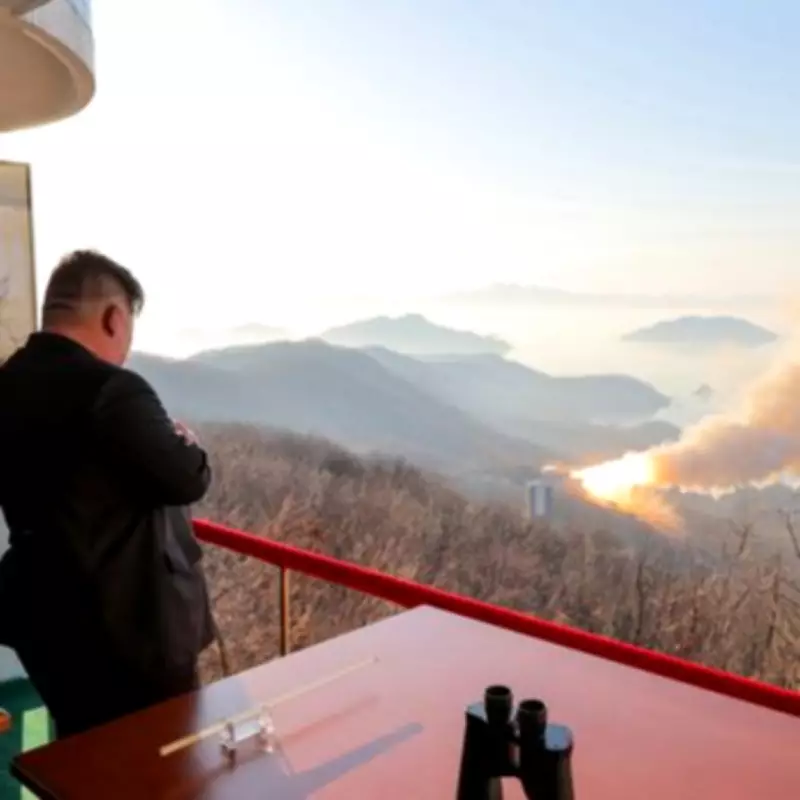
According to reports from the Korean Central News Agency (KCNA), Kim Jong-Un observed a ground jet test of a new high-thrust solid-fuel engine on Sunday. The engine, constructed using composite carbon fibre materials, reportedly achieves a maximum thrust of 2,500 kilotons, marking a substantial increase from the approximately 1,970 kilotons recorded in a similar test conducted in September. Images released by state media depicted the dictator monitoring a massive plume of smoke during the engine's operation at an undisclosed location.
This alarming test aligns precisely with Kim Jong-Un's long-term objective of acquiring more agile and harder-to-detect missiles capable of targeting the United States and its allied nations. The development of solid-fuel technology is particularly concerning for Western defence analysts, as such missiles can be launched with minimal preparation time and are significantly more difficult to track prior to lift-off compared to older liquid-fuel variants.

Strategic Military Build-Up and Expert Skepticism
The recent engine test forms part of North Korea's comprehensive five-year arms build-up programme, officially described as an effort to upgrade "strategic strike means" – a term commonly referring to nuclear-capable ballistic missiles and other advanced weaponry. Kim Jong-Un boasted that this latest achievement holds "great significance in putting the country's strategic military muscle on the highest level," underscoring the regime's relentless pursuit of military dominance.
However, several defence experts have cast doubt on North Korea's claims, suggesting potential exaggeration or deception. Lee Choon Geun, an honorary research fellow at South Korea's Science and Technology Policy Institute, noted that the regime's report might constitute "bluffing," as it deliberately omitted crucial technical details such as the engine's total combustion time. This lack of transparency has led to speculation that North Korea's solid-fuel engine development programme could be experiencing unexpected delays or that the country might be seeking Russian technical assistance to create an even more advanced propulsion system.
Deepening Ties with Russia and Historical Context
Cooperation between North Korea and Russia has intensified markedly in recent years, with Pyongyang providing troops and weapons to support Vladimir Putin's controversial military campaign in Ukraine. This burgeoning alliance raises concerns that Moscow might be sharing advanced weapons technology with the isolated dictatorship, potentially accelerating North Korea's missile development programmes beyond previous estimates.
This incident is not the first time North Korea's assertions regarding major weapons advancements have been met with international skepticism. In 2024, the regime claimed to have successfully tested a multiwarhead missile, but South Korean authorities promptly dismissed the announcement as a deliberate deception intended to conceal a failed launch attempt. Such patterns of behaviour contribute to ongoing uncertainties surrounding the true extent of North Korea's military capabilities.
Broader Implications for Global Security
Over recent years, North Korea has conducted numerous test launches of various long-range missiles, demonstrating a potential range sufficient to reach the continental United States. The shift toward solid propellants represents a significant strategic evolution, making detection before launch considerably more challenging for Western intelligence agencies. This stands in stark contrast to the regime's older liquid-fuel missiles, which require lengthy fuelling procedures and cannot remain operational for extended periods.

Since the collapse of high-stakes diplomatic negotiations with former US President Donald Trump in 2019, North Korea has aggressively pursued the expansion of its nuclear arsenal. During a ruling Workers' Party congress in February, Kim Jong-Un appeared to leave the door open for future dialogue with Trump but simultaneously demanded that Washington abandon its insistence on North Korean nuclear disarmament as a precondition for talks. This uncompromising stance, combined with continued weapons testing, underscores the persistent threat posed by the Hermit Kingdom to international peace and stability.