South Korea Implements Full Travel Ban to Iran Amid Regional Conflict
South Korea has officially banned its citizens from travelling to Iran as the conflict in the Middle East intensifies, marking a significant escalation in travel advisories. The Ministry of Foreign Affairs confirmed that the travel ban, designated as Travel Alert Level 4, took effect at 6pm local time (0900 GMT) on Thursday, 5 March 2026, citing heightened safety risks from the ongoing war.
Government Issues Stern Warning and Evacuation Urgency
A spokesperson for the Ministry of Foreign Affairs stated emphatically: “We urge our nationals planning to travel to the region to cancel their trips, and those currently staying in the region to evacuate immediately.” This move represents a sharp upgrade from the previous Level 3 Travel Alert, which had recommended against all travel to Iran since June last year, according to local media reports.
The South Korean government has designated the entire country of Iran as a travel ban area. Under the stringent new measures, individuals who visit or remain in Iran without obtaining exceptional passport usage permission may face severe penalties in accordance with the relevant provisions of the Passport Act. This legal enforcement underscores the gravity of the situation and the government's commitment to citizen safety.

Impact on Korean Citizens and Regional Travel Chaos
The announcement comes as Korean citizens have been reported stranded at major Middle Eastern airports, with the ongoing conflict sparking widespread airspace closures and flight cancellations across the region. Governments worldwide, including South Korea, are scrambling to arrange evacuation flights for tens of thousands of citizens trapped by the intensifying conflict between the United States, Israel, and Iran, which has closed most regional airspace due to missile risks.
In financial markets, South Korea's KOSPI gauge recovered its steep losses from the prior session, buoyed by a rally on Wall Street driven by hopes that the United States and Iran will seek a diplomatic off-ramp from hostilities. Meanwhile, oil and gold prices traded higher, reflecting ongoing geopolitical tensions.
Airline Stocks React to Regional Turmoil
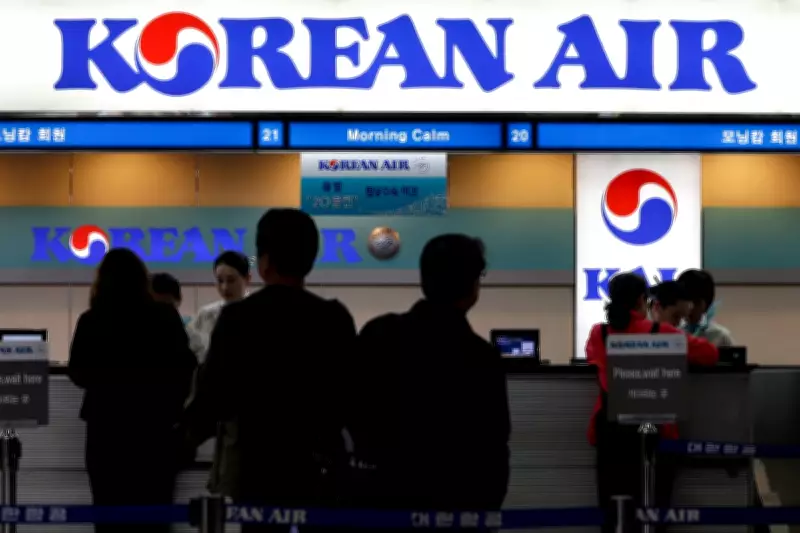
The conflict has triggered volatile movements in airline stocks across Asia. Shares in Hong Kong's Cathay Pacific Airways closed up 2.2 per cent, Qantas Airways rose 1 per cent, and Korean Air Lines jumped 5.6 per cent. Conversely, Japan Airlines closed down 1 per cent, paring the week's losses, while major Chinese carriers such as Air China, China Eastern Airlines, and China Southern Airlines fell between 1 per cent and 4 per cent in both Hong Kong and Shanghai as markets stabilised.
Gary Ng, a senior economist at Natixis, commented on the sensitivity of Asian airlines to Iran's situation: “Asian airlines are highly sensitive to Iran's situation due to exposure through routes and energy in both revenue and costs. Any news on shortening the duration of the war can easily turn market sentiment.” This analysis highlights the broader economic implications of the conflict beyond immediate travel disruptions.