Prime Minister Keir Starmer Expresses Solidarity with Gulf Allies Amid Iranian Escalation
Prime Minister Sir Keir Starmer has conveyed the United Kingdom's "solidarity" with key Middle Eastern leaders in response to what Downing Street describes as "dangerous Iranian escalation." This development follows joint United States and Israeli air strikes that resulted in the death of Iran's Supreme Leader, Ayatollah Ali Khamenei, throwing the nation's future into uncertainty and threatening regional stability.
Diplomatic Outreach and Regional Tensions
On Sunday, Sir Keir engaged in critical diplomatic conversations with King Abdullah II of Jordan, King Hamad bin Isa Al Khalifa of Bahrain, and Crown Prince Sheikh Mishal Al-Ahmad Al-Jaber Al-Sabah of Kuwait. A spokesperson from Number 10 confirmed that during these discussions, the Prime Minister expressed the UK's firm support as these nations face indiscriminate missile and drone attacks launched by Iran within the last twenty-four hours.
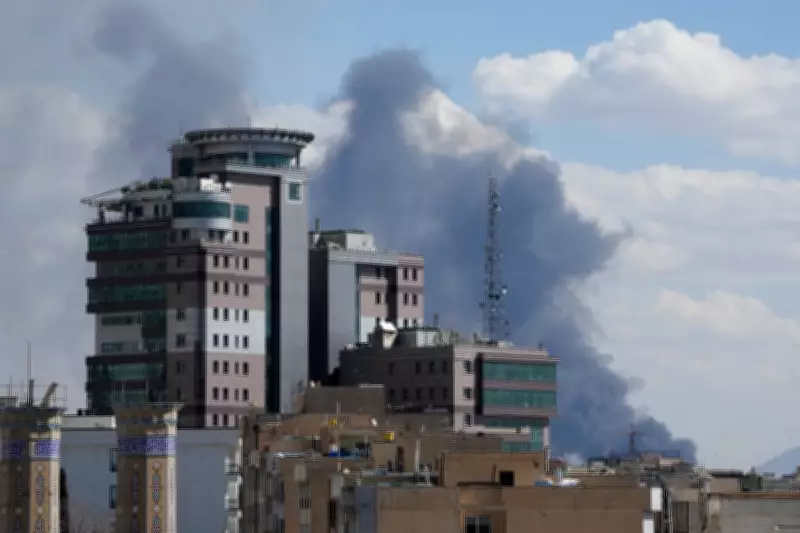
The Prime Minister also articulated "deep concern" regarding assaults on civilian infrastructure and addressed the imperative of safeguarding British nationals and military personnel stationed across the region. These talks occurred against a backdrop of escalating violence, with explosions reported in multiple Gulf states as Iran vowed to execute its "most intense operation" ever in retaliation for the killing of its long-serving leader.

Military Developments and Security Threats
The Israeli military has announced additional air strikes targeting Tehran, aimed at "establishing aerial superiority and paving the path to Tehran." Meanwhile, significant apprehension is mounting over the security of the Strait of Hormuz, a vital global shipping corridor located off Iran's southern coast. Reports indicate that two vessels were struck by "unknown projectiles" in this area on Sunday, heightening fears of broader economic disruption.
Although the United Kingdom has confirmed it played no role in the initial US-Israeli strikes, Defence Secretary John Healey issued a stark warning on Sunday regarding the risks posed by Iranian retaliation. Speaking on Sky News's Sunday Morning With Trevor Phillips programme, Healey revealed that Iranian missiles and drones had landed within "a few hundred yards" of approximately 300 British troops stationed at a base in Bahrain. Additionally, two missiles were fired toward Cyprus, where thousands of UK personnel are based.
"We don't believe they were targeted at Cyprus, but nevertheless, it's an example of how there is a very real and rising threat from a regime that is lashing out widely across the region," Healey stated. He further confirmed that British aircraft have been deployed on defensive operations from bases in Cyprus and Qatar, successfully intercepting drones and missiles that threatened UK installations and allied forces.
Political Reactions and Legal Ambiguity
The government's stance has drawn criticism from across the political spectrum due to its reluctance to explicitly endorse or condemn the US-Israeli strikes. When questioned repeatedly by BBC presenter Laura Kuenssberg about whether the UK supports the strikes or considers them legal, Defence Secretary Healey declined to provide a direct answer.
"Britain played no part in the strikes on Iran," Healey asserted. "We share, however, the primary aim of all allies in the region and the US that Iran should never have a nuclear weapon." He later added, "It is for the US to set out the legal basis of the action that it took."
Green Party leader Zack Polanski condemned the attacks as "illegal and unprovoked," accusing the government of undermining international law by not condemning former US President Donald Trump's actions. Conversely, Conservative shadow foreign secretary Dame Priti Patel argued that the government should have been "more proactive" in supporting the strikes, questioning why British bases were not utilized and whether the US requested permission to use facilities such as Diego Garcia in the Indian Ocean.

International Responses and Future Implications
The UK government, alongside France and Germany, has formally condemned Iran's retaliatory measures and urged Tehran to resume diplomatic negotiations. However, other allies, including Canada and Australia, have expressed explicit support for the United States' actions, framing them as necessary to prevent Iran from acquiring nuclear weapons and threatening global peace.
As the situation continues to evolve, the death of the 86-year-old Supreme Leader, who ruled Iran for nearly four decades, has created a power vacuum that could lead to prolonged instability. With Iran's parliamentary speaker Mohammad Bagher Qalibaf promising "devastating blows" in response, and former President Trump warning of unprecedented force if retaliation persists, the international community remains on high alert for further escalation in this volatile region.