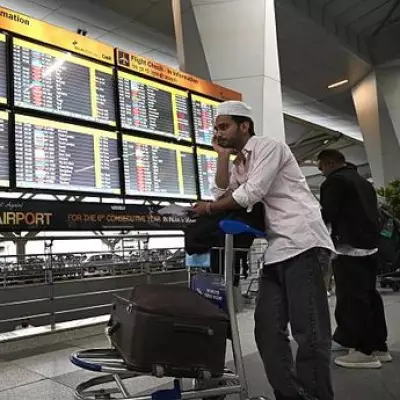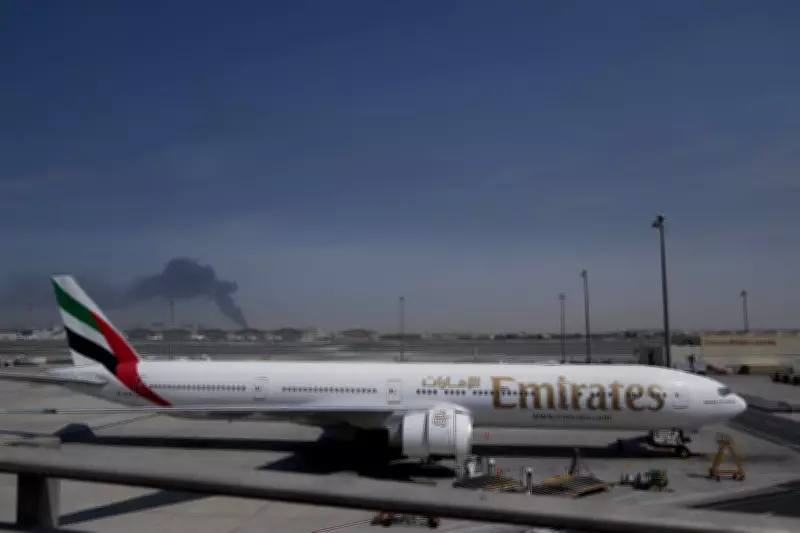
Significant travel disruption has struck London Heathrow Airport, with nearly half of all scheduled flights to Middle Eastern destinations cancelled on Sunday. This major operational halt follows a series of airspace closures across the region, triggered by escalating military actions.
Extensive Cancellations at the UK's Busiest Airport
According to data from aviation analytics firm Cirium, a staggering 24 out of 56 flights scheduled to depart from Heathrow for the Middle East on Sunday were axed. This represents 43% of all departures from the UK's primary aviation hub to that region. The cancellations have created a ripple effect of uncertainty for thousands of passengers.
Destination-Specific Impact
The cancellations were not evenly distributed, with some destinations experiencing complete suspension of service. All three flights bound for Israel were cancelled, as were both flights scheduled for Bahrain. Qatar faced severe disruption, with eight out of nine departures cancelled. The United Arab Emirates saw nine of its 17 flights from Heathrow cancelled.

Other affected routes included one of eight flights to Saudi Arabia and one of two departures to Jordan. However, flights to Egypt, Oman, and Turkey appeared to remain operational, with five, two, and eight scheduled services respectively proceeding as planned, according to the latest available information.
Root Cause: Regional Conflict and Airspace Closures
This widespread aviation disruption stems directly from military escalation in the Middle East. The catalyst was a coordinated "pre-emptive" strike by US and Israeli forces against Iran on Saturday morning, which the nations stated was aimed at countering Tehran's nuclear weapons development ambitions.
Iran responded with retaliatory missile launches, reportedly targeting Israel and other locations across the region. This exchange prompted civil aviation authorities in multiple countries to close their airspace as a safety precaution, creating an unprecedented challenge for international airlines.
Airline Responses and Suspensions
Major carriers serving the region have been forced to implement temporary suspensions. Emirates Airlines announced a complete halt of all operations to and from Dubai until 3pm UAE time on Monday, March 2, citing "multiple regional airspace closures."
Similarly, Etihad Airways suspended all flights to and from Abu Dhabi until 2am UAE time on Monday, warning passengers to expect continued disruption while airspace restrictions remain in place. Qatar Airways also confirmed the temporary suspension of its operations due to the closure of Qatari airspace, with a promise to provide updates about resuming services.
Virgin Atlantic took proactive measures, cancelling services between London Heathrow and both Dubai and Riyadh for Sunday and Monday. The airline also confirmed it was continuing to avoid Iraqi airspace, resulting in pre-planned rerouting of some flights between Heathrow and the region.
Government Travel Warnings and Passenger Safety
The UK Foreign, Commonwealth and Development Office (FCDO) issued urgent safety advisories for British nationals in the region. In a particularly stark warning, the FCDO advised those in the Omani coastal city of Duqm to "immediately shelter in place," while urging British nationals in Salalah to "leave as soon as possible."
The government department specifically stated: "Any British nationals currently visiting Salalah, or within 100km, should look to leave as soon as possible if commercial means allow. Remain indoors in a secure location, avoid all travel and follow instructions from the local authorities."
Additionally, the FCDO encouraged British nationals in Bahrain, Israel, Palestine, Qatar, and the United Arab Emirates to register their presence with the UK government to receive direct updates about the evolving situation.
Remaining Operations and Security Concerns
Despite the extensive cancellations, Cirium data indicates that 83 flights between the UK and the Middle East were still scheduled to operate on Sunday. However, the situation remains fluid, with airlines closely monitoring airspace reopenings and security developments.

Qatar Airways highlighted an additional concern, warning passengers about scammers impersonating airline staff online. The carrier emphasized that it would never request passwords, one-time passcodes, banking details, or other sensitive information via social media or direct messages.
The aviation industry now faces the complex task of restoring normal operations while navigating an uncertain security landscape, with thousands of passengers experiencing disrupted travel plans amid heightened regional tensions.