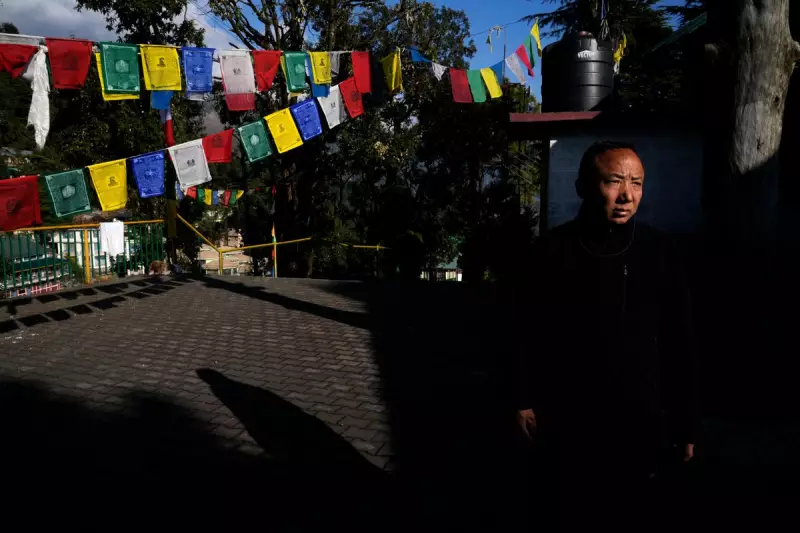
For decades, Nepal served as a crucial sanctuary for Tibetan refugees. Today, that safe haven has been fundamentally transformed, with a pervasive surveillance apparatus silencing dissent and driving the community into exile. An exclusive investigation by The Associated Press, published on Sunday 21 December 2025, details this stark shift through the story of one man's desperate bid for his son's future.
The Crushing Weight of Surveillance
The story of Sonam Tashi, a 49-year-old born in Nepal to Tibetan refugees, encapsulates the community's plight. Once a regular and vocal presence at protests outside the Chinese embassy in Kathmandu, Tashi watched as the space for dissent evaporated. In the early days, arrests were brief, but by 2015, detentions stretched to weeks, causing protest crowds to thin dramatically. Tashi eventually found himself among the last few demonstrators.
Surveillance, however, extended far beyond the protest sites. Police began pre-emptively appearing hours before any gathering, asking pointed questions about future plans they should not have known. A proliferation of cameras appeared around Tibetan settlements, temples, and private homes. In the Boudha area, the once-comforting presence of the great stupa was overshadowed by its new, all-seeing electronic counterparts.
An American-Made Apparatus
The AP investigation uncovered a critical and controversial detail: much of the Chinese technology used to monitor Tibetans in Nepal originated from American companies. Despite warnings about intellectual property theft and copying, these firms reportedly helped build, customise, and expand China's surveillance network over the past quarter-century. This technology has been instrumental in dismantling Nepal's once-vibrant Free Tibetan movement.
The impact is stark in the numbers. While thousands of Tibetans once fled to Nepal annually, Tibetan officials in Nepal report that last year, new arrivals dwindled to single digits. The net has pulled tight, making escape nearly impossible and life inside increasingly constrained.
A Father's Flight for Freedom
For Sonam Tashi, the breaking point was his 10-year-old son's future. Unable to secure identity papers for the boy and refusing to let him inherit a life of fear, Tashi made the difficult decision to leave. This year, he embarked on a winding bus journey to the Indian border, heading for Dharamshala, the Tibetan capital-in-exile. There, his son can receive an education and live in a community where monks walk freely and portraits of the Dalai Lama are not a risk.
"There are cameras everywhere," Tashi said during the journey, gazing at the passing landscape. "There is no future." In Dharamshala, he found a echo of Kathmandu's past and joined a rare protest, a poignant reminder of what has been lost.
The loneliness of exile was echoed across the world in Washington, D.C., by Namkyi. Arrested at age 15 and sentenced to three years in a Chinese prison for protesting, she now speaks about the cost of losing a homeland. Dressed in black with Tibetan and American pins on her coat, she described how silence has become synonymous with survival for Tibetans remaining in Nepal. "They know they are being watched," she stated, her eyes holding a fragile hope that being heard might one day make a difference.
This curated documentary photo essay by AP stands as a testament to a community under pressure and a geopolitical reality where technology, diplomacy, and human rights are inextricably linked.