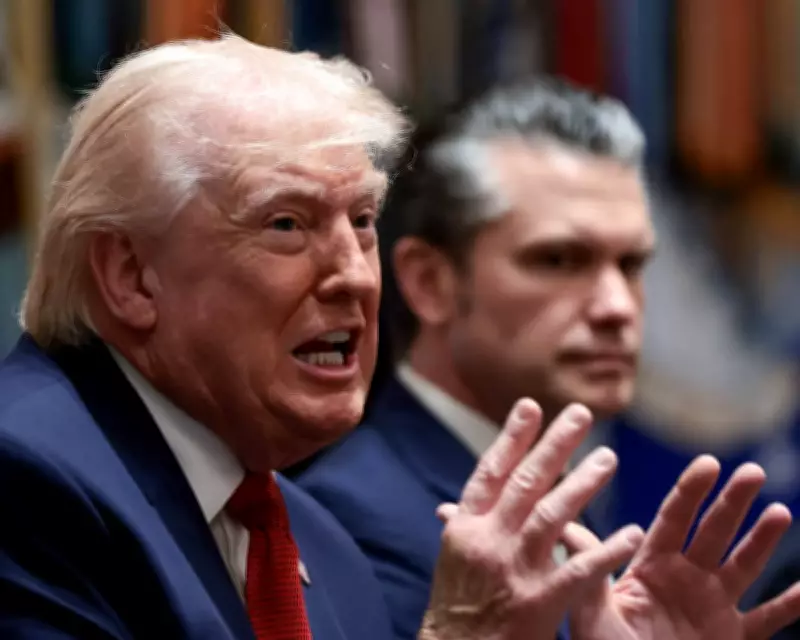
Former US President Donald Trump has launched a fresh verbal assault on NATO allies, specifically targeting the United Kingdom by dismissing its naval capabilities as mere "toys." In remarks delivered from the White House on Thursday, Trump escalated his criticism of member nations' contributions during the ongoing joint US-Israeli military operations against Iran.
Trump's Derisive Comments on UK Military Support
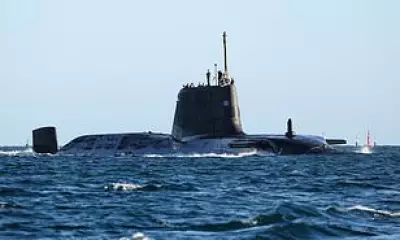
Trump recounted a recent exchange, asserting that approximately three weeks prior, British officials had offered to deploy aircraft carriers to assist in the conflict. He responded with characteristic scorn, stating: "I said: 'Oh that's wonderful, thank you very much. Don't bother. We don't need it.'" The former president elaborated, claiming the UK's carriers "aren't the best aircraft carriers, by the way. They're toys compared to what we have."
Background of the Dispute
This incident follows Trump's previous allegations that he had requested two aircraft carriers from the UK, which Prime Minister Keir Starmer initially rejected before later offering to send them. Downing Street has firmly denied these claims, stating that no such request was ever made or refused by the British government.

The prime minister has maintained a clear policy position, confirming that UK military bases will not be used for offensive strikes against the Iranian regime. However, bases such as Diego Garcia on the Chagos Islands remain available for defensive operations to counter any retaliation from Iran.
UK's Actual Military Deployments
Despite Trump's dismissive rhetoric, the United Kingdom has taken concrete military actions in response to regional tensions. The Royal Navy has deployed warship HMS Dragon to the eastern Mediterranean following an Iranian-made missile attack launched from Lebanon targeting the UK's RAF base in Cyprus.
Furthermore, British officials are actively considering deploying either a Royal Navy vessel or a civilian ship to help reopen the strategically vital Strait of Hormuz. The closure of this Gulf route has severely disrupted global energy movements. The proposed vessel would serve as a mothership for mine-clearing drones, working to make the strait safer for commercial shipping traffic.
Trump's Broader NATO Criticism
Trump expressed broader disappointment with NATO allies during his remarks, stating: "Actually made a statement, a couple of them, that 'we want to get involved when the war is over'. No, it's supposed to get involved with the war's beginning, or even before it begins." He contrasted this with what he described as belated offers of assistance, remarking: "Now they all want to help. When they're annihilated, the other side is annihilated, they said 'we'd love to send ships'."
The former president also reacted derisively to Iran's missile launch toward the US-UK base on Diego Garcia, part of the Chagos Islands in the Indian Ocean. Trump noted Iran had fired "one missile 2,500 miles – they supposedly didn't have a missile like that." He referenced the UK's agreement to hand over the Chagos Islands to Mauritius with a long-lease deal, a arrangement he has recently criticized extensively.
Starmer's Deliberate Non-Response Strategy
Prime Minister Keir Starmer has adopted a policy of deliberate non-engagement with Trump's repeated insults, marking a significant deterioration in their relationship since Trump's second state visit to the UK in September. Earlier this week, Starmer informed the House of Commons liaison committee that he does not intend to react to the US president's provocative comments.
Starmer explained that these remarks were made "to put pressure on me" and that he has been "unapologetic" about refusing to respond directly because he remains "utterly focused" on his governmental responsibilities. The prime minister's position of limited military involvement in the Iran conflict has proven popular with the British public, despite Trump's attempts to frame him as weak for not providing greater support to US operations.

Escalating Rhetorical Attacks
Trump has increasingly framed Starmer as inadequate in comparison to historical British leaders, stating that the prime minister is "not exactly [Winston] Churchill." He has also publicly questioned why Starmer needs to consult his ministers or seek advice when making military decisions, suggesting this demonstrates indecisiveness.
The former president's comments represent the latest in a series of anti-NATO jibes that have characterized his approach to international alliances, particularly regarding European contributions to collective defense efforts during global conflicts.