Trump Dismisses Iran 'Quagmire' Concerns, Highlights Military Success
President Donald Trump has firmly rejected comparisons between the ongoing conflict in Iran and the protracted wars of previous administrations, specifically dismissing fears of a Bush-like quagmire. In a telephone interview with ABC News' Jonathan Karl on Thursday, Trump was questioned about the future trajectory of the military engagement. His response was unequivocal: 'Forget about next,' the President asserted, adding, 'They are decimated for a 10-year period before they could build it back.'
Detailed Account of Military Operations
During the conversation, Trump provided specific details regarding the impact of US operations, claiming that 58 percent of Iran's missile launchers have been wiped out. He expressed pride in the military's performance, asking Karl, 'How do you like the performance? I mean, Venezuela is obvious. This might be even better.' This dialogue was documented in Karl's book, Retribution, released last autumn, which chronicles several of their past exchanges.
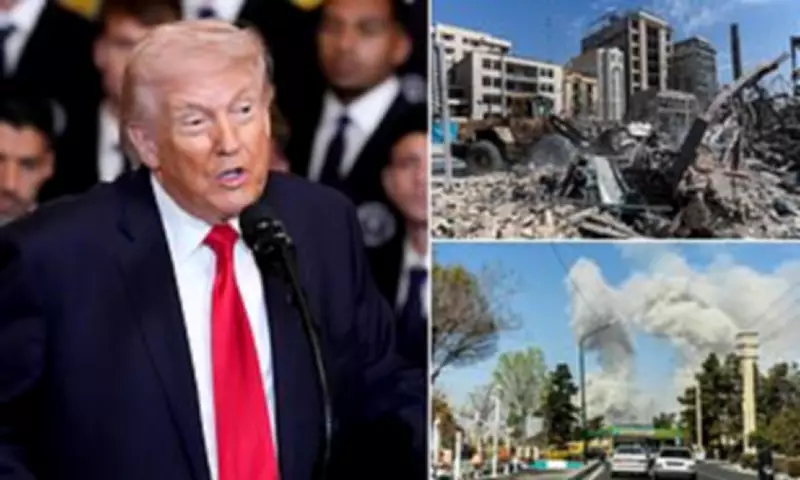
Supporting Trump's claims, a CENTCOM briefing held on Thursday revealed that over the preceding 72 hours, the United States had struck nearly 200 Iranian targets, including sites around Tehran. The operations involved B-2 bombers utilizing penetrator bombs to destroy Iranian ballistic missile launchers, underscoring the scale of the offensive.

Contrasting Campaign Promises with Recent Actions
Trump's current stance marks a significant shift from his 2024 campaign rhetoric, where he vowed to avoid 'forever wars' and frequently criticised President Joe Biden's chaotic withdrawal from Afghanistan, linking it to Russia's invasion of Ukraine. However, since resuming office in January, his administration has undertaken several aggressive foreign policy moves:
- Bombing a trio of Iranian nuclear sites.
- Capturing Venezuela's dictator, Nicolas Maduro.
- Approving Operation Epic Fury in Iran.
Despite these actions, the Iran conflict poses the highest risk of drawing the US into a prolonged engagement. Trump initially predicted a duration of 'four weeks' in a Sunday interview with the Daily Mail, later revising this to four to five weeks from the East Room on Monday. When pressed by ABC on Thursday, he stated, 'Well, there are many people who say it's already over. It's not over for me. It's over when I want it to be.'
Political Objectives and Regional Implications
The President outlined clear political goals for Iran, emphasising the need for US-approved leadership. 'We don't want them to put anybody in there unless it is approved by us,' Trump explained, aiming to prevent future administrations from inheriting unresolved issues. In a separate interview with Axios, he commented on the succession following the death of Iranian Supreme Leader Ayatollah Ali Khamenei in a Saturday airstrike, suggesting Khamenei's son, Mojtaba, as the likely replacement but deeming this 'unacceptable'.
Trump drew parallels to Venezuela, where Delcy Rodríguez, formerly Maduro's deputy, was left in charge post-ouster, indicating a similar hands-on approach in Iran. 'I have to be involved in the appointment, like with Delcy in Venezuela,' he stated.
Ongoing Diplomacy and Regional Spillover
Despite the hostilities, Trump noted that Iranians are seeking negotiations, claiming they are calling to ask, 'How do we make a deal?' He responded, 'You’re being a little bit late,' and asserted that the US now desires conflict more than Iran does. This was mentioned during an event where he hosted the Inter Miami CF soccer team in the East Room.
The war's effects have extended beyond Iran's borders, with the United Arab Emirates confirming that cities including Dubai, Abu Dhabi, and Fujairah continue to be targeted. Video footage shows smoke rising from Abu Dhabi's Yas Marina, highlighting the regional instability and broader consequences of the conflict.