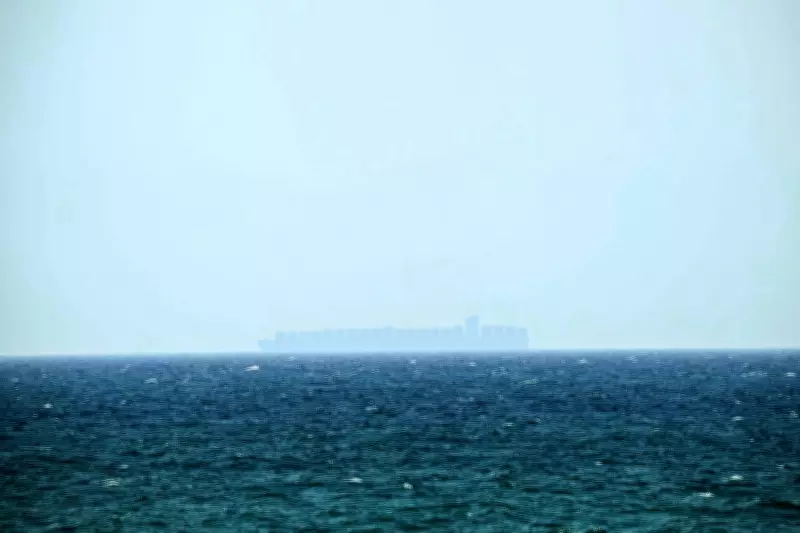
In a dramatic response to a mounting global energy crisis, former President Donald Trump has issued new directives concerning the Strait of Hormuz, aiming to "ensure the free flow of energy to the world during the war with Iran." This move comes after Iran effectively closed the crucial maritime channel, a narrow passage in the Persian Gulf through which approximately one-fifth of the world's oil supply transits.
Iran's Blockade and Escalating Tensions
The closure was initiated by Iran following a joint military attack by the United States and Israel last Saturday. In retaliation, Iranian forces have targeted multiple ships in the vicinity with drone strikes, including an oil tanker that was set ablaze, and have issued threats to ignite any vessels attempting to navigate through the strait. This aggressive stance has effectively blockaded the waterway, creating a severe disruption to international maritime trade.
The immediate impact has been a sharp surge in global oil prices, with experts warning that a prolonged closure could devastate the global supply chain and inflict widespread economic havoc. The blockade underscores the strategic importance of the Strait of Hormuz, a vital artery for energy exports from the Middle East to markets worldwide.

Trump's Decisive Orders and U.S. Military Response
On Tuesday, Trump announced a comprehensive plan to counteract the blockade. "Effective IMMEDIATELY, I have ordered the United States Development Finance Corporation (DFC) to provide, at a very reasonable price, political risk insurance and guarantees for the Financial Security of ALL Maritime Trade, especially Energy, traveling through the Gulf," he declared.
This initiative is designed to offer protection and financial assurances to all shipping lines operating in the region. Furthermore, Trump emphasized that if necessary, the United States Navy will commence escorting oil tankers through the Strait of Hormuz as soon as possible. "No matter what, the United States will ensure the FREE FLOW of ENERGY to the WORLD. The United States' ECONOMIC and MILITARY MIGHT is the GREATEST ON EARTH — More actions to come," he asserted, highlighting the nation's commitment to maintaining global energy stability.
Broader Implications and International Reactions
The situation has escalated into a full-blown international crisis, with the potential to trigger broader conflicts and economic instability. Trump's orders signal a robust U.S. stance, leveraging both economic tools and military power to secure maritime routes. The involvement of the U.S. Navy in escort missions could heighten tensions with Iran, raising concerns about further military confrontations in the region.
In related developments, Trump has also made controversial remarks about international allies, including a recent attack on the British prime minister, whom he described as "no Winston Churchill." This adds a layer of diplomatic strain to an already volatile geopolitical landscape, as nations grapple with the fallout from the oil crisis and the escalating U.S.-Iran conflict.
The global community is closely monitoring the situation, with oil markets on edge and governments assessing the potential for prolonged disruptions. The effectiveness of Trump's measures in reopening the Strait of Hormuz and stabilizing energy supplies remains to be seen, as the crisis continues to unfold with significant implications for global security and economy.