Former President Donald Trump has publicly reacted to comments made by his Secretary of Defense, Pete Hegseth, regarding the ongoing conflict with Iran. The exchange, which occurred on Tuesday, 24 March 2026, revealed a notable divergence in approach between the two key figures.
Hegseth's Firm Commitment to Pressure
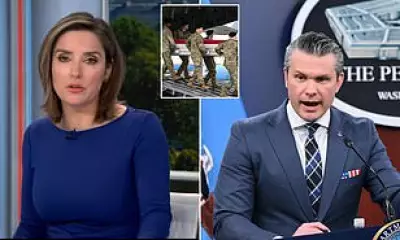
During a briefing, Secretary Hegseth stated unequivocally that his primary objective is to ensure the United States continues to apply military pressure on Iran. He emphasized that this pressure would be maintained "as long and as hard as necessary," signaling a steadfast and potentially escalatory stance towards the Middle Eastern nation.
Trump's Visible Reaction and Critique
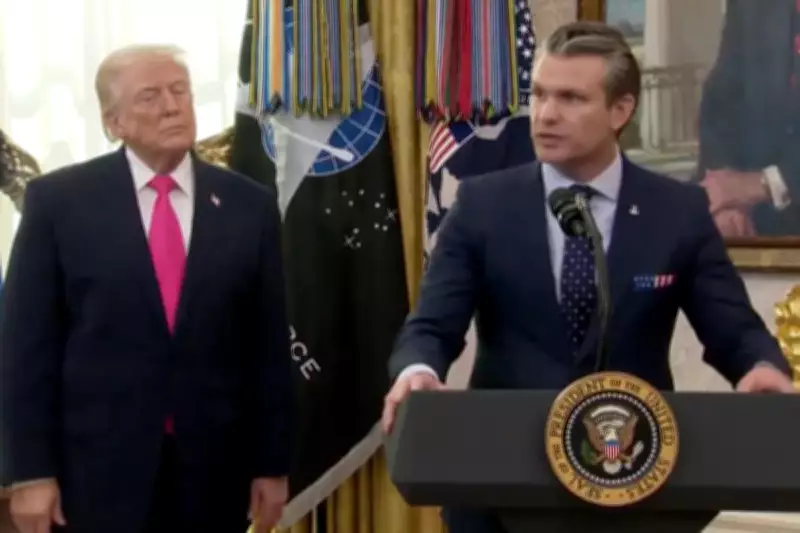
Observers noted that Trump raised an eyebrow in response to Hegseth's remarks, a gesture that underscored his apparent disagreement. Trump later commented on the situation, referring to Hegseth as "Our Secretary of War" and suggesting that the Defense Secretary does not desire peace but rather seeks conflict.

This reaction is particularly significant because it appears to contradict Trump's own 15-point plan, which is aimed at diplomatically resolving the Iran conflict. The plan, which has been a cornerstone of Trump's foreign policy agenda, focuses on de-escalation and negotiated settlements rather than prolonged military engagement.
Implications for US Policy
The public exchange between Trump and Hegseth highlights a potential rift within the administration regarding how to handle Iran. While Hegseth advocates for sustained and forceful military pressure, Trump's raised eyebrow and subsequent comments indicate a preference for his peace-oriented strategy.
This divergence could have far-reaching implications for US foreign policy in the region. It raises questions about the coherence of the administration's approach and whether internal disagreements might hinder effective decision-making. The situation underscores the complexities of managing international conflicts, where differing viewpoints among top officials can lead to public tensions and policy uncertainties.
As the conflict with Iran continues to evolve, the dynamic between Trump and Hegseth will be closely watched by analysts and policymakers alike. Their differing perspectives on military pressure versus diplomatic resolution may shape the future trajectory of US-Iran relations and influence broader geopolitical stability in the Middle East.