Trump Demands Approval Over Iran's Next Supreme Leader
Former President Donald Trump has responded to emerging reports that Iran is selecting a new supreme leader by declaring that he holds ultimate authority over the process. This comes just over a week after the death of Ayatollah Ali Khamenei in U.S. and Israeli airstrikes.
Trump's Assertion of Authority
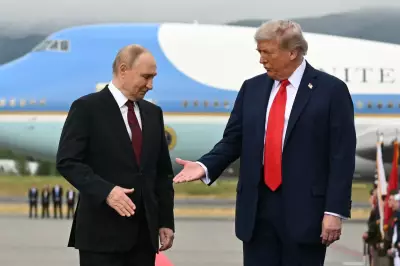
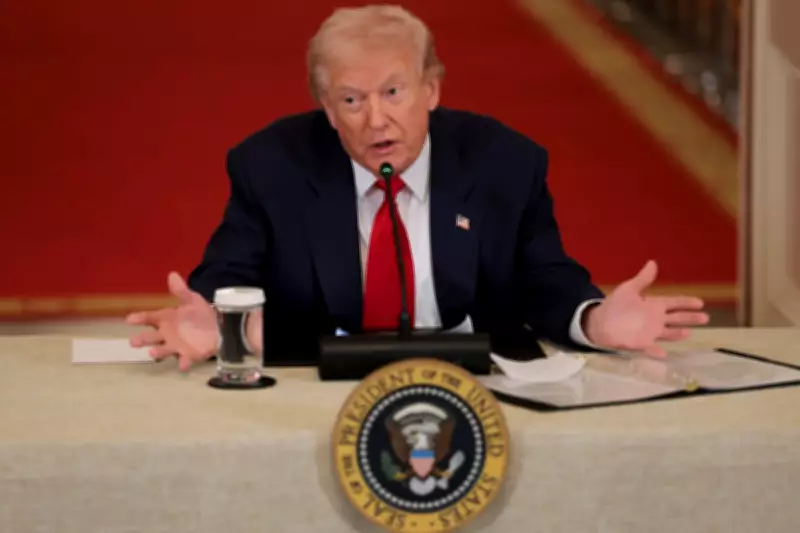
In an interview with ABC News, Trump stated that the incoming leader "is not going to last long" without his endorsement. "He's going to have to get approval from us. If he doesn't get approval from us, he's not going to last long. We want to make sure that we don't have to go back every 10 years, when you don't have a president like me that's not going to do it," Trump emphasized.
Iran's Firm Rejection of Interference
Iranian Foreign Minister Abbas Araghchi countered Trump's claims during an appearance on NBC's "Meet the Press." He clarified that no successor has been officially chosen yet, stating, "There are lots of rumors around, but we have to wait for the Assembly of Experts to convene and vote for the new Supreme Leader." When questioned about Trump's remarks, Araghchi was resolute: "We allow nobody to interfere in our domestic affairs. This is up to the Iranian people. It is only the business of the Iranian people."

Internal Selection Process and Challenges
According to Reuters, the clerical Assembly of Experts has reportedly reached a majority consensus on a successor, as indicated by member Ayatollah Mohammadmehdi Mirbaqeri. However, the Mehr news agency noted that "some obstacles" remain in the selection procedure.
Key developments in the process include:
- Two assembly members, Ayatollah Mohsen Heidari Alekasir and Ahmad Alamolhoda, confirmed via Iranian media that a successor has been chosen.
- Alamolhoda specified that Ayatollah Hashem Hosseini Bushehri, head of the assembly's secretariat, will announce the final decision.
- Disagreements have arisen over whether an in-person meeting is necessary, with Heidari Alekasir suggesting remote alternatives due to security concerns.
Security Concerns and Candidate Criteria
The assembly faces extraordinary circumstances, as U.S. and Israeli strikes since February 28 have killed numerous officials, including Khamenei, and damaged an auxiliary building of the Assembly of Experts in Qom. Heidari Alekasir warned that targeting the assembly would "harm the revolution" and benefit Iran's enemies.
He also revealed that the candidate was selected based on Khamenei's advice that Iran's top leader should "be hated by the enemy" rather than praised. "Even the Great Satan (U.S.) has mentioned his name," he noted, referencing Trump's previous criticism of Mojtaba Khamenei as an "unacceptable" choice.
Focus on Mojtaba Khamenei
Trump identified Mojtaba Khamenei, the 56-year-old son of the late supreme leader, as the most likely successor in a Thursday report by Axios. He warned against this selection and insisted on personal involvement in choosing Iran's next leader.
Mojtaba Khamenei, who was not in Tehran during his father's death, holds significant influence through his ties to the Revolutionary Guards and his role as his father's gatekeeper. Despite never holding a government position, he has long been considered a top candidate to succeed his father.
His profile includes:
- Close connections to Iran's security apparatus, which has suppressed protests in recent years.
- Criticism from protesters during the 2022 unrest over a woman's death in police custody.
- Leverage built behind the scenes within Iran's clerical establishment.
Ali Khamenei served as Iran's supreme leader from 1989 until his death, following an eight-year presidency. The ongoing leadership transition occurs amid heightened tensions and external pressures, with Trump's comments amplifying the geopolitical stakes.