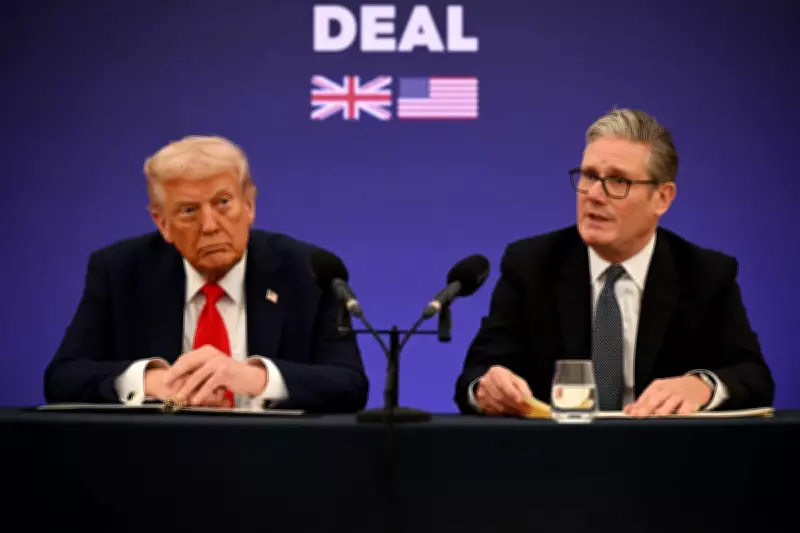
Donald Trump has launched fresh criticism against the UK government's handling of Middle East tensions while delivering a pointed comparison between current Prime Minister Keir Starmer and Britain's legendary wartime leader Winston Churchill.
Presidential Discontent with UK Response
Speaking from the Oval Office, the US president expressed clear dissatisfaction with Britain's initial reluctance to permit American forces to utilize UK bases for strikes against Iran. "I'm not happy with the UK either," Trump stated bluntly, highlighting operational inconveniences caused by the delay. "That island... It's taken three, four days for us to work out where we can land there, it would have been much more convenient landing there as opposed to flying many extra hours, so we are very surprised."
The Churchill Comparison
Trump's most striking remark came when he directly contrasted Starmer with Britain's most celebrated 20th-century leader. "This is not Winston Churchill that we're dealing with," the president declared, invoking the memory of the prime minister who guided Britain through the Second World War.

This represents the latest in a series of criticisms from the American leader regarding Britain's position on the ongoing Middle East conflict. While discussing European support for US actions against Iran, Trump offered mixed assessments of allies, praising NATO chief Mark Rutte while describing Spain's response as "terrible."
The Churchill Legacy and Modern Context
Winston Churchill remains Britain's most iconic wartime leader, remembered for his stirring speeches that bolstered national morale during Britain's darkest hours. His leadership during the defeat of Nazi Germany cemented his historical reputation, though voters rejected him in the 1945 general election, demonstrating the distinction between wartime leadership and peacetime governance.
Historical Foundations of the Special Relationship
Churchill personally coined the term "special relationship" during a 1946 speech in Missouri, formalizing the concept of the transatlantic alliance. The closeness between the UK and US was vividly demonstrated in 1941 when Churchill stayed at the White House following Japan's attack on Pearl Harbor, an event that drew America directly into the war.
Later that same year, Churchill and President Franklin D. Roosevelt signed the historic Atlantic Charter, a crucial joint declaration outlining British and American war aims that would shape the postwar world order.
Contemporary Reverence and Controversy
Churchill's legacy as a statesman and wartime leader is physically commemorated through numerous memorials, most prominently the towering statue in Parliament Square and the Churchill War Rooms museum. However, this veneration has faced modern challenges, with the Westminster statue recently defaced by graffiti labeling Churchill a "Zionist war criminal."
This incident follows previous acts of vandalism, including a 2020 case where a teenager was fined for painting "racist" on the statue's plinth, reflecting ongoing debates about historical figures in contemporary society.
Strategic Implications of Trump's Remarks
Trump's comments extend beyond personal criticism to touch upon fundamental aspects of the UK-US relationship. By invoking Churchill specifically, the president references not just leadership qualities but the historical foundation of the "special relationship" itself. The operational complaints about base access further highlight practical military cooperation challenges amid evolving geopolitical tensions.
These remarks come as part of broader American concerns about European support for Middle East policy, with Trump offering differentiated assessments of various allies while placing particular emphasis on Britain's response. The Churchill comparison serves as both a historical benchmark and a pointed commentary on current leadership dynamics between the two nations.