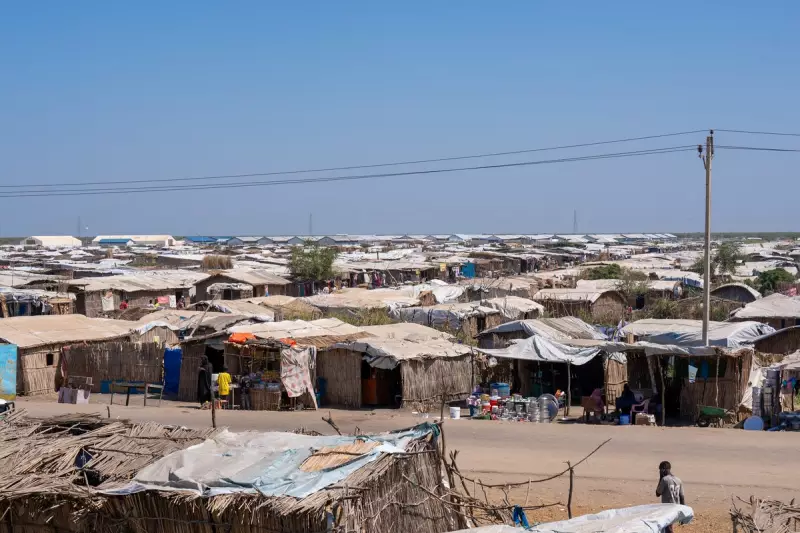
The British government stands accused of reneging on a crucial promise to support the Sudanese people, as severe reductions in foreign aid exacerbate a desperate humanitarian situation for refugees fleeing to neighbouring South Sudan.
Broken Promises and Deepening Crisis
Despite pledging last February that the crisis in Sudan would remain a priority even as the UK cut its overall aid budget from 0.5% to 0.3% of gross national income, support has been slashed. At a Sudan conference hosted by the UK in April, the government vowed it would not "look away". However, the conflict, which began in 2023, has now claimed over 150,000 lives and displaced more than 12 million people.
The spillover has been profound, with the latest data showing 1.3 million people have sought safety in South Sudan. Yet, aid received by South Sudan in 2025 is the lowest since the country's founding in 2011. According to UN OCHA figures, the UK has cut its aid to South Sudan by more than 40%, from $131 million (£97m) in 2024 to just $75 million (£56m) in 2025.
Other major donors have also reduced funding. The United States slashed its contribution from $708m to $283m, while Germany's aid fell from $102m to $63m.
Life at the Breaking Point in Renk
The human impact of these cuts is starkly visible at the Renk transit centre in Upper Nile state, northern South Sudan. Designed for far fewer, the centre now shelters over 11,000 people, with an estimated 44,000 refugees and returnees in the wider area. Facilities are overwhelmed, with only one clean water tap for every 433 people, far below the humanitarian standard of one per 250.
"The population is just continuing to increase day after day and everyone is just facing so many challenges," said Sirivanos Manjera, Oxfam’s programme manager at Renk. He reported that a lack of funds had forced the International Organisation for Migration to halt onward transportation assistance, leaving new arrivals stranded beyond the two-week ration period provided by the World Food Programme.
Health services are collapsing. A cholera outbreak that began in October 2024 has seen over 1,500 cases, with 14 new cases recorded in the first week of December alone. Hepatitis E is also rampant, with 1,131 cases. "It is very hard for us to bring these diseases under control, given the constant influx of people," Mr Manjera explained.
Oxfam, which runs vital water and sanitation services at Renk, nearly withdrew last month due to funding shortages. The number of cleaners has been cut from 40 to 15, and the maintenance team reduced from 10 to five.
Aid System Pushed to 'Hyperprioritisation'
Shabnam Baloch, Oxfam's country director for South Sudan, warned that the cuts are pushing the humanitarian system to its limits. "Humanitarian aid is a lifeline for people in South Sudan, and neither the system nor the people were at all ready for these cuts," she told The Independent.
She described a growing "donor fatigue" among international partners, but argued that the spillover into neighbouring countries like South Sudan and Chad must be seen as part of the overall response to the Sudan crisis. "When donors, including and in particular the UK, talk about the Sudan crisis, they should be taking a regional approach," Baloch stated.
The result is a shift to "hyperprioritisation", where only those with the "most extreme needs" receive help. "This year we were able to support 770,000 people, but next year we are going to be able to support less than half of that," Baloch said. "Nobody else is going to be able to fill the gap left by us, so people really are going to suffer."
The crisis unfolds against a dire backdrop in South Sudan, where over 80% of the population lives in poverty. The UN estimates six million people face extreme hunger, with famine a real risk. A resurgence of conflict has displaced 445,000 people within the country this year.
In response to the allegations, Foreign Secretary Yvette Cooper said: "The UK will always stand with the innocent civilians of Sudan... This year alone, we have committed over £146 million, and since the conflict began, UK aid has delivered lifesaving support to over one million people."
Yet, for refugees like the woman in Renk who described watching her husband killed and "selling my dignity piece by piece" to reach safety, and the 21-year-old who carries "the future of four scared little faces on my back", the promised support feels desperately out of reach.