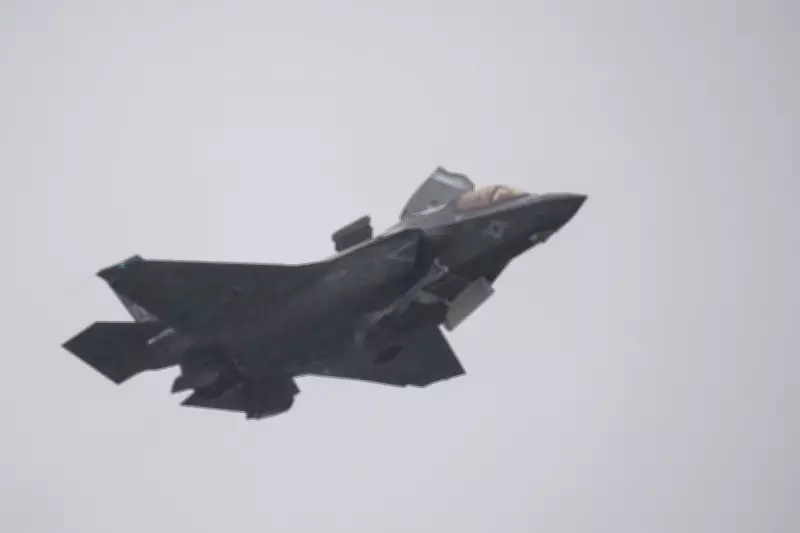
US and Chinese Fighter Jets Engage in Tense Aerial Standoff Over Korean Peninsula
American and Chinese military aircraft briefly faced off in a tense aerial confrontation over waters near the Korean Peninsula, according to reports from South Korean media outlets. The incident occurred on Wednesday when China scrambled its jets in response to approximately ten United States fighter aircraft taking off from an airbase located in South Korea.
Details of the Military Encounter
The US F-16 fighter jets, operated by US Forces Korea (USFK), departed from Osan Air Base in Pyeongtaek, situated about 60 kilometres south of Seoul. These aircraft conducted planned drills, flying between the air defence identification zones of both South Korea and China. It is important to note that the US aircraft did not enter China's designated air defence identification zone during this operation.
No clashes or untoward incidents were reported during the brief standoff, which underscores the controlled nature of the encounter despite the heightened tensions. The USFK had reportedly informed the South Korean military about the unilateral exercise in advance but did not share comprehensive details regarding its operational plan or specific purpose.

Chinese Military Response and Statements
In reaction to the US drills, the Chinese People's Liberation Army organised naval and air forces to monitor and effectively respond to the activities throughout the process, as stated by the Chinese media outlet Global Times. The publication cited sources indicating that these measures were taken in accordance with laws and regulations, specifically addressing the American military's flying of jets into airspace facing China over the Yellow Sea.
The South Korean defence ministry issued a statement clarifying that its military was not part of the latest training exercise and was not aware of the flight details in advance. Both the USFK and South Korea's defence ministry declined to provide further comments on the incident, maintaining a stance of operational secrecy.
Broader Strategic Context and Implications
This unilateral exercise by the American military, which is relatively uncommon, occurs against a backdrop of increasing pressure from the Donald Trump administration on South Korea. Washington is urging Seoul to assume a larger role in maintaining its defence posture against North Korea, signalling a potential shift in the United States' support framework for its key ally.
The US National Defence Strategy, released last month, explicitly pushes for South Korea to take primary responsibility for deterring its rival neighbour, with the United States offering critical, but more limited support. This strategic realignment highlights evolving dynamics in the region, where the US maintains nearly 30,000 soldiers stationed in South Korea. Seoul relies heavily on the American nuclear umbrella for protection against potential threats from North Korea, making such military exercises and standoffs particularly significant in the current geopolitical landscape.