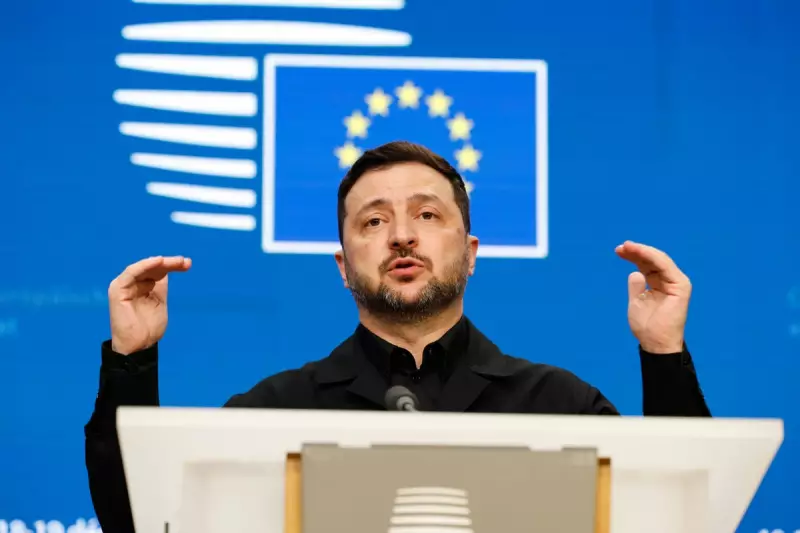
Ukrainian President Volodymyr Zelenskyy is set for a critical face-to-face meeting with US President Donald Trump on Sunday, as diplomatic efforts to broker an end to the nearly four-year war with Russia reach a pivotal moment. The summit at Trump's Mar-a-Lago club in Florida comes amidst a sharp escalation in Russian attacks on Ukrainian cities, underscoring the urgent need for a breakthrough.
Mar-a-Lago Summit Amidst Escalating Violence
The two leaders are scheduled to convene at Trump's private Palm Beach estate, where the American president is holidaying. Zelenskyy, who arrived in Miami on Sunday morning, stated their early afternoon discussions would focus on security and economic agreements, with the contentious issue of territory high on the agenda. This follows a deadly wave of Russian strikes, including a ballistic missile and drone attack on Kyiv on Saturday that killed at least one person and injured 27.
Just a day before the talks, Russian forces also struck the eastern city of Sloviansk with guided aerial bombs, hitting private homes. Local military administrator Vadym Lakh reported on Telegram that the assault resulted in one man's death and left three others wounded. "Ukraine is willing to do whatever it takes to stop this war," Zelenskyy declared on social media platform X on Saturday, adding, "We need to be strong at the negotiating table."
Negotiation Progress and Sticking Points
Substantial groundwork has been laid ahead of this high-stakes meeting. US negotiators have engaged in intense diplomacy, with a 20-point draft peace proposal now reported to be about 90% ready. A key development involves the United States agreeing to offer Ukraine security guarantees akin to those provided to NATO members. In a significant potential concession, Zelenskyy has indicated a willingness to drop Ukraine's bid for NATO membership if it receives equivalent, binding protection against future Russian aggression.
However, formidable obstacles remain. Russian President Vladimir Putin demands the formal recognition of Russian sovereignty over the illegally annexed Crimean Peninsula and all territories captured by his forces in four eastern regions. Furthermore, the Kremlin insists Ukraine withdraws from additional areas in the east not currently under Russian control, abandons its NATO ambitions, limits its army size, and grants official status to the Russian language. Kyiv has publicly rejected all these conditions.
Zelenskyy has proposed a plan involving the withdrawal of troops from Ukraine's eastern industrial heartland, provided Russia also pulls back and the area becomes a demilitarised zone monitored by international forces. Kremlin spokesman Dmitry Peskov confirmed on Friday that dialogue with the US is ongoing, while Putin's adviser, Yuri Ushakov, warned that reaching a compromise could be a lengthy process, criticising alterations made by Ukraine and its European allies to earlier US proposals.
The Path Ahead and International Support
The diplomatic flurry extends beyond the US-Ukraine talks. During a meeting with Canadian Prime Minister Mark Carney in Halifax on Saturday, Zelenskyy emphasised that the key to peace lies in sustained pressure on Russia coupled with robust support for Ukraine. Carney denounced Russia's "barbarism" and announced additional Canadian economic assistance for Ukrainian reconstruction, while crediting both Zelenskyy and Trump for working towards a "just and lasting peace."
President Trump, who spent much of his first year back in office attempting to broker an end to the conflict, has shown frustration with both leaders. His approach has involved urging an immediate ceasefire along current battle lines—a stance interpreted as allowing Russia to keep seized land—and suggesting economic incentives to bring Moscow back into the global fold. As the leaders meet at Mar-a-Lago, the world watches to see if this intensive diplomacy can finally chart a course to end Europe's bloodiest conflict in decades.