Hungary's Border Barrier: A 95% Reduction in Illegal Migration
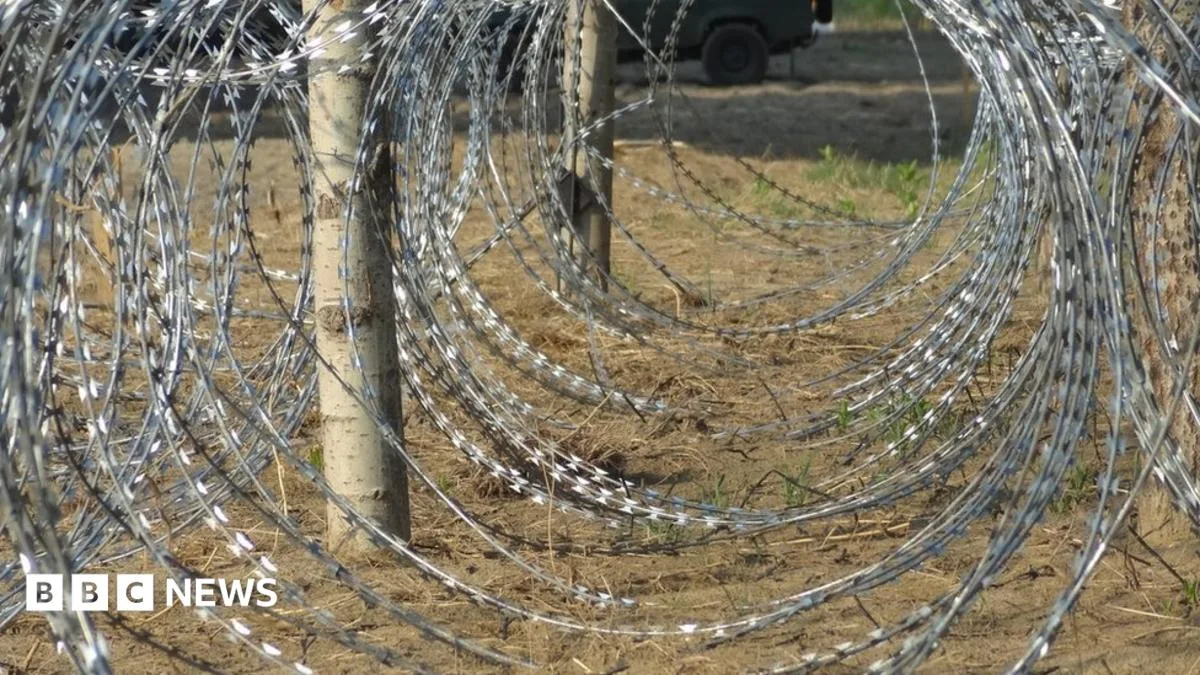
Stretching across 110 miles of stark, flat countryside stands Hungary's formidable barbed wire fence, a physical barrier constructed specifically to deter migrants. Designed with steel spikes capable of tearing human flesh, this imposing structure has successfully prevented over one million individuals from entering Europe illegally during the past decade.
Defiance Against Brussels
The European Union's bureaucrats in Brussels strongly opposed the fence, refusing to export the necessary steel spikes when Hungary began construction during the 2015 migration crisis. Undeterred, the rebellious former Communist nation—strategically positioned on a key transit route for Middle Eastern refugees and economic migrants traveling through Serbia into Western Europe—responded by rapidly establishing its own factory to manufacture the required materials.
Once completed, the barrier produced dramatic results: migration rates plummeted by an extraordinary 95% or more, dropping from approximately 400,000 crossings in 2015 to fewer than 18,000 by 2016. Today, annual numbers have dwindled to a mere trickle of under 30, indicating that asylum seekers have largely abandoned attempts to enter via Hungary.
Orban's Pride and Political Stance
This now world-famous barrier, partially constructed using prison labor from Hungary's criminal population, represents the pride and joy of Prime Minister Viktor Orban. In the lead-up to crucial elections, Orban declared: "Only we built a fence. Only we said no to Brussels. Only we stopped mass migration. Our people decide who enters, our culture, our future."
During a recent visit to the border in cold, drizzling rain—a two-hour drive from Budapest—armed guards patrolled diligently in vehicles along tracks adjacent to the fence. Workers arrived in white trucks, unloading shiny new coils of spiked wire to repair any potential breaches that migrants might exploit from the Serbian side.
Border Enforcement and EU Tensions
Border guard Nadai Zoltan explained the strict enforcement protocol: "It is impossible here to give an illegal migrant a hotel room as you do in Britain. We take them immediately to the border gate at the fence and tell them to leave." He recounted incidents during peak migration periods when migrants became aggressive, attacking guards with stones, while Serbian authorities discovered migrants armed with guns.
The electrified fence, costing millions of euros, activates loudspeaker warnings in English at the slightest touch from the Serbian side, commanding intruders to "go away." Any migrant lingering near the barrier quickly encounters Hungarian guards arriving in fleets of trucks to chase them away from the border.
However, Hungary's defiance has come at a price. The European Union imposes daily fines of one million euros (£870,000) as punishment for Hungary's policy of turning back illegal migrants and refusing asylum applications. Orban also rejects Brussels' demands that Hungary accept a share of asylum seekers entering the bloc elsewhere annually, resulting in EU-Hungary relations reaching an all-time low.
Election Showdown and Corruption Allegations
This weekend's crucial elections could potentially end Orban's 16-year tenure in power. The contest has become a two-horse race between his ruling hard-Right Fidesz Party and the emerging Tisza party, led by former Orban devotee Peter Magyar, who has since defected and been labeled a puppet of Brussels.
Magyar, previously an obscure middle-ranking civil servant, gained prominence in 2023 after breaking ranks and launching blistering attacks against the Orban government. His campaign released tape recordings featuring his ex-wife, former justice minister, alleging widespread corruption among officials and ministers.
In an astonishing surge, Magyar has risen from obscurity to lead in recent polls, with one survey showing his party seven points ahead, though others indicate Orban's party has rallied in the final days. Magyar has galvanized disillusioned voters across the political spectrum through social media and vigorous campaigning, visiting six cities daily over the past fortnight to circumvent Orban's tight control over national media.
International Implications and Voter Dilemmas
András Cser-Palkovics, mayor of Szekesfehervar and a Fidesz member considered one of the party's few independent voices, acknowledged: "There's no doubt there is significant support behind Tisza. I think that this race is going to be a very tight one."
A Tisza victory would dismantle Orban's powerbase, potentially bringing Hungary closer to Brussels and increasing hostility toward Putin's Russia, which Orban counts as an ally. Recent reports from Bloomberg News claim to have obtained a Hungarian government transcript of an October call between Orban and Putin, where Orban reportedly compared their relationship to that of a "mouse" ready to assist the Russian "lion."
Critics have described Orban as Putin's "Trojan horse," suggesting he willingly assists the Russian leader in destabilizing Western Europe and the EU. Despite this, US Vice President JD Vance recently endorsed Orban during a visit to Hungary, though his intervention reportedly triggered a three percent drop in Orban's poll numbers according to political sites.
During Vance's speech, President Donald Trump made a surprise phone call, prompting deafening cheers from the audience when they recognized his voice. Trump praised Hungary's leadership, stating: "Viktor didn't allow people to storm in and invade your country like other people have."
Voter Sentiments and Future Uncertainties
On the ground, voters express deep indecision. A 38-year-old truck driver and father of three in Budapest summarized the dilemma: "We like Mr Orban's policies on protecting our family life, the tax breaks for mothers which encourage more births. But the rumours of corruption scandals are the continual problem with his Government. I have always voted for Orban, but this time it will be his rival Peter Magyar."
Ironically, Hungary's election occurs amid growing European support for leaders who secure borders and prioritize their own citizens. Right-wing parties like National Rally in France and AFD in Germany top polls as populations resist uncontrolled borders and mass migration.
This presents Hungarian voters with a serious dilemma. While Magyar's party claims to maintain anti-immigration stances, his determination to reset Hungary-EU relations could potentially reverse the country's firm border controls, possibly leading to the removal of the barbed-wire fence and renewed migrant flows from Serbia and the Balkans.
A woman in her 70s exiting a Budapest church expressed widespread concern: "We are worried that Hungary will become a vassal state of Brussels like all the other EU nations. We leave our keys in the door, crime is low, we feel safe. Why would we want to alter that by letting in everyone who wants to live here?"
The election represents a pivotal moment for Hungary. An Orban victory could lead to attempts to loosen or even sever EU links, while his defeat would likely end Hungary's defiant stand against Brussels. As voters prepare to cast their ballots, the outcome remains uncertain, with profound implications for Hungary's future direction and European migration policies.