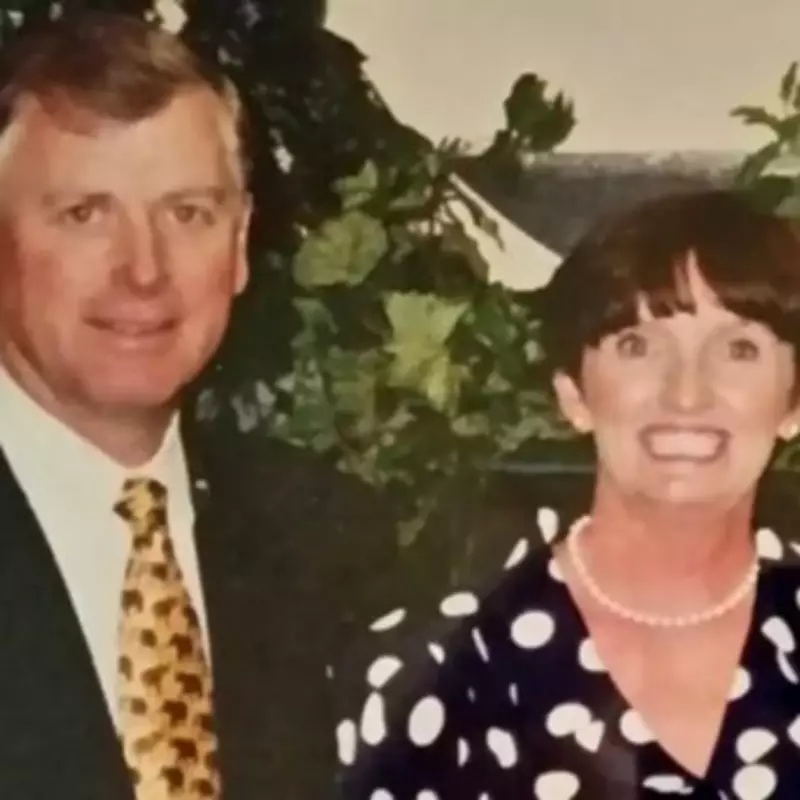
Netflix's Swindlers Revisits Julia Holmes' Four-Decade Fraud Spree
The extraordinary and shameless pattern of deception by Julia Holmes has been thrust back into the limelight by Netflix's new true crime series Swindlers. Holmes, who spent four decades weaving a web of financial ruin across two continents, is featured as one of Ireland's most prolific fraudsters—a woman whose lies were as complex as they were audacious.
A Web of Lies and Multiple Identities
To the outside world, she often appeared composed, articulate, and, at times, vulnerable. But behind that carefully maintained facade was a decades-long pattern of deception. Over a period of around 40 years, Holmes lived under more than 40 different aliases, reinventing herself repeatedly as she moved between Ireland and the United States.
Born Cecilia Julia McKittrick, she adopted names including Elizabeth Holmes Parrish, Julia O'Neill, and Jay Holmes, allowing her to maintain multiple overlapping identities while continuing her schemes. Her crimes, as documented in the series through interviews with investigators, victims, and journalists, ranged from investment fraud to elaborate personal deceptions designed to manipulate those closest to her.

Fabricated Illnesses and Manipulative Claims
One of the most striking aspects of her story is the way she used fabricated personal circumstances to gain sympathy and credibility. According to those featured in the documentary, Holmes claimed to be suffering from terminal cancer at one point, presenting herself as gravely ill while continuing to shamelessly swindle.
At another stage, she told people she was pregnant at the age of 59—an extraordinary claim that, investigators say, formed part of her broader pattern of manipulation. Her ability to convince others extended beyond casual acquaintances.
In the United States, she lived with her husband Clyde Parrish, during which time she defrauded a number of individuals, including her husband's oncologist, Denis Rose, who treated Parrish for cancer. Rose later reported losing around $400,000 (£302,000) as a result of her actions. He was one of the key figures whose testimony contributed to bringing her activities to the attention of authorities.
International Schemes and Lavish Lifestyle
Holmes' schemes were often complex and international in scope. One example involved a property investment scam in Texas, where she persuaded investors to put money into land that did not exist, promising substantial returns that never materialised.
According to FBI Agent David Mohr, who is featured in the documentary, Holmes appeared to fund a lifestyle far beyond her legitimate means, spending freely on vehicles and luxury items while continuing to present herself as someone of status and credibility. "She was writing cheques for cars, Rolex watches, and other high-value purchases," he explained, highlighting the contrast between her apparent income and her actual financial position.
Convictions and Continued Deception
Her activities eventually led to arrests and convictions in both the United States and Ireland. After serving a prison sentence in the US, she was deported to Ireland in 2005, where she continued to offend. Further convictions followed, including a 2009 case involving fraud worth approximately £1 million, for which she received a custodial sentence.
By that point, she had accumulated more than 20 convictions related to deception and fraud. Despite repeated encounters with the justice system, Holmes continued to operate under different identities, adapting her approach but maintaining the same underlying tactics by gaining trust, fabricating narratives, and exploiting personal relationships for financial gain.
Later Life and Tragic End
After meeting Thomas Ruttle, the pair became involved in a honey-selling venture that was later described as fraudulent. Family members of Ruttle have spoken publicly about the impact Holmes had on his life, alleging that her influence contributed to a deterioration in his relationships with his children. "She changed everything," one family member said in testimony featured in the series, describing her as manipulative and controlling.

In 2015, Holmes and Ruttle were found dead in their home in Limerick in what was believed to be a joint suicide involving carbon monoxide. The Netflix documentary Swindlers delves deep into this tragic conclusion, exploring how her lifelong deception ultimately led to devastating consequences for herself and those around her.