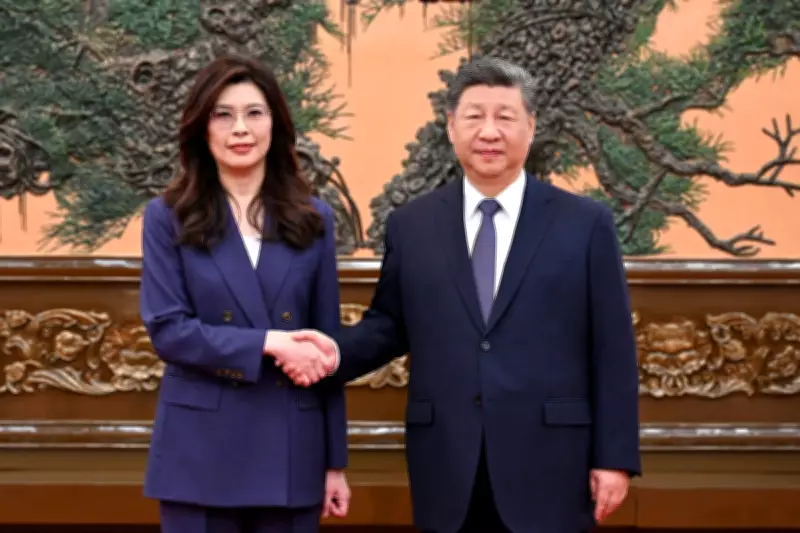
China has announced a significant move to resume certain ties with Taiwan, including the restoration of direct flights to mainland cities and the import of Taiwanese aquaculture products. This development follows a high-profile meeting between Chinese President Xi Jinping and Cheng Li-wun, the leader of Taiwan's opposition Kuomintang Party, where both leaders emphasised the need for peace, though specific details were not provided.
Background of Strained Relations
Relations between China and Taiwan have been notably strained since 2016, following the election of Tsai Ing-wen from the Democratic Progressive Party as president. Since that time, Beijing has largely ceased official dialogue with Taiwan's government in Taipei and has routinely dispatched military aircraft and vessels towards the island, heightening tensions in the region.
New Measures Announced
The Taiwan Work Office, under China's Communist Party, issued a statement outlining the new measures. These include exploring the establishment of a long-term communication mechanism between the Communist Party and Taiwan’s Kuomintang Party. Additionally, China committed to facilitating the import of Taiwanese aquaculture products, which had been banned in recent years.

China plans to resume direct flights for other mainland cities, such as Xi'an or Urumqi, to Taiwan. However, the statement remained unclear on how these measures will be implemented in practice. This move addresses connections that China had previously suspended as tensions escalated between the two sides.
Historical Context of Bans
China banned individual trips by Chinese people to Taiwan in 2019. Currently, Taiwan's rules require Chinese visitors to hold a valid resident visa from another country, such as the United States or the European Union, to apply for a visitor visa. In terms of trade, China banned the import of Taiwanese pineapples in 2021 and later extended the import ban to products including grouper fish, squid, tuna, and other fruits.
After the initial ban on grouper, Taiwan’s Ministry of Agriculture approached China about making adjustments to ensure it met import requirements. China replied with a limited list of individual companies that were allowed to sell to China, but without providing a clear explanation. In response, Taiwan issued a statement on Saturday, indicating it would "continuously assist farmers and businesses in expanding into overseas markets" to diversify risk.
Infrastructure Proposals
China also stated it would work toward the construction of a bridge that would connect to Matsu and Kinmen, Taiwanese islands that are geographically closer to China. This project is a longstanding proposal that Beijing has previously announced, though it remains uncertain when or if it will be realised.
Overall, these announcements represent a cautious step towards easing tensions, though the broader geopolitical context remains complex. Taiwan governs itself, but China asserts sovereignty over the island, a point of contention that continues to shape bilateral relations.