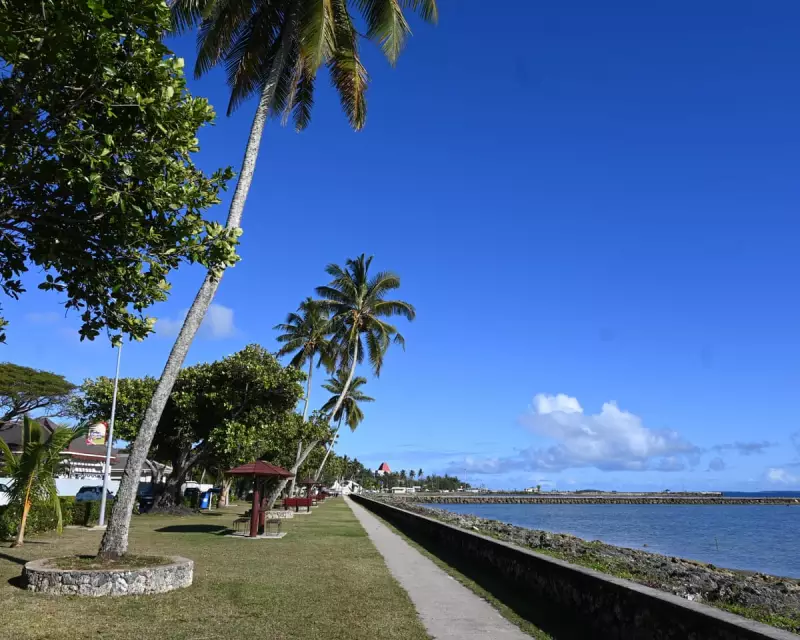
The Trump administration has sparked anger and disbelief by announcing it will impose significant visa and entry restrictions on the Pacific island nation of Tonga, alongside 14 other countries, effective from 1 January.
Expanding the Ban: A New List of Restricted Nations
In a move framed as protecting national security, the White House confirmed in December it was expanding its controversial travel ban. Five countries – Burkina Faso, Mali, Niger, South Sudan, and Syria – will face a full entry bar. A further 15 nations, including Tonga, will be subject to what the administration terms "partial restrictions and entry limitations."
The list of countries facing these partial restrictions is: Angola, Antigua and Barbuda, Benin, Cote d'Ivoire, Dominica, Gabon, the Gambia, Malawi, Mauritania, Nigeria, Senegal, Tanzania, Tonga, Zambia, and Zimbabwe. Despite the "partial" label, visas will reportedly only be issued in rare cases, such as for US government employees.
Why Tonga? The Official Justification and Fierce Backlash
With a population of just 100,000, Tonga is the sole Pacific island country included. US officials justified its inclusion by pointing to high visa overstay rates among Tongan nationals, which they claim exceeds 14% for certain visa categories.
This rationale has been met with fierce criticism from community leaders and politicians. Dr Tevita Kaili, a Tongan professor at Brigham Young University in Hawaii, stated unequivocally, "Tongans are not a threat to US security." He highlighted Tonga's military support for US campaigns in Iraq and Afghanistan and its aligned voting record at the United Nations.
The decision strikes at the heart of significant diaspora connections. The US is home to the largest Tongan community outside the homeland, with an estimated 70,000 people, primarily in California and Utah. Globally, around 150,000 Tongans live abroad.
Broader Consequences and Cultural Insult
The restrictions create immediate practical and emotional hardships. They affect not only new travellers but also Tongans currently in the US on work or student visas, who may fear leaving lest they be unable to return. Dr Kaili expressed sorrow that parents may be barred from attending their children's graduation ceremonies in America.
The policy has also been condemned as a cultural affront. Hawaii State Senator Jarrett Keohokalole strongly denounced the inclusion of Tonga, calling it "unjustified and deeply offensive to the people of Hawaii, where Polynesian identity is foundational." He argued the move unfairly targets Pacific island communities and reflects a pattern of immigration policies impacting people of colour.
Melino Maka, a Tongan community leader in New Zealand, voiced a sense of betrayal, suggesting the policy was racially motivated. "Those connections are based on the colour of our skin," Maka said, adding that he would rather focus on strengthening relationships with countries like China than "chasing this road to nowhere" with the US.
The inclusion of Tonga in this expanded travel ban has thus ignited a firestorm of protest, framed not just as an immigration issue, but as an unwarranted slight against a longstanding Pacific ally and its global diaspora.