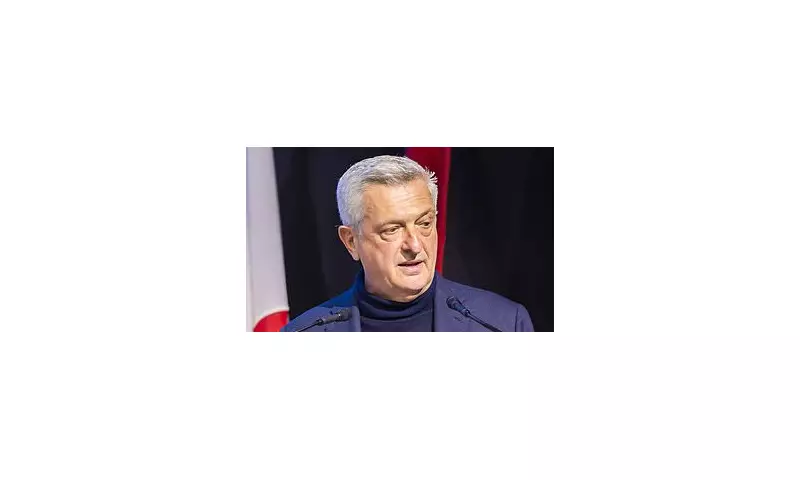
The outgoing head of the United Nations refugee agency has described the arrival of more than 40,000 people in the UK via small boats this year as a "small number" in global terms, urging Britain to accommodate such figures annually.
UN Official Calls for Perspective on UK Arrivals
Filippo Grandi, the 68-year-old Italian diplomat who steps down as UN High Commissioner for Refugees at the end of December, made the remarks during an interview with actress Cate Blanchett on BBC Radio 4. He stated that the 41,000 arrivals recorded so far in 2025 represent a modest figure compared to the challenges faced by other nations.
"The UK's 41,000 arrivals this year represented a small number compared to what other countries faced," Grandi said. He equated the annual total to the "daily arrivals" of asylum seekers in countries like Chad, highlighting the scale of displacement elsewhere.
Grandi argued that Britain should have the capacity to accommodate this level of refugee intake each year. However, he conceded that asylum systems in Western nations, including the UK, need to be organised much better. This includes the deportation of individuals whose claims do not qualify for protection.
Warning Over 'Hostile Environment' and Political Rhetoric
The senior UN official issued a stark warning about the consequences of poorly managed asylum processes. "There is nothing that creates a hostile environment as [much as] a badly organised welcome, and unfortunately we've seen that," Grandi stated.
He directly criticised past Conservative governments for fuelling public hostility by allowing a perception of "chaos" to develop around migration. "In the UK, the small boats and the challenges of dealing with these people and some of the choices that were made... have conveyed the wrong impression that this brings chaos," he told the BBC.
Grandi warned that when systems fail, it opens the door to dangerous rhetoric. "When this doesn't happen, people say there's no leadership in this chaos, it's dangerous, let's listen to those who say, 'Push back, build walls, don't rescue people at sea'," he explained.
He further argued that Western politicians must do more to support their populations to foster better attitudes towards migrants, suggesting that failure here breeds the "propaganda that people come to steal jobs and threaten values and undermine security."
Record Crossings and Government Response
Grandi's comments come as the latest Home Office figures show the situation in the Channel remains acute. On Saturday, December 20th, 803 people made the crossing in 13 dinghies, bringing the total for 2025 to 41,455. The day itself saw 1,075 arrivals—the highest single-day figure since October 8th and a potential record for December in seven years.
This continues a busy period, despite December traditionally being a quieter month due to harsh winter conditions in the Channel. The annual record of 45,755, set in 2022, could yet be challenged.
In response, the Labour government under Home Secretary Shabana Mahmood has announced sweeping reforms, including:
- Making refugee status temporary.
- Ending guaranteed financial support for refugees with assets.
- Creating new "safe and legal routes" for genuine asylum seekers.
A Home Office spokesman said: "The number of small boat crossings are shameful and the British people deserve better." The government cites the removal of almost 50,000 people and a deal with France to return arrivals as evidence of action.
Internationally, cooperation is intensifying. Germany recently passed a law that could jail people smugglers targeting the UK for up to 10 years. Foreign Secretary Yvette Cooper hailed this as a result of "close partnership working." France has also indicated plans to halt boats at sea before they embark for the UK.
However, critics remain sceptical. Fisherman Matthew Coker, commenting on a recent lull in crossings, attributed it solely to bad weather, calling claims of progress "farcical." As the year ends, the debate over how to manage Channel crossings and the UK's asylum system, framed by Grandi's international perspective, shows no sign of abating.