US Tourists Urged to Reconsider Mexico Travel During Spring Break Season
American travelers are being strongly advised to avoid Mexico during the upcoming Spring Break period, as one of the nation's most powerful and violent drug cartels may continue seeking retaliation for the killing of its leader last weekend. The warning comes from security analysts who highlight persistent dangers despite government efforts to control the situation.
Violent Aftermath of Cartel Leader's Death
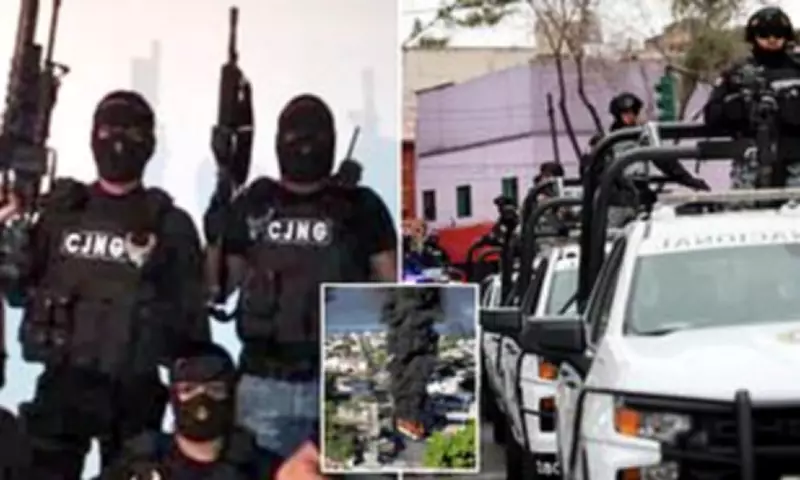
On February 22, federal forces conducted an operation that resulted in the death of Nemesio 'El Mencho' Oseguera Cervantes, the notorious head of the Jalisco New Generation Cartel (JNGC). The immediate aftermath saw fiery violence erupt across Mexico, with retaliating cartel members setting vehicles and businesses ablaze in 20 of the country's 37 states. Intense shootouts between cartel operatives and security forces claimed at least 70 lives, including 25 Mexican National Guard soldiers.
Mario Braga, a Latin American security analyst at RANE, told the Daily Mail that while Mexican authorities have deployed forces that have "gotten the worst of the chaos under control," significant risks remain. "But of course, there is the risk that cartel members will try to continue some sort of retaliation," Braga cautioned, emphasizing that the cartel is most likely to target government buildings or security forces, potentially leading to dangerous shootouts that pose indirect security risks to bystanders.
Persistent Threats of Narco-Blockades and Violence
The security expert further warned that the JNGC may continue creating narco-blockades by igniting vehicles on roads, particularly targeting strategically important routes such as those leading to airports. "These kinds of risks, they are likely to persist over the coming days and perhaps weeks," Braga stated, though he noted the scale would be "nothing like on Sunday in the kind of the immediate reaction."
Looking beyond the immediate aftermath, Braga highlighted longer-term dangers stemming from the power vacuum created by El Mencho's death, which also claimed his second-in-command. This leadership void could trigger months of infighting and violent clashes between rival cartel factions. The JNGC maintains "some degree of presence in at least 27 out of the country's 32 states," operating with cells that function somewhat independently under a franchise-like model. "But that means that once you lose the leadership, there is significant risk for infighting... And then, of course, we're talking of a time horizon for several months or perhaps even years to come," Braga explained.
Specific Dangers for Foreign Travelers
While cartel violence typically targets those involved in drug trafficking or other illegal activities, Braga noted that foreigners can accidentally become victims through simple misidentification. Driving into the wrong neighborhood with an unfamiliar vehicle might lead cartel members to mistake tourists for police officers or undercover agents, potentially resulting in immediate shootings or abductions.
The JNGC is particularly notorious for brutal tactics, with their "modus operandi" often involving "beheadings" or leaving "parts of bodies dismembered across the road." However, Braga included an important caveat: cartels are "profit-oriented enterprises" that generally avoid directly targeting Americans or other foreigners, as such incidents would attract unwanted attention from both Mexican and U.S. authorities.
World Cup Concerns and Safety Recommendations
Looking beyond Spring Break, the upcoming World Cup scheduled to begin in Mexico on June 11 presents additional concerns. While Mexico City is expected to remain relatively safe, Guadalajara—hosting games at one of three tournament stadiums—serves as the capital of Jalisco state and a JNGC stronghold. Braga reassured that the cartel is "not likely that [they] would proactively seek to undermine the event itself, because that would hurt their business... from a revenue perspective."
For tourists planning to visit Mexico despite the risks, Braga offered several precautionary measures:
- Monitor how the security situation evolves, as conditions "can quickly change and there can be triggers that lead to an escalation of violence"
- Stay updated with travel warnings issued by U.S. and Canadian governments
- Seek safety recommendations from local hotel staff or short-term rental hosts regarding areas to avoid, curfews, and safe driving routes
- Travel in groups rather than alone, particularly when commuting from stadiums or airports
- "Understand the kind of local dynamics that may help mitigate these security risks"
"If you are in a different country, it's important to understand the kind of local dynamics that may help mitigate these security risks," Braga emphasized, underscoring the importance of situational awareness for anyone traveling to regions experiencing cartel-related violence.