Massive Petition Backs Trans Community as Women Reject Discrimination
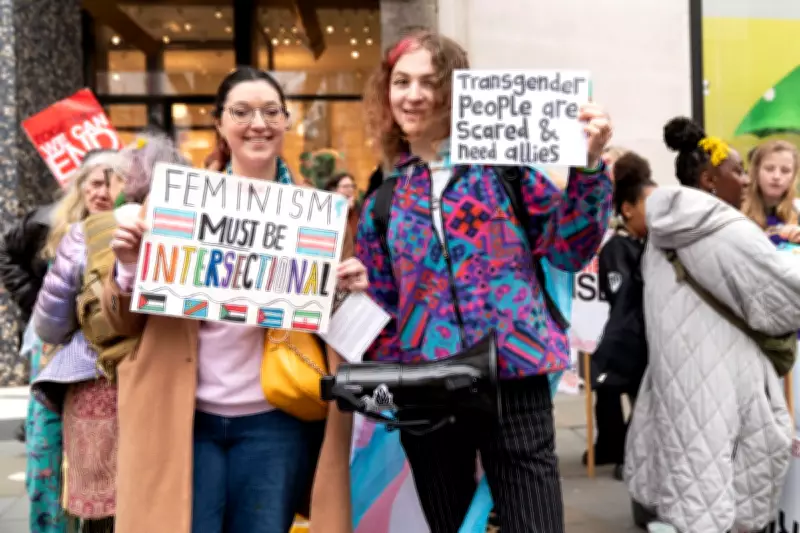
In a powerful show of solidarity, over 100,000 cisgender women have now signed the "Not In Our Name" petition in support of transgender people. The movement highlights growing public opposition to policies that marginalise trans individuals, with organisers warning against repeating the damaging logic of Section 28 that targeted LGBTQ+ communities in the past.
Political and Public Support Grows
The petition's momentum comes alongside significant political developments. Education Secretary Bridget Phillipson has returned EHRC guidance for revisions to ensure greater inclusivity for trans people - a notable move given her previously cautious stance on trans issues. This follows last year's Supreme Court ruling concerning transgender access to single-sex spaces, which continues to spark national debate.
Public opinion appears to be shifting substantially. A recent survey about Hampstead Heath's swimming ponds revealed that 86% of respondents rejected calls to segregate men's and women's facilities. Notably, 84% of those surveyed had actually swum at the ponds, and 74% identified as London residents, indicating informed local perspectives rather than abstract opinions.

Grassroots Movements and Personal Stories
Last weekend saw protests across the United Kingdom against proposals to exclude transgender children from Girl Guiding organisations. Simultaneously, Women's Institute groups are reportedly closing in response to restrictions preventing them from maintaining inclusive membership policies.
"These are not 'trans activists' in the stereotypical sense," explains petition supporter Kat Brown. "These are mothers, relatives and friends whose loved ones are being monstered in the public eye. We're witnessing ordinary people standing up against discrimination."
The human cost of exclusionary policies has been tragically illustrated by cases like that of Alice Litman, who died by suicide at age 20 while facing a five-year wait for gender identity assessment. Her mother, former psychologist Caroline Litman, has become a prominent voice highlighting the challenges confronting trans lives.
Safety Arguments Challenged
Many signatories express particular frustration with campaigns that invoke women's safety to justify trans exclusion. "What makes me and so many other women so intensely furious is that this campaign uses our safety as a lightning rod," Brown states. She references personal experiences of harassment and the murder of Sarah Everard by a police officer as examples of genuine safety concerns that have nothing to do with transgender people.
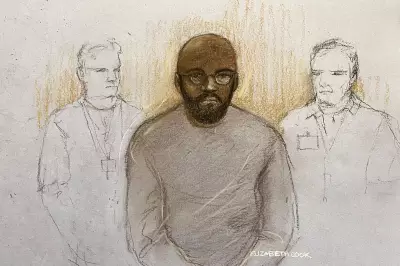
Statistical evidence supports this perspective. Cisgender men and boys remain overwhelmingly more likely to commit harm against both men and women. Recent news coverage highlighted cases including 94 children harmed by orthopaedic surgeon Yaser Jabbar, a 15-year-old boy pleading guilty to murdering 12-year-old Leo Ross, and a 12-year-old girl strangled and raped in Nuneaton - none involving transgender perpetrators.
"Men don't need to cross-dress to attack us, and it's insulting to suggest otherwise," Brown argues. "It's also deeply insulting to anyone enduring the harrowing stress of gender dysphoria."
Historical Parallels and Financial Backing
For many signatories, current anti-trans campaigns evoke painful memories of Section 28, the 1988 legislation that prohibited "promotion" of homosexuality in schools. "This anti-trans focus takes me right back to Section 28 and anti-gay treatment that helped me and many of my peers to grow up utterly clueless in the Nineties," Brown recalls.
She suggests that disproportionate attention given to gender-critical voices stems from substantial financial backing rather than public support. "I believe the only reason gender critical people are listened to to such a disproportionate extent is that they are backed with money to bring lawsuits," she states, referencing organisations like Sex Matters that repeatedly pursue legal challenges regarding trans issues.

The Real Motivation Behind Exclusion
Critics argue that anti-trans campaigns ultimately serve different purposes than protecting women. "Focusing on trans people gives a certain type of person a sense of power and a focus for their own rage," Brown suggests. "They can't tackle the domination of men in society, so they target a vulnerable minority instead."
She concludes with a direct challenge: "Logic doesn't matter to these people, only cruelty and power. They don't want trans people to exist, full stop. It's time for them to admit that they find them yucky, rather than dangerous, and stop hiding behind 'women's safety' as an excuse."
The petition represents a growing chorus of voices demanding that policymakers "listen to the hundreds of thousands of women who are fed up with being used as a deflection from the real issues impacting our lives." As Brown emphasises: "We all know that the threat is not coming from the trans community."