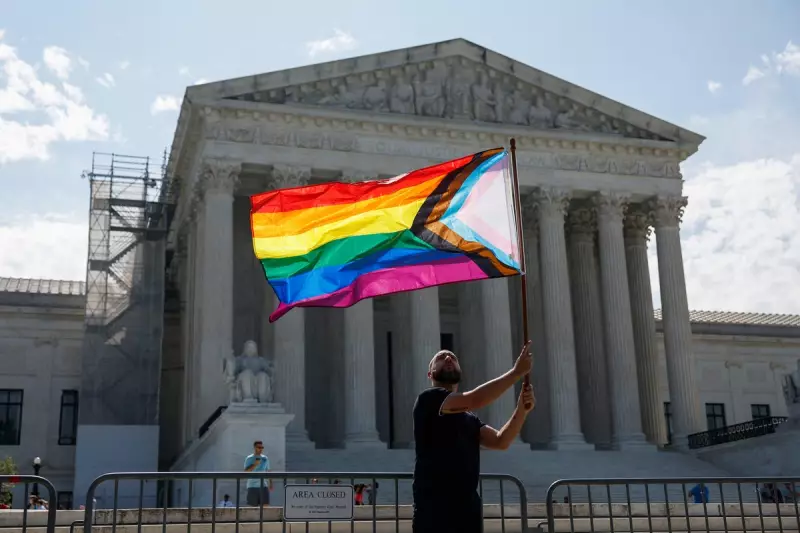
In a significant ruling for civil liberties, the United States Supreme Court has decisively rejected a bid to undermine the national right to same-sex marriage. The court's refusal to hear the case on Monday 10 November 2025 effectively upholds the decade-old Obergefell v Hodges decision, which legalised marriage equality across all fifty states.
The Davis Petition and Legal Backdrop
The petition was brought by Kim Davis, a former county clerk from Kentucky who gained notoriety in 2015. Davis had refused to issue marriage licenses to same-sex couples, citing her personal religious beliefs. This latest legal challenge sought to reverse a lower court ruling that required her to pay more than $300,000 in damages to a couple she had denied a license.
Davis and her legal team argued that her actions were protected under the First Amendment, claiming a right to religious exemption even in her capacity as a public official. However, the Supreme Court justices denied her petition without comment, allowing the financial penalty and the underlying marriage equality precedent to stand.
Reactions and Wider Implications
Legal experts and major LGBT+ advocacy groups had been watching the case closely, though many were sceptical that Davis's specific petition would succeed. Their primary concern centred on the potential for the court's conservative majority to re-examine and potentially roll back hard-won LGBT+ rights in the future.
This swift ruling provides immediate reassurance to the community, confirming that the foundational right to marriage remains secure. The decision underscores the principle that public officials cannot use personal religious beliefs to justify denying statutory services to citizens.
A Decade of Precedent Upheld
By letting the lower court's decision stand, the Supreme Court has reinforced the legal and financial consequences for officials who defy the law. The $300,000 penalty against Davis serves as a powerful deterrent to others who might consider similar actions. This outcome solidifies the legal landscape a decade after Obergefell v Hodges and marks a clear defeat for efforts to chip away at marriage equality through individual religious exemption claims.