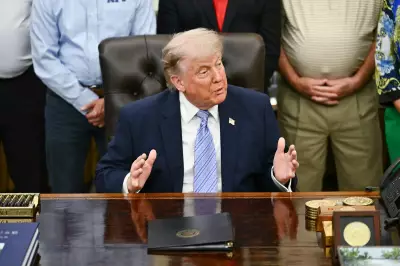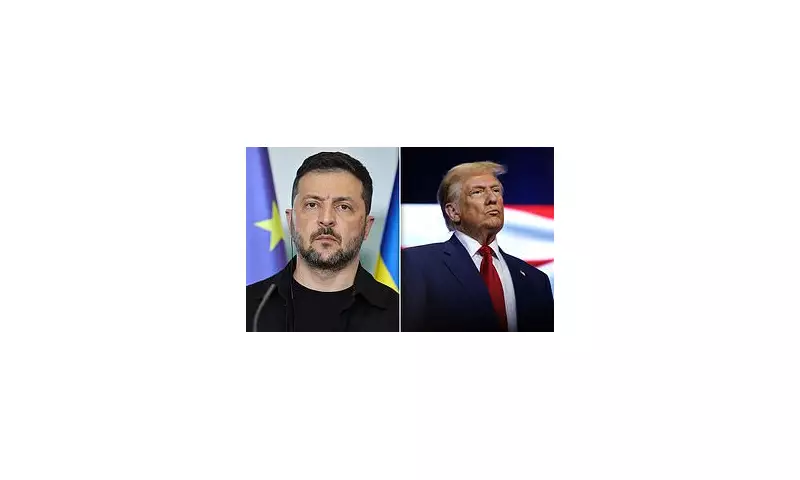
American voters are sharply divided over their nation's future role in diplomatic efforts to end the war in Ukraine, according to an exclusive new poll released ahead of a high-stakes meeting between former President Donald Trump and Ukrainian leader Volodymyr Zelenskyy.
A Nation Split on Diplomatic Involvement
The Daily Mail/J.L. Partners survey of 1,000 registered voters found public opinion almost evenly fractured. Forty-one percent believe the United States should maintain its involvement in negotiations, while 39 percent argue Washington should step back. A significant 20 percent remain unsure, underscoring a clear lack of national consensus as the conflict approaches its fourth year.
This division cuts across traditional party loyalties, even fracturing the Republican base. Among voters who supported Donald Trump, the split is remarkably narrow: 43 percent back continued US engagement, with 42 percent opposed.

Zelenskyy Confirms Florida Talks Amidst Public Skepticism
The polling data emerges as President Zelenskyy confirmed he will meet Donald Trump in Florida this Sunday. The talks are part of an intensified, US-led diplomatic push to find a resolution to the brutal conflict that began with Russia's full-scale invasion on 24 February 2022.
Zelenskyy stated the discussions will centre on security guarantees for Ukraine and a proposed 20-point peace framework, which he described as roughly 90 percent ready. An economic agreement is also on the agenda, though the Ukrainian leader cautioned it is unclear if any final deals will be struck during the meeting.
Territorial issues are expected to be raised, touching on the war's most contentious point. Moscow has persistently demanded that Kyiv relinquish control of remaining Ukrainian-held territory in the eastern Donbas region—an ultimatum Ukraine has repeatedly rejected. To date, Russian forces have seized most of the Luhansk region and about 70 percent of Donetsk.
Public Wary of Concessions, Contrasts with Other Conflicts
The poll suggests deep American scepticism about potential outcomes. When asked about specific concessions, only 36 percent of voters said it would be acceptable for Ukraine to cede territory currently occupied by Russia in exchange for binding security guarantees and neutrality. Thirty-one percent deemed such a deal unacceptable.
Support plummeted for broader territorial concessions. A mere 26 percent found it acceptable for Ukraine to give up additional land not currently under Russian control, while 41 percent said this would be unacceptable. Views on sanctions relief were similarly ambivalent: 31 percent said lifting sanctions on Russia as part of a peace deal would be acceptable, versus 33 percent who said it would not.
This polarisation over Ukraine stands in contrast to clearer US voter sentiment on another long-running conflict. The poll found 45 percent support continued American involvement in Israel-Palestine negotiations, with only 36 percent opposed.
The J.L. Partners poll was conducted on 20-21 December with a margin of error of plus or minus 3.1 percentage points. It arrives as fighting continues on multiple fronts, with recent Russian aerial bombardments killing civilians in Kharkiv, Zaporizhzhia, and Mykolaiv. Ukraine has responded with strikes on Russian energy infrastructure, including a major oil refinery in Rostov using UK-supplied Storm Shadow missiles.