The long-awaited public release of documents related to the Jeffrey Epstein case has done little to resolve the enduring mysteries surrounding the financier's crimes and his ability to evade serious federal prosecution for years.
Missing Pieces and Public Frustration
On Saturday, 20th December 2025, the US Justice Department began a rolling disclosure of tens of thousands of pages tied to Epstein. However, the initial flood of material was notable for what it omitted. Crucially absent were FBI interviews with survivors and internal Justice Department memos that examined charging decisions. These records could have explained how investigators viewed the case and why Epstein was permitted in 2008 to plead guilty to a relatively minor state-level prostitution charge, rather than facing federal sex trafficking charges.
The gaps extended further. The records, mandated for release under a recent Act of Congress, contained no references to several powerful figures long linked to Epstein, including Britain's former Prince Andrew. This omission has renewed questions about the scope of the investigations and the true value of these disclosures for public accountability.

This approach has angered some of Epstein's accusers and members of Congress who fought for the transparency law. Marina Lacerda, who alleges Epstein began sexually abusing her at his New York City mansion when she was 14, stated: "I feel like again the DOJ, the justice system is failing us." Instead of concluding a years-long battle for transparency, Friday's release marked the beginning of an indefinite wait for a complete picture.
What the Documents Do Reveal
Among the fresh details were insights into the Justice Department's decision to abandon a federal investigation into Epstein in the 2000s, a move that paved the way for his state plea deal. The release also included a previously unseen 1996 complaint accusing Epstein of stealing photographs of children.
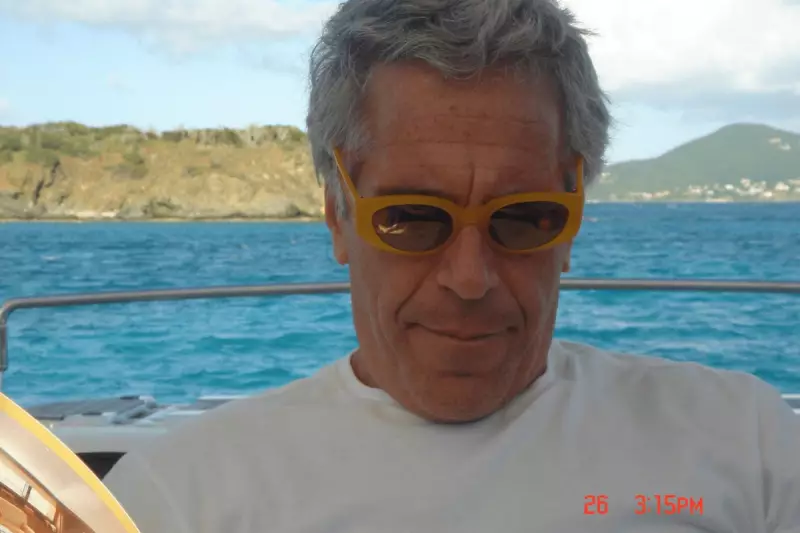
A significant portion of the material comprised images of Epstein's properties in New York City and the U.S. Virgin Islands, alongside photos featuring celebrities and politicians. These included a series of never-before-seen photos of former President Bill Clinton, but very few of former President Donald Trump. Both men have been associated with Epstein but have since disavowed the friendships. Neither has been accused of any wrongdoing in connection with Epstein, and there was no indication the photos played any role in the criminal cases.
Perhaps the most substantive revelations came from grand jury transcripts, made public for the first time. They included testimony from FBI agents who described interviews with several girls and young women paid to perform sex acts for Epstein. The youngest was 14 and in the ninth grade. One victim described being sexually assaulted when she resisted his advances during a massage.
Another woman, then 21, testified about how Epstein hired her when she was 16 for sexual massages and how she later recruited other girls. "For every girl that I brought to the table he would give me $200," she said, adding that she advised underage recruits to "lie about it and tell him that you are 18."
Explanations and Ongoing Secrecy
The documents also contained a transcript of an interview with Alexander Acosta, the former U.S. attorney who oversaw the case and later served as Labour Secretary under Donald Trump. Acosta explained his decision not to bring federal charges, citing concerns about whether a jury would believe Epstein's accusers over a decade ago.
He also suggested the Justice Department was reluctant to federalise a case that straddled the line between sex trafficking and soliciting prostitution, matters typically handled by state prosecutors. "I'm not saying it was the right view," Acosta conceded, noting that societal attitudes towards victims have shifted significantly since. "There's been a lot of changes in victim shaming," he said.
Despite a Congressional deadline to make everything public by Friday, the Justice Department is releasing records gradually, citing the time-consuming process of redacting survivors' names. The department has not indicated when more records might arrive.

The documents made public so far represent only a fraction of the material held. Deputy Attorney General Todd Blanche noted that Manhattan federal prosecutors alone possess more than 3.6 million records from sex trafficking investigations into Epstein and his confidant, Ghislaine Maxwell. Many records were already public via court filings or FOI requests, but this is the first time they have been collated in one publicly searchable location.
New documents were often heavily redacted or lacked context. A 119-page document marked "Grand Jury-NY," likely from the investigations that led to charges against Epstein in 2019 or Maxwell in 2021, was entirely blacked out.
Epstein was arrested on federal sex trafficking charges in New York in 2019 but died by suicide in jail shortly after. The quest for full transparency regarding his crimes and the investigative decisions that allowed him to operate with impunity for years continues, with the public and victims awaiting a more complete account.