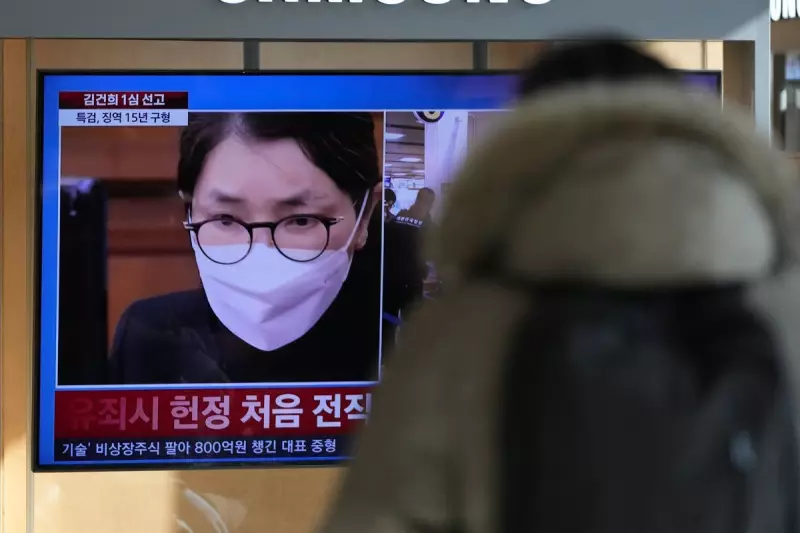
In a landmark ruling that has sent shockwaves through South Korean politics, the former first lady Kim Keon Hee has been handed a 20-month prison sentence for her involvement in a high-profile bribery scandal. The verdict was delivered by the Seoul Central District Court, which found her guilty of accepting illicit payments connected to the controversial Unification Church.
Court Orders Asset Forfeiture and Repayment
The court has mandated that Kim Keon Hee must return a valuable diamond necklace and repay a sum of 12.85 million won, equivalent to approximately £6,500 in cash. This financial penalty underscores the seriousness of the charges and aims to rectify the gains obtained through corrupt practices.
Acquittals and Planned Appeals
While convicted on bribery charges, Kim was acquitted of separate allegations related to stock price manipulation and the receipt of illicit opinion polls. However, prosecutors have indicated their intention to appeal these acquittals, suggesting that the legal battle may be far from over.

Historic Moment in South Korean Politics
This sentencing marks a historic and unprecedented moment in South Korea's political landscape. With Kim Keon Hee's imprisonment, both members of the former presidential couple are now behind bars, following her husband Yoon Suk Yeol's five-year sentence for abuse of power. This dual incarceration highlights the deep-seated issues of corruption within the highest echelons of power.
Ongoing Legal Challenges and Controversial Past
Kim Keon Hee continues to face additional legal cases, including allegations of political interference and improper job appointments. Her history is further marred by controversy, with past accusations of academic plagiarism adding to her troubled legacy. These ongoing proceedings indicate that her legal woes are likely to persist, casting a long shadow over her public image.
The case has drawn significant attention both domestically and internationally, reflecting broader concerns about governance and accountability in South Korea. As the nation grapples with these revelations, the implications for political integrity and public trust remain profound.