Spanish Prime Minister's Wife Formally Charged in High-Profile Corruption Case
The wife of Spanish Prime Minister Pedro Sánchez has been formally charged with corruption in a case that has gripped Spanish politics for two years. Begoña Gómez faces multiple allegations related to her professional activities during her husband's time in office.
Serious Allegations and Formal Charges
On Monday, judicial authorities charged Gómez with influence peddling, embezzlement of public funds, misappropriation of funds, and private corruption. The charges stem from allegations that she used her position as the prime minister's wife to secure a prestigious university position in Madrid and improperly utilized public resources for personal benefit.
Two additional individuals - Gómez's personal assistant and a businessman - also face charges in connection with the case. All three parties have firmly denied any wrongdoing and maintain their innocence against the allegations.

Two-Year Investigation Reaches Critical Stage
Judge Juan Carlos Peinado, who has led the investigation since it began in 2024, stated that his extensive inquiry has uncovered sufficient evidence of potential criminal conduct to proceed with prosecution. The judge has given all involved parties five days to request the opening of oral proceedings or submit defense briefs ahead of a potential trial.
The investigation originated from a complaint filed by anti-corruption campaign group Manos Limpias (Clean Hands), which alleged that Gómez used her influence to secure sponsors for a master's degree course she directed at Complutense University. Although Judge Peinado expelled Manos Limpias from the case late last year for procedural reasons, other plaintiffs joined the proceedings to keep the case active.
Political Reactions and Accusations of Smear Campaign
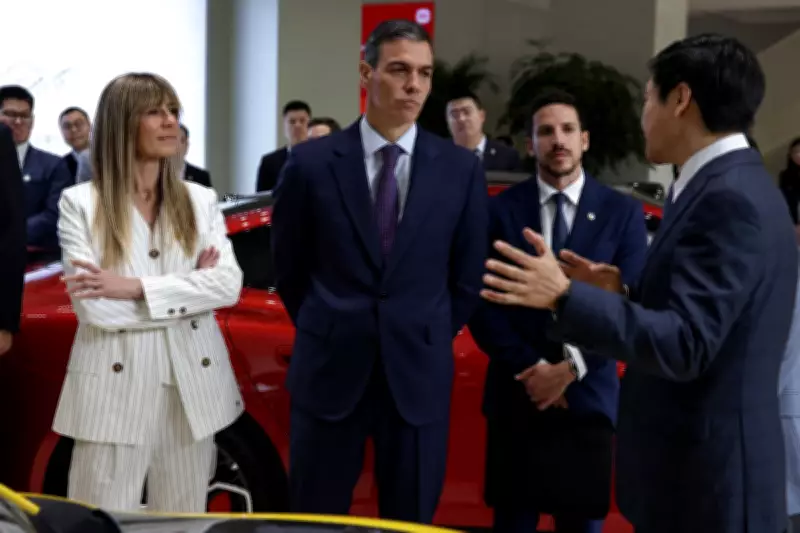
Prime Minister Pedro Sánchez, currently on an official visit to China with his wife, addressed the charges during a press conference. "I only demand the courts do justice," Sánchez stated, adding, "I am convinced that time will put everything and everyone in their place."
Sources within Sánchez's left-wing PSOE party have characterized the legal proceedings as a "baseless" strategy of "character assassination" against the prime minister. One party source told broadcaster La Sexta: "We have been faced with an investigation that is, to say the least, astonishing. In our opinion, it is completely baseless and is part of a strategy by the right and far right and their political and media outlets."
The source continued with strong criticism: "This strategy is nothing less than the harassment and character assassination of the Prime Minister, using every means at their disposal, including his family. Not everything is fair game in politics. The right and far right have crossed a line never before crossed in Spanish democracy."
Opposition Criticism and Broader Context
The conservative People's Party (PP), currently in opposition, described the situation as "absolutely unbelievable." Alma Ezcurra, the party's deputy secretary for sectoral coordination, criticized the timing of the indictment, noting that Gómez was abroad when charged: "There's only one thing to say: the tetraprocesada [four-time defendant] is in Beijing."
Spain's Public Prosecutor's Office has previously called for the case to be closed on several occasions, adding another layer of complexity to the proceedings. The case against Gómez represents just one of several corruption-related investigations involving individuals connected to the Spanish government.
In a separate but related development, the prime minister's brother, David Sánchez, was recently indicted in an investigation into alleged influence peddling linked to his hiring by a regional government. Additionally, former transport minister Jose Luis Abalos faced trial earlier this month over alleged kickbacks connected to public contracts.
The charges against Begoña Gómez come at a politically sensitive time for the Spanish government and have sparked intense debate about the intersection of political power, family connections, and accountability in Spanish democracy.