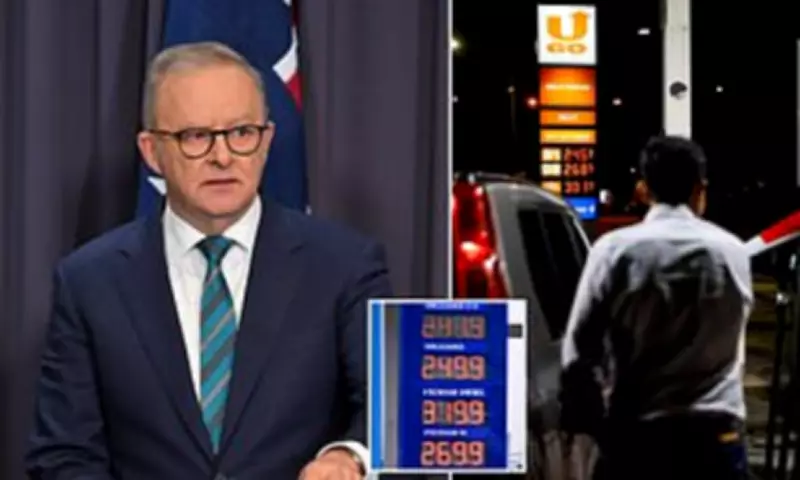
Prime Minister Anthony Albanese has firmly drawn a line in the sand as Australia confronts a worsening fuel crisis, explicitly vowing that the nation will not revert to 'Covid-style' government mandates. With demand skyrocketing and states issuing warnings about strained supplies, the Prime Minister has taken steps to calm public nerves ahead of a pivotal National Cabinet meeting scheduled for Monday.
No Return to Pandemic Restrictions
Albanese has categorically ruled out imposing enforced restrictions on Australians' movements or implementing limits on fuel usage, despite mounting political pressure for decisive federal intervention. Instead, the government is concentrating its efforts on supply-side measures designed to 'keep Australians moving' and maintain national mobility.
'We will get through this. We are not going down the path of Covid-style mandated demand management measures,' Albanese declared in an interview with the Sunday Telegraph. 'We want to keep our nation moving and Australians moving. I am looking forward to a productive discussion with state and territory leaders on Monday.'

High-Stakes Emergency Discussions
The upcoming high-stakes talks will centre on a comprehensive suite of emergency options currently under active consideration. Key proposals include implementing tougher transparency measures at petrol stations, potential adjustments to work-from-home arrangements, and renewed calls for immediate relief at the pump for motorists.
A temporary reduction in the fuel excise and the introduction of a national petrol price tracker are also expected to dominate the discussions. The Opposition has already staked its position, calling on Friday for the excise to be halved for three months, a move they claim would slash prices by approximately 26 cents per litre.
Caution Against Rushed Decisions
However, Prime Minister Albanese has urged caution against hasty decisions, emphasising the need for careful deliberation. 'Any measures we agree to take will be nationally considered and very carefully thought through,' he stated, highlighting the government's measured approach to the crisis.
In preparation for the national cabinet meeting, NSW Premier Chris Minns will hold crisis talks on the fuel emergency with his state and territory counterparts on Sunday. Albanese's intervention comes as premiers intensify pressure on Canberra to assume control of a coordinated national response, privately warning that a fragmented, state-by-state approach, reminiscent of the pandemic, risks exacerbating public anxiety, triggering panic buying, and worsening existing shortages.
Initial Stabilisation Measures Announced
On Saturday, Albanese announced the first in what is anticipated to be a series of measures aimed at stabilising supply chains and reassuring motorists that there is no need for panic. The new legislation will empower the Commonwealth to underwrite private fuel shipments and secure deliveries, particularly as the conflict in Iran constricts global supply chains.
'We are working around the clock to deal with the fuel supply issues,' Albanese affirmed. 'This support from the government will not be business as usual. It has to be additional supplies that are available on the international market, and they will literally underwrite the purchase. Importantly, it will also allow for the purchase of fertiliser and other essentials. I want us to have the strongest possible plans so that we're ready for what may come.'
State-Level Initiatives and Supply Concerns
On Sunday, the Victorian government announced it will temporarily make public transport free in an effort to ease fuel demand and relieve pressure on motorists. This decision coincides with reports that hundreds of fuel stations across the country remain dry, with Australia estimated to have just 38 days of fuel left in reserve, underscoring the urgency of the situation.
The growing calls for the government to slash the fuel excise reflect widespread public concern over rising costs and limited availability. As the crisis deepens, the National Cabinet meeting on Monday will be crucial in determining a unified strategy to navigate the challenges ahead, balancing immediate relief with long-term supply security.