Democrats Escalate Pressure with New War Powers Resolutions Over Iran Conflict
Democratic senators have launched a fresh legislative offensive, filing a series of new war powers resolutions aimed at compelling the United States military to withdraw from hostilities with Iran unless Congress explicitly authorizes the engagement. This move comes as they intensify calls for Republicans to convene public hearings on the conflict, threatening to force votes that could highlight divisions over what they term an "unnecessary war."
Senators Demand Transparency and Accountability
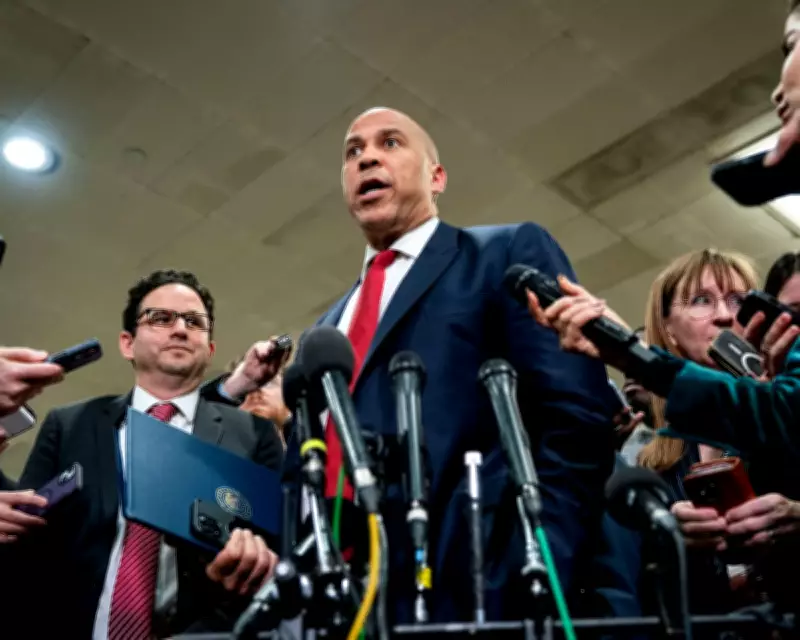
Led by prominent figures including Cory Booker of New Jersey, Tim Kaine of Virginia, Adam Schiff of California, Tammy Baldwin of Wisconsin, and Chris Murphy of Connecticut, the Democrats filed these resolutions under the War Powers Act late last week. Their goal is to pressure Senate Majority Leader John Thune into organizing public hearings with key cabinet secretaries involved in the war effort. If such hearings are not scheduled, the Senate will be obligated to debate and vote on the resolutions in the coming weeks.
In a joint statement, the senators emphasized the public's opposition to prolonged military engagements, stating, "Have we learned nothing from the last 25 years of war in the Middle East? Americans do not want their taxpayer dollars funding another potential forever war as they carry the crushing weight of Republicans’ price hikes and health care cuts at home." They specifically called for Defense Secretary Pete Hegseth and Secretary of State Marco Rubio to testify publicly before Congress, demanding explanations for the war's rationale, endgame, and financial priorities.
Background and Political Context
The GOP-controlled Senate and House of Representatives previously blocked similar resolutions last week, largely along party lines. Republican leaders argued that former President Donald Trump was acting within his executive authority when the U.S. launched attacks on Iran in collaboration with Israel at the end of February. However, Democrats have criticized the lack of transparency, noting that while Hegseth, Rubio, and other Trump administration officials have briefed lawmakers since the conflict began, these sessions were held behind closed doors and left many questions unanswered.
Recent polling underscores the war's unpopularity among the American public. A NPR/PBS News/Marist poll released last Friday found that 56% of respondents disapprove of the war, with opposition particularly high among Democrats (86%) and independents (61%). In contrast, 84% of Republicans expressed approval. The conflict has also disrupted global oil markets, leading to spikes in gas prices, which Democrats have leveraged to argue that Trump has failed to deliver on campaign promises to reduce costs.
Senate Dynamics and Upcoming Actions
Senate Minority Leader Chuck Schumer endorsed the push for public hearings, declaring in a floor speech, "Donald Trump and his administration owe the American people an explanation. Secretary Rubio, Secretary Hegseth and other senior officials must come to the Senate for public hearings and testify under oath as to why our troops are once again fighting and dying in the Middle East." The resolutions, filed last Thursday and Friday, can be called for a vote after a 10-day period, requiring only a simple majority to pass in the Senate, where Republicans hold 53 seats to Democrats' 47.
In last week's vote on a war powers resolution, Pennsylvania Senator John Fetterman was the sole Democrat to oppose it, while Kentucky Senator Rand Paul was the only Republican in support. This highlights the partisan divide, with Democrats aiming to use their leverage to halt what they describe as an escalating and costly conflict. As the situation develops, the call for public hearings and legislative action reflects broader debates over executive power, military engagement, and domestic economic concerns.