Denver's Conservative Catholic Archdiocese Enters the Leo Era
When Pope John Paul II descended into Denver's Mile High Stadium thirty-two years ago for a Catholic youth festival, the crowd's roar created turbulence so intense the pilot compared it to combat experience in Vietnam. This dramatic moment marked Denver's unexpected emergence as a significant Catholic center, despite lacking the deep historical Catholic ties of other American cities.
A Legacy of Conservative Evangelization
Under Archbishop James Francis Stafford and his successors, Charles Chaput and Samuel Aquila, Denver transformed into a national hub for influential conservative Catholic ministries. Organizations like the Fellowship of Catholic University Students and the Augustine Institute flourished here, establishing Denver as a powerhouse of orthodox Catholic evangelization.
The archdiocese's conservative orientation became particularly evident when The Pillar, a Catholic investigative outlet, launched in 2021 with substantial financial backing from Denver donors. This publication gained immediate attention for its controversial investigation into Catholic priests' use of a gay dating application.

These three archbishops cultivated an environment that supporters view as defending church orthodoxy while critics describe them as combative culture warriors. Their leadership created a distinctive Catholic milieu that now faces transition under Pope Leo XIV's emphasis on unity and reduced polarization.
Controversial Leadership and Progressive Frustrations
Archbishop Samuel Aquila, who has led the archdiocese since 2012, earned admiration from many conservative Catholic leaders for his unwavering positions. He actively supported anti-abortion initiatives, participated in Eucharistic processions around Planned Parenthood clinics, and empowered Catholic Charities during the COVID-19 pandemic to provide hundreds of temporary shelter units for migrants.
However, Aquila's policies generated significant frustration among progressive Catholics, particularly regarding LGBTQ+ inclusion. In 2022, he instructed Catholic schools not to enroll transgender or queer students, and regularly assigned conservative pastors to historically progressive parishes.
At Most Precious Blood church near the University of Denver, a priest appointed by Aquila removed feminist artwork and eliminated certain songs from services while accusing congregants of being offended by their need for salvation. Nearly nine hundred parishioners signed a protest petition against these changes.
The situation proved particularly contentious at St. Ignatius Loyola, a historically Black Catholic parish where the replacement of Jesuits with the more traditional Community of St. John led to cultural clashes. The new pastor reportedly denied Communion to women wearing rainbow face masks and replaced the parish's Gospel music program with Gregorian chant and Western classical music. Parishioners discovered their cherished Black Catholic hymnals discarded in a dumpster, an action the pastor attributed to misunderstanding but refused to rectify.
Conservative Discontent and School Controversies
Frustration with Aquila's leadership extended beyond progressive circles. The archdiocese's decision to close Bishop Machebeuf High School, a majority-minority institution focused on classical education typically favored by conservative Catholics, generated significant controversy.
Former administrators alleged the closure was intended to bolster enrollment at the independently operated St. John Paul the Great High School, noting that two trustees from that school sat on the archdiocesan finance council that recommended withdrawing funding from Machebeuf. Staff were reportedly instructed to direct students exclusively to John Paul the Great without mentioning other Catholic options.
Former principal Harold Siegel described the closure as devastating to the archdiocese's apostolic mission, particularly noting Machebeuf's high rate of religious vocations and its success in providing classical education to Latino and African students. The decision left the archdiocese with only one remaining high school, which demographic surveys showed as majority white and not offering classical education.

A New Archbishop for a New Era
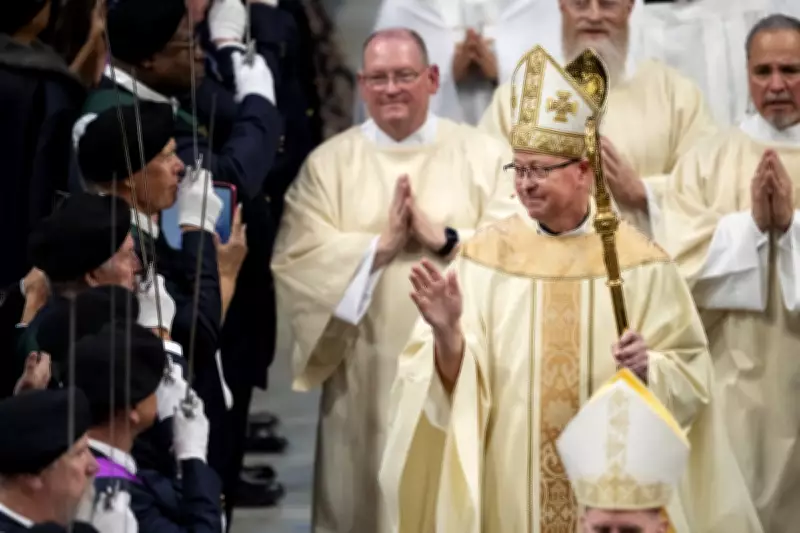
Pope Leo XIV's February appointment of Bishop James Golka, installed on March 25, represents a potential turning point for the archdiocese. Golka arrives from leading the Colorado Springs diocese for five years and has already generated optimism across the theological spectrum.
Those familiar with Golka's leadership describe him as joyful, pastoral, and collaborative. He earned particular praise for his response to the November 2022 mass shooting at Club Q, an LGBTQ+ nightclub in Colorado Springs, where he emphasized the dignity of every human life and urged prayers for victims while acknowledging the troubling nature of targeted violence.
Golka has demonstrated practical commitment to social issues, supporting the conversion of property into transitional housing for homeless families and expressing particular concern for immigrant communities. He has emphasized both the right of nations to defend their borders and the obligation to care for those in need, stating that if someone shows up at his door requiring assistance, he will care for them as best he can as a Catholic.
Hopes for Unity and Continuity
Observers express cautious optimism about Golka's potential to unify the archdiocese's six hundred thousand Catholics across twenty-five northern Colorado counties. His collaborative approach and pastoral manner contrast with the more combative style of his predecessors while maintaining commitment to Catholic orthodoxy.
Chas Canfield, who shares Golka's Nebraska hometown, describes the archbishop-elect as consistently living with the joy of Christ and predicts a seamless transition. Others note Golka's ability to connect with young people during confirmation ceremonies and his reputation for falling in love with the communities he serves.
As Denver's Catholic archdiocese enters this new era under Pope Leo XIV's vision, the community watches to see whether Golka can bridge divisions while maintaining the evangelical energy that made Denver a national center for conservative Catholicism. The installation at the Cathedral Basilica of the Immaculate Conception marks not just a change in leadership but a potential shift in tone for one of America's most watched Catholic communities.