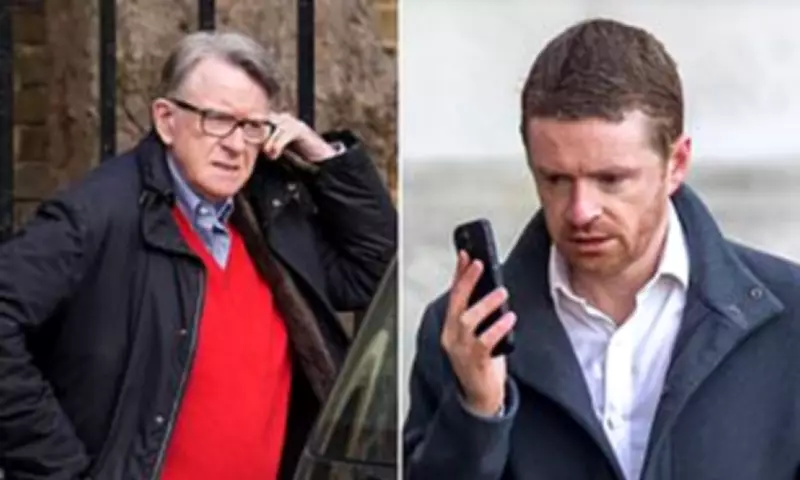
Former Downing Street Adviser's Phone Mystery Deepens with Two Private Devices
Sources have revealed that Morgan McSweeney, the former Downing Street adviser at the centre of a mystery over his stolen mobile phone, used two other handsets that could contain messages relating to Peter Mandelson's appointment as US ambassador. This development adds a new layer of intrigue to an ongoing investigation and political scrutiny.
Pressure Mounts Over Theft Details
McSweeney is under increasing pressure to explain the full details of the theft he reported last October. At that time, MPs were pushing for the disclosure of correspondence that could clarify why Lord Mandelson was given the ambassadorial role despite his connections with Jeffrey Epstein. With the Tories plotting to use a Commons procedure to force the release of all messages about the appointment and resignation, Downing Street aides held meetings to devise a strategy for handling 'Morgan's messages'.
A few days later, on October 20, Mr McSweeney, then serving as No 10 chief of staff, reported that his official iPhone had been snatched in London. After reporting the incident to Downing Street, the device was wiped remotely. Now, it has been established that McSweeney also possessed two private phones: one was deactivated earlier this year, while the other remains in service.

Investigation and Political Fallout
When asked this weekend if all his phones had been searched for applicable messages, No 10 stated that it was still in the process of asking 'relevant individuals' for messages relating to Lord Mandelson. On Friday, the Cabinet Office requested Lord Mandelson for messages on his personal phone, two months after MPs demanded their publication.
Scotland Yard was forced to reopen the investigation into the reported theft last week after questions were raised over the sequence of events. Detectives are examining CCTV footage from the street where Mr McSweeney claims he was robbed and have asked him to provide a formal statement about the incident.
Questions Over Record-Keeping and Police Response
Adding to the intrigue, a senior official in Boris Johnson's government has commented on the situation. Helen MacNamara, who served as the Deputy Cabinet Secretary during the Covid pandemic, said: 'It's really simple. If it belongs to the Government and it's the business of the State, the records should be kept. They can be kept on the phone, but then the things on the phone should be periodically transferred on to the official record. It's not massively complicated.'
A call log published by Scotland Yard showed that Mr McSweeney told an officer that his phone had been snatched by a bike rider as he walked home from a restaurant in Pimlico, central London. However, he gave the police call handler the incorrect location, stating he was in Belgrave Street in east London, rather than Belgrave Road in Westminster. As a result, Scotland Yard's initial attempt to recover CCTV of the incident was doomed from the start.
Mr McSweeney also failed to inform the police that he worked at No 10, meaning the Yard did not realise that the device could contain sensitive material and contacts. He additionally provided his Scottish address rather than his London one. Furthermore, it has been reported that McSweeney failed to respond to police requests asking if he had managed to locate the missing phone using its inbuilt tracker.
Political Implications and Future Hearings
Ministers fear that Mr McSweeney could be forced to appear before MPs to clear up the mysteries surrounding his relationship with Lord Mandelson, the messages that were exchanged, and the phone theft. This comes after Tory leader Kemi Badenoch hinted that she was ready to force another Commons vote to compel Mr McSweeney to give evidence to explain 'exactly what happened and why Keir Starmer signed off on Peter Mandelson's appointment despite the warnings'.
Mr McSweeney resigned last month over his role in the decision to appoint Lord Mandelson as the British Government's representative in Washington. A No 10 spokesman said: 'All government departments, ministers and relevant individuals are in the process of being asked to provide information they hold.'