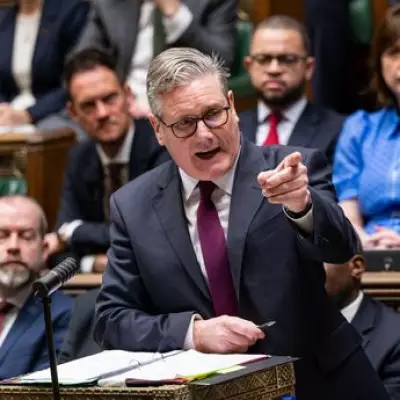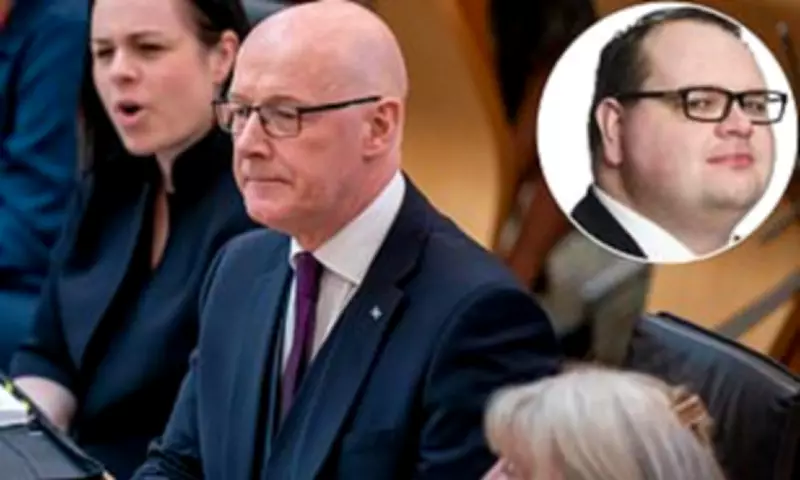
The final First Minister's Questions session before the election purdah period descended into a spectacle of electoral stump speeches rather than substantive parliamentary scrutiny. Conservative leader Russell Findlay and Labour leader Anas Sarwar largely abandoned traditional questioning in favour of crafting ready-made social media content, peppered with the odd question mark to barely adhere to procedural rules.
The Art of Political Soundbites
Both opposition leaders relied on the blunt, bullet-point oratory that has become ubiquitous in modern politics. This style prioritises short, punchy bursts of rhetoric designed for viral sharing over detailed interrogation of government policy. The approach transforms parliamentary exchanges into content for digital teams to clip and distribute on platforms like TikTok almost instantaneously.
Findlay's Attacks and Swinney's Rebuttal
Russell Findlay launched a series of attacks against First Minister John Swinney, focusing on what he termed the "£5 billion bin fire" of Scottish public finances, "sleazy SNP pals," and a litany of policy failures. However, Swinney effectively turned the question back on his opponent, questioning why the Conservative Party faces such dismal polling predictions if the SNP government has been as catastrophic as claimed.

The Tory leader offered no substantive response, echoing H.L. Mencken's century-old observation about democracy giving people what they deserve "good and hard." Meanwhile, Anas Sarwar fared little better, accusing Swinney of considering "10,000 homeless children" as a marker of success while failing to convince the public to support his own party.
The Invisible Opposition and Swinney's Middling Performance
Scottish Labour's ongoing invisibility was highlighted as a significant factor in the opposition's weakness. Despite winning 37 Westminster seats in the last election, the party has largely disappeared from public view between leadership crises. Swinney emerged from the session relatively satisfied with a middling performance that featured no major triumphs but equally no obvious gaffes.
Parliament Closes as MSPs Return to Campaigning
With Holyrood now closed ahead of May's elections, MSPs have returned to the campaign trail where they will be "darkening your door" with promises that likely won't be kept, pledges that can't be afforded, and policies that will not work. The coming weeks will see politicians avoiding difficult questions about Holyrood's tangible achievements, MSP pay rises, and fundamental policy positions.
The session underscored how parliamentary scrutiny has been supplanted by electoral messaging, with opposition leaders prioritising viral potential over holding government to account. As Swinney's inevitable premiership continues, the quality of democratic debate appears to be another casualty of the perpetual campaign cycle.