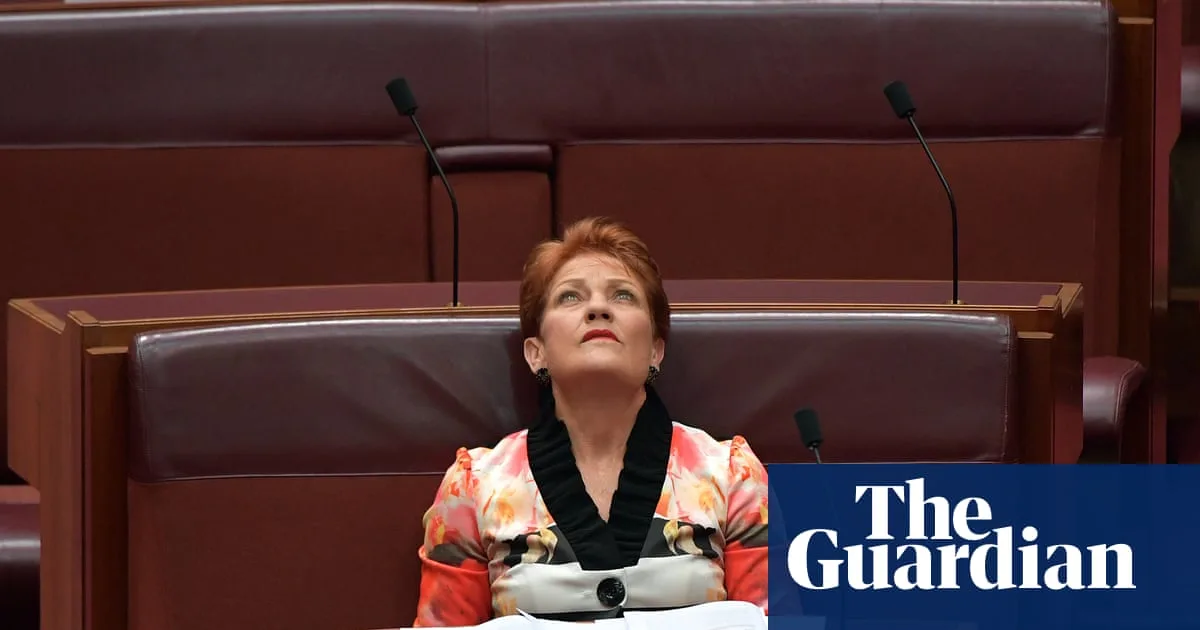
One Nation's Financial Scrutiny: Where Does Millions in Public Funding Go?
One Nation's Financial Scrutiny: Public Funding Under Fire

One Nation Faces Intensifying Scrutiny Over Financial Practices

Pauline Hanson's One Nation party is under mounting pressure as questions arise about the handling of millions in public funding and member contributions. With the populist rightwing movement gaining momentum in Australian politics, former candidates and insiders are lifting the veil on alleged financial chaos and a lack of transparency at the party's Brisbane headquarters.

Former Candidates Allege Financial Exploitation

Jennifer Game, a former One Nation Senate candidate, recounts a venomous phone call from Pauline Hanson after failing to win a seat in the 2025 federal election. Despite spending $29,000 of her own money on campaigning, Game claims she has received no reimbursement from the party, leaving her nearly $20,000 out of pocket. She has since launched legal action to recover $14,271, alleging that One Nation is operating a "money-making scheme" at the expense of its candidates.

Under Australian electoral law, parties receiving at least 4% of the primary vote are entitled to public funding, set at $3.38 per vote in 2025. One Nation banked $6.08 million from the Australian Electoral Commission (AEC) after securing about 6.4% of the national vote. However, Guardian Australia reveals that the total electoral expenditure declared by the party's 160 candidates was just $872,116, with 76 candidates reporting zero spending on their campaigns.

Wide Pickt banner — collaborative shopping lists app for Telegram, phone mockup with grocery list

Systemic Issues and Lack of Accountability

Game highlights a critical weakness in the law, questioning whether candidate receipts are being used in party funding claims. "There's no legal framework where they have to account for that publicly," she says, emphasizing the need for greater accountability as One Nation's public funding grows. The party's rise in polls suggests it could nearly quadruple its 2025 result in the next federal election, with public funding rates set to increase to $5 per vote.

One Nation has long faced allegations of financial improprieties. Hanson has twice been forced to repay election funding after AEC audits found unsubstantiated claims, including about $165,000 in 2021. The AEC is currently auditing the party's 2025 expenditure claims, requiring specific evidence of payment for amounts above $10,000.

Internal Chaos and Member Contempt

Insiders describe the Brisbane headquarters as dysfunctional and chaotic. Angela, a former receptionist, witnessed inappropriate banter, verbal abuse, and contempt for rank-and-file members. She noted 20,000 unread emails in the party's inbox and a culture where staff "enjoy being in the shit." The office is thinly staffed, with high turnover among administrative personnel.

Key figures include operations manager Alexander Jones, who pleaded guilty to attempted electoral fraud in 2023, and former campaign manager Sean Black, a convicted rapist whose employment was terminated amid backlash. The office supervisor, Liddy Vearing, is described as a feng shui practitioner and psychic intuitive.

Financial Streams and Governance Concerns

One Nation's income streams are multifaceted. Membership fees, ranging from $60 to $500 annually, could generate at least $3 million yearly with reports of nearly 50,000 members. The party also benefits from state electoral funding, such as $1.5 million from South Australia's new laws. However, Game claims funds were regularly moved from state accounts without explanation, and the party lacks proper financial reporting, with accounts not complying with Australian Accounting Standards.

Robert Hicks, another former candidate, spent $12,000 campaigning in Leichhardt but received only $2,800 in reimbursement, leaving him $10,000 out of pocket. He questions where the remaining funds went, as his votes entitled the party to up to $25,625 in public funding. Hicks resigned, calling One Nation a "nasty, toxic organisation."

Constitutional Control and Merchandise Sales

One Nation's constitution, not publicly available, grants Hanson extensive powers, including lifetime presidency and control over state positions. The national executive, which can be as few as three members, has authority to disband subordinate bodies and manage bank accounts. This centralization raises concerns about financial oversight.

Pickt after-article banner — collaborative shopping lists app with family illustration

Merchandise sales, including caps and bobble-headed toys, have drawn regulatory scrutiny. In 2021, former MPs Rod Roberts and Mark Latham accused the party of diverting NSW electoral funds to buy merchandise, which was then resold to fund federal campaigns—allegations Hanson denied. Guardian Australia uncovered evidence of money transfers between state and federal branches, including inter-branch loans with interest charges.

Historical Context and Future Implications

Jim Savage, former national president, notes that Hanson's total control over the party, established after her 2016 Senate election, is at the core of financial issues. He warns that new members may not consider the lack of financial reports or transparency. With One Nation regularly outpolling the Liberal and National parties, its financial practices could have significant implications for Australian democracy as public funding increases.

One Nation did not respond to Guardian Australia's questions, leaving allegations unanswered as the party continues to capitalize on public discontent with major parties.