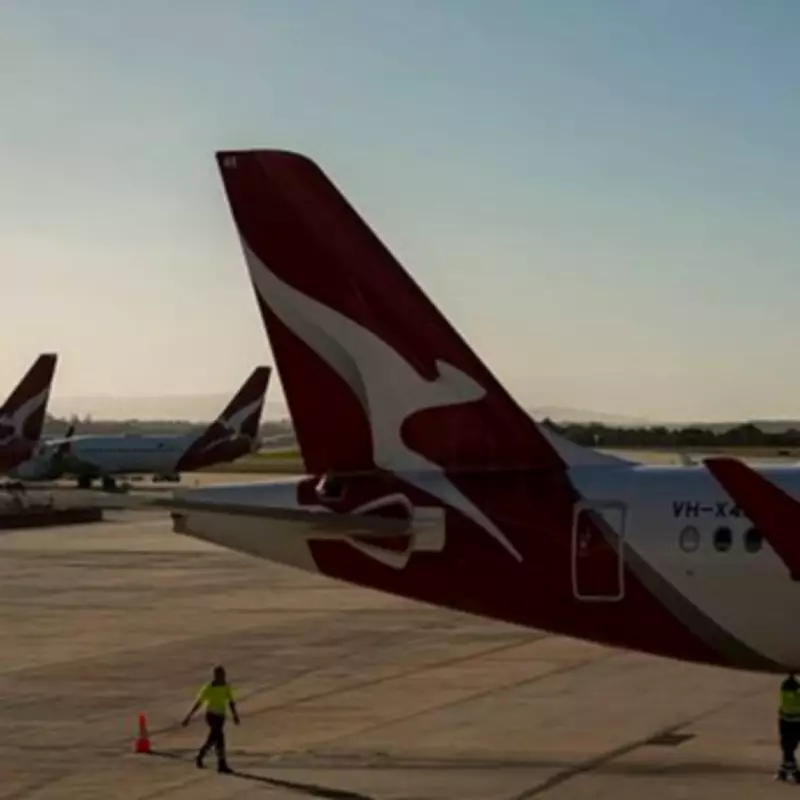
Air safety authorities have commended a Qantas flight crew for their exceptional response to an engine failure that occurred during a critical phase of take-off. The incident, involving Qantas flight QF520, took place in November 2024 as the aircraft departed Sydney for Brisbane.
Engine Failure at Critical Moment
The flight, carrying 181 passengers and crew, had just lifted off when the crew heard a loud bang and felt a shudder as the right engine failed. According to the Air Transport Safety Bureau (ATSB) report released on Wednesday, April 29, the crew immediately identified the failure through caution lights and indications. However, as the aircraft had already reached a speed beyond which aborting take-off would be unsafe, they continued the climb-out.
ATSB Chief Commissioner Angus Mitchell stated: "This engine failure occurred at the worst possible moment during a critical phase of flight. The flight crew responded quickly and decisively, continuing the take-off, declaring an emergency, and conducting relevant checklists while planning a return to Sydney."

Passenger Recalls Ordeal
Passenger Mark Willacy described hearing a bang and feeling a jolting shudder as the wheels left the ground. "We knew immediately something was wrong. But what was more disturbing, I think, the plane really laboured after that," he said. The pilot informed passengers of a major problem with the right engine. The aircraft then banked and looped over Sydney for approximately 15 minutes before executing a safe single-engine landing.
"When we landed, there was a lot of applause and cheering among the passengers. And I have to praise, always, the professionals and the pilots and the crew," Willacy added.
Coordinated Emergency Response
Mitchell highlighted the effective teamwork among the flight and cabin crew, Airport Rescue and Fire Fighting Services (ARFFS), and air traffic controllers, which ensured a safe and uneventful return to Sydney for all on board.
The engine failure was attributed to a fatigue crack in a high-pressure turbine blade. The engine, a CFM International CFM56-7B, was scheduled for replacement less than two weeks later as it approached the manufacturer's recommended service threshold. Following the incident, CFM International reviewed its fleet of similar engines. Although several previous failures due to such cracking had occurred, the specific blade configuration on the QF520 engine still met internal reliability targets and regulatory guidelines. Newer blade configurations have since been introduced.