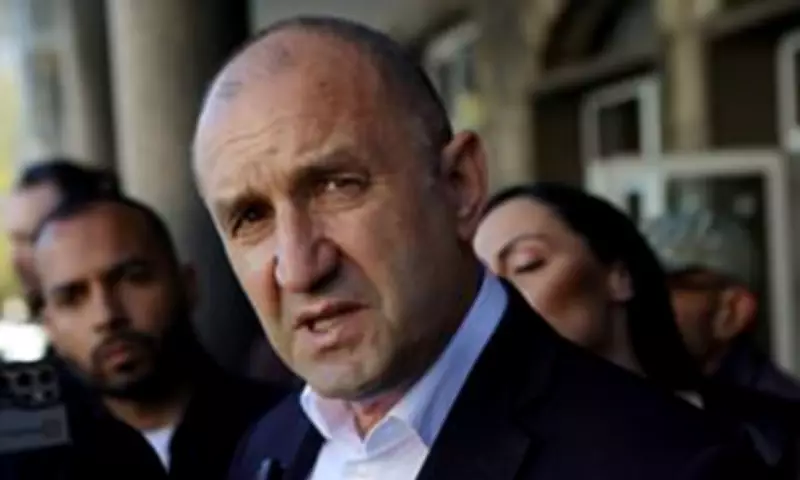
Pro-Russian Former President Radev Secures Landslide Victory in Bulgarian Parliamentary Election
Official results released on Monday confirm that pro-Russian former President Rumen Radev has won Bulgaria's parliamentary election by a commanding landslide. This stunning outcome arrives just one week after Viktor Orbán's defeat in Hungary, marking a significant shift in Eastern European politics. Radev's triumph is poised to dismantle long-dominant political forces and could potentially steer this European Union and NATO member state into a closer alignment with Moscow.
Historic Performance Defies Pollster Predictions
Outperforming all pollster forecasts, this result represents one of the most formidable single-party electoral performances witnessed in Bulgaria for an entire generation. The victory likely signals the conclusion of a prolonged period of chronic political instability, which had seen the nation endure eight separate elections over the past five years. Radev's Progressive Bulgaria party captured an impressive 44.7 per cent of the vote after 97.52 per cent of ballots were meticulously counted.
This substantial share suggests the party could feasibly govern alone without requiring coalition partners. However, Radev has not entirely ruled out the possibility of forming a coalition with a pro-European political group or a smaller party. Progressive Bulgaria's tally placed it far ahead of its closest rivals. The pro-European We Continue the Change-Democratic Bulgaria (PP-DB) coalition secured 12.8 per cent, while the long-dominant GERB party, led by former Prime Minister Boyko Borissov, garnered 13.4 per cent.

Radev's Political Journey and Public Sentiment
Rumen Radev, a former fighter pilot and a noted eurosceptic critic of military aid to Ukraine, resigned from his role as Bulgaria's president in January to actively pursue a seat in parliament. His strategic move followed massive public protests in December that successfully toppled the previous administration. Radev masterfully capitalised on widespread public exhaustion with systemic corruption and the enduring political dominance of traditional parties.
This sentiment resonated deeply within a nation of 6.5 million people that has persistently struggled with constant political and economic instability. Radev's campaign effectively tapped into voter frustration, promising a break from the established political order and a new direction for the country.
Parallels with Hungary's Political Upheaval
Remarkably, Radev's decisive victory occurred merely seven days after pro-European candidate Peter Magyar successfully ousted Viktor Orbán in Hungary. Magyar's win conclusively ended Orbán's uninterrupted 16-year tenure, unseating one of the Kremlin's most prominent and vocal European allies. In his victory speech, Magyar declared that the 'healing' of the nation would commence immediately and that Orbán's 'puppets' needed to depart from political life.
He emphatically stated that Hungary 'will no longer be a country without consequences' and insisted that those who 'stole from the country have to face consequences.' The 45-year-old victor even vowed to change the constitution to ensure that the Trump-supporting Orbán could never serve as prime minister again. Magyar promised to introduce a strict two-term limit for prime ministers, aiming to prevent Hungary from reverting to authoritarian rule.
International Reactions and Policy Implications
Both the European Union and Russia have formally welcomed Radev's electoral victory in Bulgaria. Antonio Costa, the head of the European Council, which groups the EU's national governments, posted on social media platform X: 'Congratulations to Rumen Radev on your outright victory... I look forward to working together with you on our shared agenda for a prosperous, autonomous and secure Europe.'
Conversely, the Kremlin expressed encouragement regarding Radev's stated desire to resolve outstanding issues with Russia through pragmatic and constructive dialogue. During his campaign, Radev drew direct comparisons with Viktor Orbán when discussing the potential for improving diplomatic ties with Moscow and resuming the free flow of Russian oil and gas into European markets.

Radev also openly criticised the European Union for its perceived over-reliance on renewable energy sources. However, the politician has remained notably vague on specific policy details, leaving considerable uncertainty about how much he will actually alter Bulgaria's foreign policy stance. Bulgaria is a Black Sea nation situated on the EU's southeastern flank, which joined the eurozone in January—a move that Radev himself has publicly criticised.
Political analysts generally do not expect Radev to attempt reversing Bulgaria's adoption of the euro or to actively block wider European Union aid packages destined for Ukraine. On Sunday, Radev indicated a willingness to collaborate on judicial reform with the PP-DB coalition and affirmed that Bulgaria would 'make efforts to continue on its European path.'
Election Integrity and Broader National Challenges
Ahead of Sunday's crucial vote, Bulgaria's caretaker Interior Minister Emil Dechev reported significant progress in tackling election fraud. Authorities detained more than 400 individuals on suspicion of vote buying and other electoral malpractices. This figure represents a substantial increase from the 72 arrests made for similar crimes during the previous election in 2024.
Bulgaria has undergone rapid development since the fall of communism in 1989 and its subsequent accession to the European Union in 2007. Life expectancy has risen sharply, unemployment rates are currently the lowest within the EU, and the economy has gained greater safeguards since adopting the euro currency.
Nevertheless, the country continues to lag behind other EU member states in several critical metrics. The cost of living has emerged as a particularly pressing issue since Bulgaria joined the eurozone. The previous government collapsed amid widespread protests against a new budget proposal that included tax increases and higher social security contributions.
'The country's main challenge is the economic crisis and the demographic crisis,' stated Tihomir Bezlov, a senior fellow at the Centre for the Study of Democracy in Sofia. 'There do not seem to be many ideas in the winning camp on either of these issues.' This observation underscores the complex challenges awaiting Radev's administration as it prepares to govern.