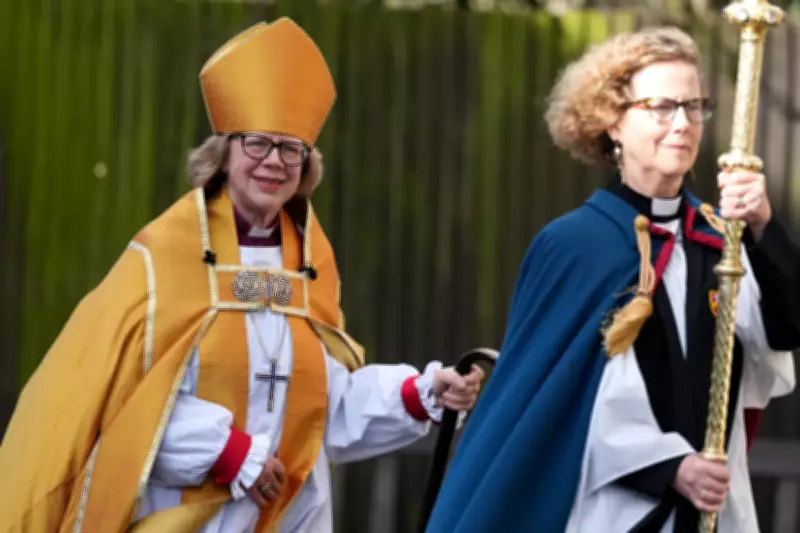
Historic Installation of First Female Archbishop of Canterbury
Sarah Mullally, a former cancer nurse who transitioned to priesthood at the age of 40, has been formally installed as the Archbishop of Canterbury in a landmark ceremony. This historic event celebrates her election as the first woman to lead the Church of England, marking a significant milestone in the institution's long history.
Ceremony and Significance
Although Mullally, aged 63, officially assumed the role in January, Wednesday's installation ceremony at Canterbury Cathedral signalled the commencement of her public ministry. She now serves as both the head of the Church of England and the spiritual leader of the worldwide Anglican Communion, an association of independent churches with over 100 million members globally.
In her inaugural sermon, Mullally emphasised themes of hope and divine companionship. "We walk with God – trusting that God walks with us. Trusting that in all that we face, in the sorrow and the challenges, as much as in the joy and the delight – we do not walk alone," she declared. "There is hope because we are invited to trust that God will do a new thing."

Distinguished Attendees and Symbolic Timing
The ceremony attracted high-profile guests, including Prince William, Princess Catherine, UK Prime Minister Keir Starmer, and representatives from 42 member churches of the Anglican Communion. Delegates from the Vatican and the Orthodox church were also present, underscoring the event's ecumenical importance.
Symbolically, the service was held on the Feast of the Annunciation, which commemorates Mary being chosen as the mother of Jesus. This timing highlighted Mullally's historic appointment, with the church noting it as a day to celebrate "one of the great women of the Bible and think about how we can respond to God’s call."
Historical Context and Challenges Ahead
The Church of England, with roots dating back to 597 AD when St. Augustine was sent to Britain, ordained its first female priests in 1994 and its first female bishop in 2015. Mullally's installation represents a progressive step, yet she inherits leadership during a tumultuous period.
The Anglican Communion faces deep divisions over issues such as the role of women and the treatment of LGBTQ+ individuals. Additionally, Mullally must address ongoing sexual abuse scandals that have plagued the church for over a decade. She replaces former Archbishop Justin Welby, who resigned in November 2024 amid criticism for mishandling abuse allegations.
In a recent BBC interview, Mullally stated the church is "seeking to become more trauma informed, listening to survivors and victims of abuse." She emphasised transparency, asserting that "light should be shone on all our actions, and the more senior we are, the more light should be shone."
From Nursing to Archbishop
Born in Woking in 1962, Mullally attended local schools and worked as a nurse in the National Health Service. At 37, she became England's chief nursing officer, the youngest ever to hold the position. While in that role, she began ministerial training, leading to her ordination.
She was appointed a bishop in 2015, becoming the fourth woman in the Church of England to reach that rank. In 2018, she was named Bishop of London, one of the church's most prominent roles. Her journey from healthcare to high clergy is symbolised by her ceremonial cloak, fastened with a clasp made from her nurse's belt buckle.
Global Reactions and Future Outlook
Mullally's appointment has sparked mixed reactions within the Anglican Communion. Archbishop Henry Ndukuba of the Church of Nigeria described her election as "devastating" and insensitive to conservative views on female leadership. However, the installation ceremony focused on unity and new beginnings, featuring prayers in Bemba, Spanish, and Urdu to reflect the communion's global reach.
George Gross, a theology expert at King's College London, noted the appointment's significance, stating, "I think it’s huge, absolutely massive. It matters because ... the stained glass ceiling is smashed. And that, in the world we’re in, when we talk of equality, (it's) hard to have that if you have unattainable positions."

Mullally expressed optimism in her sermon, highlighting the church's role in both ordinary and extraordinary acts of love. "The Church, through the ordinary lives of its people, contains so many extraordinary acts of love: God’s people, offering a listening ear, a word of encouragement, or prayer for healing; offering food and shelter, sanctuary and welcome," she said, envisioning a future of inclusivity and shared purpose.