Conservative Frontbencher Demands Prime Minister's Apology Over PMQs Conduct
A senior Conservative figure has called upon Prime Minister Sir Keir Starmer to issue a formal apology to Members of Parliament following what has been described as "contemptuous behaviour" during Prime Minister's Questions sessions.
Accusations of Question Dodging and Subject Changing
Shadow Commons Leader Jesse Norman presented a detailed analysis claiming that in the last four PMQs sessions, which covered critical topics including the Iran war, fuel duty, North Sea oil and gas, and the defence review, the Prime Minister had "ignored the question and changed the subject" in 23 out of 24 responses to Opposition Leader Kemi Badenoch.
"That is a shameful record for which the Prime Minister should write to you, and therefore, by implication, to this House and apologise," Norman declared during a Commons session, addressing Speaker Sir Lindsay Hoyle directly.

Norman further criticised Starmer's conduct, highlighting an incident where the Prime Minister was seen "hectoring you, Mr Speaker, in your chair and on live television just for doing your job." He emphasised that such behaviour demonstrated contempt not only for the Speaker and Opposition Leader but for all MPs, both present and past.
Speaker's Intervention and Parliamentary Protocol
The controversy follows reports of a heated exchange between Prime Minister Starmer and Speaker Hoyle at the conclusion of this week's PMQs session. According to the Speaker's office, Hoyle has repeatedly reminded Downing Street that answers in the Commons chamber should "be confined to the points contained in the question."
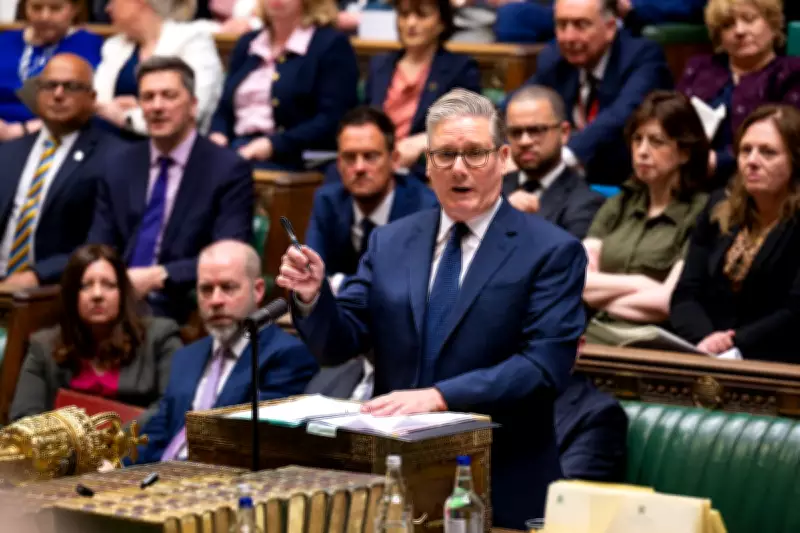
During Wednesday's session, Speaker Hoyle interrupted Starmer, stating clearly: "It's Prime Minister's Questions, we've got to concentrate." This intervention came as Starmer responded to questions about the delayed publication of the government's defence investment plan, with Badenoch pressing: "What's the hold up?"
Instead of directly addressing the query, Starmer described the defence review as "the first line-by-line review of defence budgets for 18 years" and accused Badenoch of attempting "the mother of all U-turns" regarding her stance on the Middle East conflict.
Broader Constitutional Concerns Raised
Jesse Norman expanded his criticism beyond the immediate PMQs conduct, addressing what he termed "deeper constitutional points." He argued that in Britain's representative system of government, "the people is Parliament and Parliament is the people," warning that "nothing good can come out of the attempt to undermine the British constitution by this means."
Norman specifically criticised the government's tendency to make announcements publicly or through press channels before presenting them to Parliament. "Our job, however imperfectly we may do it, is to pursue the truth on behalf of those we represent," he asserted. "If we give that up, then Heaven help us."
The Conservative frontbencher delivered a stark ultimatum to the Prime Minister: "If the Prime Minister doesn't like the rules, if he doesn't want to offer honest answers, if he is not up to it, then he should step back and let someone else do the job instead."
Government Response and Defence
Commons Leader Sir Alan Campbell responded to the accusations by noting that "all prime ministers deal with Prime Minister's Questions in their own way." He acknowledged that "it isn't unusual for any minister not to give the answer that the Opposition want on a particular day."
Regarding announcements made outside Parliament, Sir Alan pointed out that previous governments had also occasionally made announcements beyond the Commons chamber. He explained that while "serious announcements should be made at the earliest convenience in this House," the political environment has evolved significantly in recent decades, requiring governments to adapt their communication strategies accordingly.

A spokesperson for the Speaker's Office clarified the procedural expectations: "The Speaker is not responsible for the questions asked by members or the answers given by ministers. Questions to ministers should relate to matters for which they are officially responsible. Equally, answers should be confined to the points contained in the question."
The spokesperson confirmed that "every so often, the Speaker has to remind prime ministers and ministers of the rules of engagement in the Chamber," noting that this point has been made to Number 10 officials on multiple recent occasions.
From the Prime Minister's camp, an official spokesman offered a brief response to reporters: "I'm not going to comment beyond saying that the Prime Minister attended the House of Commons yesterday for Prime Minister's Questions and gave comprehensive answers in the House on the topics that were raised."
The controversy highlights ongoing tensions between government accountability and parliamentary protocol, with the Speaker's repeated interventions underscoring the importance of maintaining proper question-and-answer discipline during these crucial weekly sessions.