How Time and Tactics Toppled Orbán: A New Era for Hungary
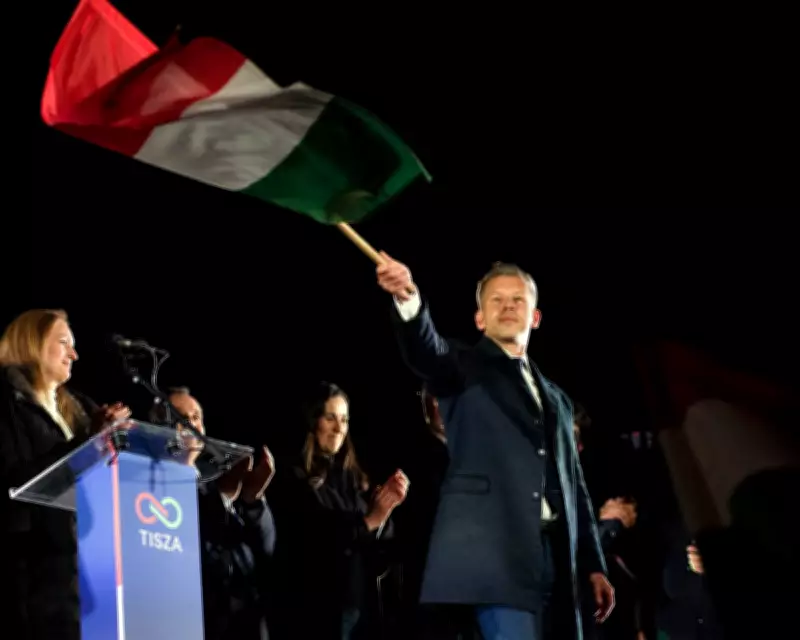
Péter Magyar waves the Hungarian flag after his election victory in Budapest on 12 April 2026, celebrating an unprecedented shift in the nation's political landscape. With a record turnout nearing 80% and his Tisza party securing a supermajority of almost 70% of parliamentary seats, this election was not just a change of government but a profound regime change compressed into a single night.
The Fall of a Long-Standing Leader
After 16 years in power, Viktor Orbán became the victim of his own creation. Hungary's electoral machinery, meticulously engineered to convert a relative majority into overwhelming parliamentary dominance, functioned perfectly—but this time, it worked against him. Opposition leader Péter Magyar did not need to dismantle the system; he simply mastered its rules to secure victory. Orbán's 2011 electoral laws, designed to punish a fragmented opposition, ultimately backfired when faced with a challenger who adeptly turned those winner-takes-all mechanics to his advantage.
Magyar's Exceptional Campaign Strategy
Magyar's performance throughout the election cycle was remarkable. His rapid construction of Tisza as a major political force, combining party-building, relentless campaigning, and a commanding social-media presence, will be studied for years. He thrived in the new-media environment where Fidesz had long seemed unbeatable, moving within it as a native speaker rather than just using the platforms.

Yet, these tactics alone do not explain the scale of Tisza's landslide. Factors like impoverishment, corruption, and confrontational foreign policy, once pillars of Orbán's success, had been present in previous cycles. The key difference was time—a silent but relentless force of erosion that undermined the Orbán system on three distinct levels.
The Erosion of Political Stability
First, the political technology wore out. Fidesz's communication machine, which once framed issues from migration to inflation as the fault of national enemies, gradually lost its grip. The narrative of external threats became overinflated, and constant alarmism led to public exhaustion, making the technology of winning hearts and minds less effective due to overuse.
Second, Orbán himself grew tired. Once a master of the campaign trail, he appeared restrained and cautious, often limiting himself to one controlled event daily. In contrast, Magyar operated with political hyperactivity, managing seven or eight appearances a day and maintaining an intense online and offline presence. Supporters perceived a choice between a routine-driven grandfather figure and a young, high-energy challenger.
Everyday Realities Trump Conspiracy Theories
Third, everyday realities reasserted themselves. Hospital conditions, the cost of living, and public service quality proved more stubborn than campaign slogans. Inflation replaced culture wars, and the desire for a functioning country supplanted enemy-making politics. Illiberal populism had to confront reality, suggesting that even sophisticated disinformation ecosystems have a finite shelf life.
Viewing time as the primary driver clarifies this defeat—it was not due to a single scandal but the culmination of slow, unmanageable erosion. This lesson extends beyond Hungary: even a polished political machine can become rigid and hollow. When a regime retreats into a bubble, excluding dissent, it loses renewal ability, turning stability into fragility until collapse.
Time is far more dangerous for authoritarian systems than open societies, which draw resilience from change. Like a plastic bag holding water, the rigid system holds for long periods, then suddenly tears. Tibor Dessewffy, director of the digital sociology research centre at Eötvös Loránd University in Budapest and a member of the European Council on Foreign Relations, highlights this dynamic in his analysis.