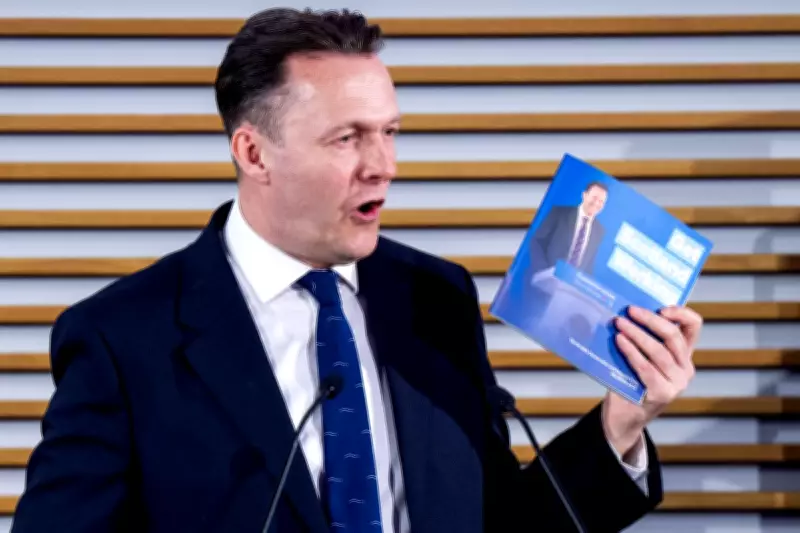
The Institute for Fiscal Studies (IFS) has issued a stark warning that manifesto pledges from the Scottish Conservatives would necessitate "substantial cutbacks" to public services. The think tank's analysis follows the party's unveiling of its election commitments on Tuesday, which prominently feature significant reductions in taxes and business rates.
Funding Shortfall and Questionable Savings
The Scottish Tories have proposed funding their tax-cutting agenda through a controversial combination of reduced disability benefits and cuts to back-office functions within the civil service. According to the IFS, the benefits squeeze would account for approximately £2.1 billion of the required £6 billion funding. However, the think tank expressed serious doubts about the credibility of sourcing the remaining £4 billion solely from administrative efficiencies without impacting frontline services.
Detailed Scrutiny and Reality Check
David Phillips, head of devolved and local government at the IFS, provided a sober assessment of the Conservative proposals. "Taking the entire package of measures together, this may be a costed plan on paper but whether it would survive contact with reality is far from clear," Phillips stated. He emphasized that while Scotland could potentially achieve lower taxes alongside increased spending on certain services, the scale of giveaways proposed by the Scottish Conservatives cannot realistically be financed primarily through back-office and administrative savings.

The think tank did acknowledge the level of detail presented by the Tories in both their manifesto and accompanying costing document. Nevertheless, Phillips cautioned that "in addition to the cuts to benefits set out in the manifesto, there would likely need to be substantial cutbacks to either the range or quality of some services used by households and businesses too."
Specific Policy Proposals Under Fire
The Conservative tax plans include several notable measures: increasing the personal allowance in line with inflation (contrasting with the UK Government's freeze), raising the higher rate of tax threshold, and merging the bottom three tax bands at a rate of 19p in the pound. Additionally, the party proposes introducing a £20,000 tax-free allowance on business rates.
To help fund these reductions, the manifesto outlines tightening eligibility criteria for the adult disability payment, restricting it to those with a formal medical diagnosis, and implementing a two-child cap on the Scottish child payment. These benefit adjustments have drawn particular criticism from political opponents and advocacy groups.
Political Reactions and Accusations
SNP candidate for Galloway and West Dumfries, Emma Harper, launched a scathing attack on the Conservative proposals. "The Tories' plans have collapsed after their first contact with basic scrutiny," Harper declared. "To say that the numbers in this Tory manifesto were drawn up on the back of a fag packet would be an insult to fag packets everywhere."
Harper further accused Scottish Tory leader Russell Findlay of promoting "classic Tory cruelty" by "slashing support for children and disabled people to cut taxes for millionaires." She also raised concerns about potential political alliances, suggesting that "Scottish voters have the chance to stop that grubby deal between Labour, the Tories and Nigel Farage's Reform by uniting behind the strong and trusted leadership of John Swinney and delivering the fresh start of independence with an SNP majority."
Broader Implications for Scottish Politics
The IFS intervention comes at a critical juncture in the Scottish political landscape, with parties positioning themselves ahead of upcoming elections. The think tank's analysis raises fundamental questions about the sustainability of tax-cutting agendas without corresponding reductions in public service provision. As the debate intensifies, voters will need to weigh competing visions for Scotland's fiscal future against the practical realities of government finance and service delivery.