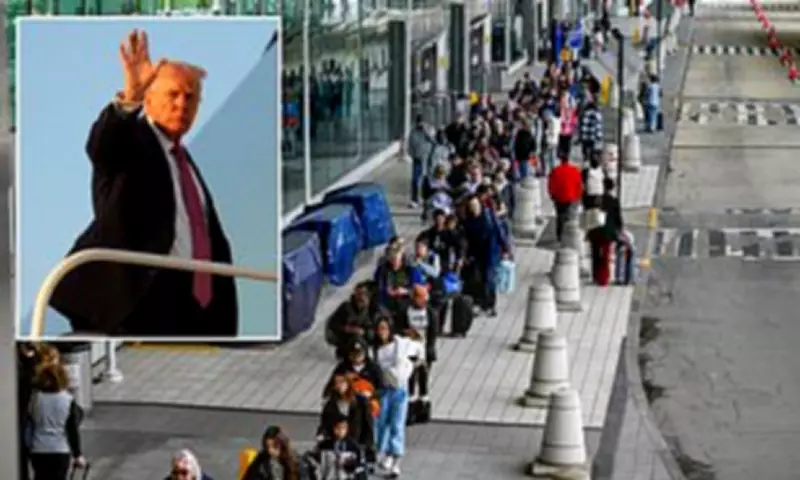
Chaotic scenes at American airports may finally be subsiding after President Donald Trump intervened with an emergency executive order to pay Transportation Security Administration (TSA) employees, despite the ongoing congressional deadlock over Department of Homeland Security (DHS) funding.
Emergency Action to Avert Travel Breakdown
TSA staff, who have endured six weeks without pay during the partial government shutdown, are scheduled to receive their first paychecks as early as Monday following the president's decisive action. In a Friday memorandum authorizing the payments, Trump declared, "America's air travel system has reached its breaking point. I have determined that these circumstances constitute an emergency situation compromising the Nation's security."
Congressional Impasse Deepens
The presidential intervention comes as House Republicans rejected a Senate-passed bill that would have funded the TSA, U.S. Coast Guard, and Federal Emergency Management Agency (FEMA), while specifically excluding Immigration and Customs Enforcement (ICE) and Border Patrol from the funding package.

House Speaker Mike Johnson launched a scathing critique of the Senate's approach, stating, "This gambit that was done last night is a joke." Johnson announced that House Republicans would pursue alternative legislation funding the entire DHS until May 22, claiming President Trump supported this alternative plan.
Shutdown Impacts Reach Critical Levels
The partial DHS shutdown, which reaches 44 days on Sunday, has left 61,000 federal workers without salaries while creating severe travel disruptions nationwide. TSA staffing shortages have resulted in security lines stretching for hours at major airports, with travelers reporting waits up to four hours at checkpoints.
Aviation expert Sheldon Jacobson told Time, "I suspect people will be showing up for work more consistently now, and these delays will come to a somewhat abrupt end. It may take a day or two for people to recalibrate themselves for work, but for the most part, I think, certainly by Tuesday or Wednesday, we should see a certain sense of normalcy around airport checkpoints."
Statistical Evidence of Crisis
The operational crisis has reached alarming proportions:
- Nationwide on Thursday, 11.8% of scheduled TSA employees missed work, equivalent to over 3,450 callouts
- Multiple airports experienced callout rates exceeding 40%
- Nearly 500 of the agency's approximately 50,000 transportation security officers have resigned during the shutdown
Partisan Divide Over Immigration Enforcement
The funding dispute centers fundamentally on immigration enforcement agencies. House Republicans expressed outrage that the Senate bill excluded ICE and Border Patrol funding, while Democrats refused to fund these agencies without significant policy changes to immigration enforcement practices.
Senator Eric Schmitt, R-Mo., emphasized Republican priorities, stating, "We will fully fund ICE. That is what this fight is about. The border is closing. The next task is deportation."
Democrats have demanded multiple reforms following protests in Minneapolis, including:
- Requiring federal agents to wear identification
- Prohibiting face masks during operations
- Restricting raids near schools, churches, and sensitive locations
- Ending administrative warrants in favor of judicial approval for searches
Senate Compromise Collapses
Senate Majority Leader John Thune, R-S.D., had negotiated a compromise that passed by voice vote early Friday after intense discussions involving White House officials. The agreement would have funded all DHS components except ICE and parts of Customs and Border Protection.
However, the House rejection creates a visible rift between Johnson and Thune, who have typically collaborated to advance the president's agenda. Senate Democratic leader Chuck Schumer declared the House Republican alternative "dead on arrival in the Senate, and Republicans know it."
Historical Context and Future Implications
The current shutdown threatens to surpass the record 43-day government closure that affected all federal agencies last fall. While Trump's executive order addresses immediate TSA payment concerns, it does little to resolve the broader funding impasse.

House Democratic leader Hakeem Jeffries urged immediate resolution, stating, "This could end, and should end, today. There is a bipartisan bill that has been sent over from the Senate that would reopen the non-controversial parts of the Department of Homeland Security."
As senators have departed Washington following their vote, any House-passed alternative would require their return, creating additional procedural delays. The standoff continues even as ICE operations persist through prior funding allocations, highlighting the selective nature of the shutdown's impacts across DHS agencies.