Donald Trump's AI-Generated Jesus Image Triggers Widespread Criticism
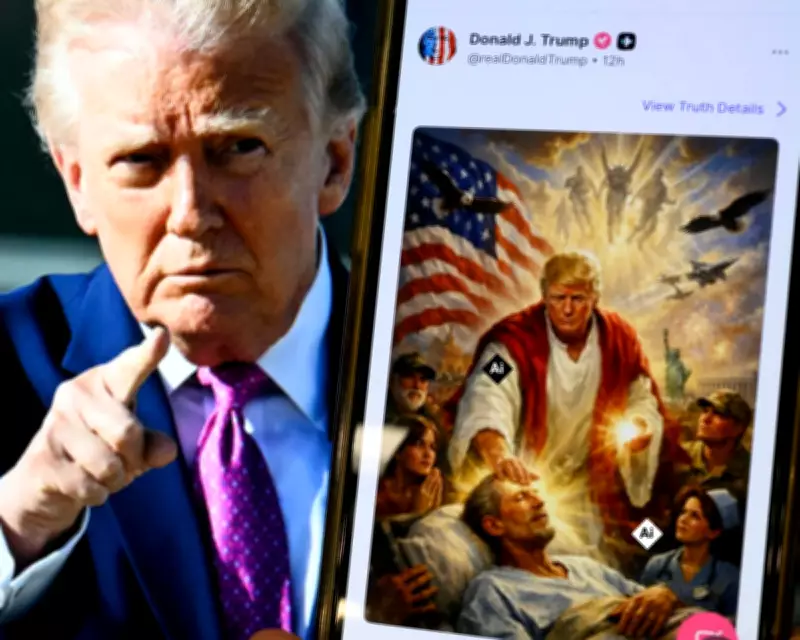
Donald Trump has ignited a firestorm of controversy by reposting an artificial intelligence-generated image that portrays him as Jesus Christ. The former president, however, insisted the picture was meant to depict him as a medical professional, despite his complete lack of formal training in the field.
"It's supposed to be me as a doctor making people better," Trump declared in response to the mounting outrage. "And I do make people better. I make people a lot better."
The Controversial Visual and Its Reception
The AI-generated artwork shows Trump administering an ethereal light to a patient's head while translucent figures gaze down from the heavens above. While this explanation might resonate with his most devoted supporters, many others have expressed strong disapproval.

"Gross blasphemy," remarked a former co-chair of a Republican youth organization. Sean Feucht, a Christian activist aligned with Trump, posted on social media platform X: "There's no context where this is acceptable."
This incident follows a pattern of Trump engaging with Christian-themed artificial intelligence imagery. Last May, during a period when the Catholic Church was mourning the passing of Pope Francis, Trump shared another AI-generated picture imagining himself as the pontiff.
A Pattern of AI-Generated Personas
Throughout his campaign and continuing into his political activities, Trump and his associates have repeatedly utilized artificial intelligence technology to visualize the former president in various roles:
- A monarch or king figure
- A skilled football player
- A person roaring alongside lions
- A musical maestro
- A wealthy individual resembling a money launderer
- Superman
- A 1930s-era private detective
- Colonel Kilgore from Apocalypse Now
- A Nobel Peace Prize recipient
- A muscular Sith lord
Media analysts suggest these AI-generated posts serve to rally his political base and divert public attention from other topics. Artificial intelligence technology amplifies his messaging capabilities by providing hyperrealistic visuals of scenarios that do not exist in reality.
Continued Controversy and Late-Night Posts
Even as Trump avoided explicitly proclaiming himself the son of God, he continued to engage with religious matters. On Tuesday night, he extended his criticisms of the pope through late-night posts on his Truth Social platform.
"Will someone please tell Pope Leo that Iran has killed at least 42,000 innocent, completely unarmed, protesters in the last two months, and that for Iran to have a Nuclear Bomb is absolutely unacceptable," Trump wrote at 11:34 PM. The former president provided no evidence for this claim, having previously cited an unverified figure of 45,000 deceased protesters.
His social media activity continued into the early morning hours, with Trump sharing a post critical of the pope's social media usage at 1:10 AM and later defending himself again regarding the Trump-as-Christ controversy.
More AI Imagery and Simpler Explanations
As this conflict persisted, the artificial intelligence content continued to flow. On Wednesday morning, Trump reposted another image showing what appeared to be Jesus Christ embracing him from behind, once again risking the disapproval of Christian communities.
"The Radical Left Lunatics might not like this, but I think it is quite nice!!!" Trump commented on the post.
This reveals a simpler explanation for Trump's fascination with AI-generated images: he genuinely enjoys seeing himself portrayed in these various roles. He appreciates visualizations of himself as a superhero, wearing fashionable headwear, or appearing as someone who isn't approaching his eightieth birthday.
This pattern suggests more artificial intelligence imagery will likely emerge in the future. Perhaps the next creation might imagine him as God himself, continuing this controversial trend of blending technology, religion, and political imagery.