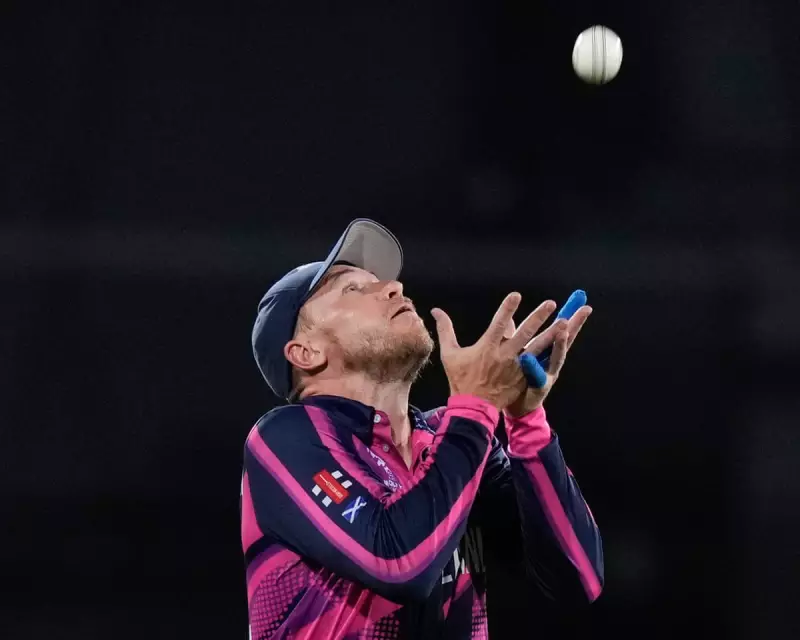
Scotland Steps Up to Replace Bangladesh in T20 World Cup
In a dramatic turn of events for international cricket, Scotland have been confirmed to replace Bangladesh in the upcoming Twenty20 World Cup. This decision comes after the Bangladesh Cricket Board (BCB) steadfastly refused to travel to co-hosts India, citing significant safety concerns amidst deteriorating political relations between the two neighbouring nations.
Political Tensions Spill Over into Cricket
The BCB had repeatedly insisted over several weeks that it would not fulfil its scheduled fixtures in India. The board formally requested that the International Cricket Council (ICC) relocate their matches to the tournament's other co-host, Sri Lanka. However, the global governing body rejected this demand, asserting that there was no credible security threat to the team. This standoff highlights how geopolitical friction can directly impact major sporting events.
The political climate between India and Bangladesh has been notably strained. Tensions escalated further last month following a tragic incident in Bangladesh's Mymensingh district, where a Hindu factory worker was fatally attacked. Subsequent protests near Bangladesh's High Commission in New Delhi exacerbated the diplomatic rift. These events, combined with existing political unrest following the flight of Bangladesh's former prime minister to India, created an environment where the BCB felt compelled to withdraw.

Scotland's Unexpected World Cup Call-Up
As the highest-ranked team that did not originally qualify, Scotland will now step into the breach. They are set to join Group C, which features formidable opponents including England, Italy, Nepal, and the West Indies. Currently ranked 14th in the ICC T20 rankings, this presents a significant opportunity for the Scottish side to compete on the world stage.
The team's captain, Richie Berrington, will be leading his squad into a high-profile group-stage match against England, a fixture that is sure to capture the attention of cricket fans. The ICC, BCB, and Cricket Scotland have all been approached for official comment on this last-minute rearrangement.
A Pattern of Political Interference in South Asian Cricket
This situation is not an isolated incident in the region. It mirrors previous tensions where political discord has disrupted cricket schedules. For instance, the Board of Control for Cricket in India (BCCI) has maintained a long-standing policy of not touring Pakistan due to the fraught relationship between the two countries, with matches only occurring during ICC events.
A hybrid model has been employed in the past to navigate these challenges. During the 2023 Asia Cup in Pakistan, a similar agreement was reached, allowing India to play their matches in Dubai to ensure the tournament could proceed. A current agreement, valid until 2027, stipulates that Pakistan will play at neutral venues for any ICC event. This includes the upcoming T20 World Cup, where Pakistan is scheduled to play its matches in Sri Lanka.
The 20-team World Cup is scheduled to commence on 7th February, and this late change underscores the complex interplay between international sport and diplomacy. The travelling circus of English cricket, as one commentator noted, continues to be a metaphor for broader national narratives, but this story firmly places Scotland in an unexpected spotlight.