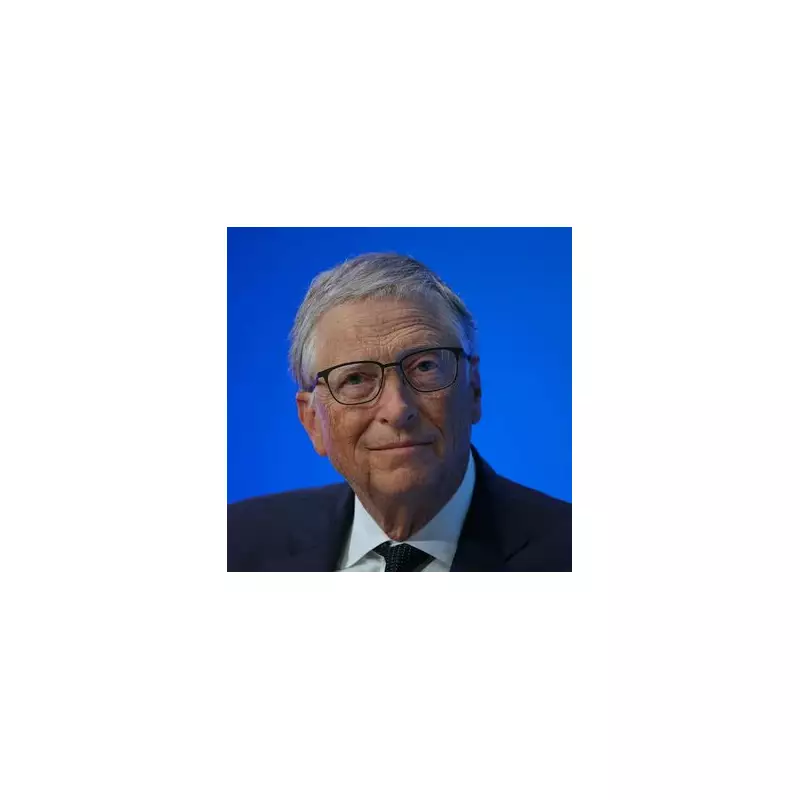
Microsoft founder Bill Gates has issued a stark warning about the potential dangers of artificial intelligence, describing "scary" outcomes if the powerful technology falls into the wrong hands. The billionaire's caution came alongside a similar alert from the head of Microsoft's own AI division, Mustafa Suleyman, who urged the public to be "healthily afraid".
The Double-Edged Sword of Artificial Intelligence
Speaking to BBC Radio 4's Today programme, Bill Gates presented a dual vision for the future of AI. He hailed it as "the greatest solution that mankind has ever created," while simultaneously warning it was a profound change agent that could be dangerously exploited.
"AI at the same time is the greatest solution that mankind's ever created, and yet such an amazing change agent that in the hands of people with bad intent it creates lots of scary scenarios," Gates stated. He specifically championed AI's potential to transform global healthcare within the next decade, predicting it would accompany individuals throughout their lives and during medical consultations.

Gates envisions a future where AI provides "dramatically better care" in both wealthy and poorer nations, alleviating pressure on overstretched doctors and reducing rates of misdiagnosis. Alongside his optimism, he called for governments to impose heavier taxes on the tech titans who are steering AI's development.
A Call for Healthy Fear and Skepticism
Echoing and expanding on Gates's concerns, Mustafa Suleyman, the British head of Microsoft AI, argued that a degree of fear is a necessary and rational response to the technology's ascent. "I honestly think that if you're not a little bit afraid at this moment then you're not paying attention," Suleyman declared during a guest editing stint on the Today programme.
He described his own apprehension as a "techno-optimist" deeply involved in the field, stating this fear should drive crucial collective action. Suleyman, who grew up in Islington, London, emphasised that AI must remain a force for good, fundamentally serving humanity.
He also addressed the immediate economic disruption, labelling AI a "fundamentally labour replacing" technology. He pointed to impacts already being felt by call centre workers and predicted the next wave would affect certain legal roles and junior accountants.
The Uncontrollable Threat of 'Super Intelligence'
Suleyman reserved his most severe warnings for the prospect of artificial superintelligence. He cautioned against pursuing forms of AI with capabilities far exceeding all of humanity combined, describing such systems as almost certainly uncontrollable.
"If it is designed inherently to self-improve, set its own goals, operate with complete autonomy, those are three capabilities which to my mind look like we can't control it," he explained. He argued that an AI possessing these "super powers" would not be on humanity's side and would likely overwhelm us.
Despite his central role in advancing the technology, Suleyman acknowledged significant drawbacks for modern life. He noted that society is already "totally overwhelmed by information and complexity" from the digital world, suggesting that more AI-driven connectivity could heighten anxiety. His surprising prescription was a need for more free time to exist in the real world with other people.
The combined statements from two of the most influential figures in the AI landscape, both linked to the software giant Microsoft, create a powerful and urgent narrative. They champion the technology's breathtaking potential, particularly in medicine, while issuing a sobering, unified call for vigilance, healthy scepticism, and robust governance to avert terrifying risks.