The Making of Chuckie Egg: A 15-Year-Old's Legacy in 8-Bit Gaming
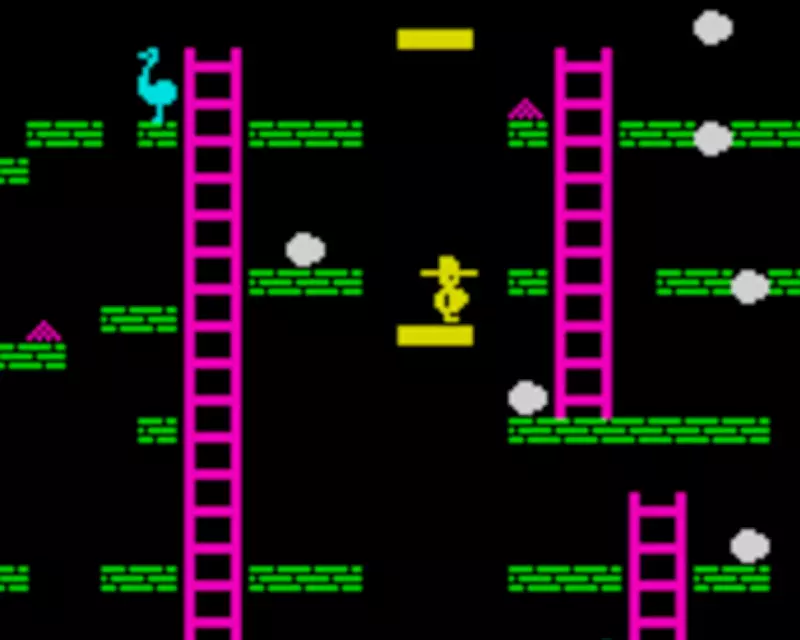
If you were immersed in home computer gaming during the early 1980s, Chuckie Egg was an undeniable staple. This deceptively simple platform game captivated players with its premise of navigating a chicken shed, collecting eggs while evading patrolling hens. However, upon reaching level eight, the gameplay transformed dramatically with the introduction of a large, relentless duck that stalked the player like a feathery missile, altering the pace and tactics entirely. This innovative twist effectively created a boss battle long before the concept became mainstream in gaming.
Universal Appeal and Widespread Success
Chuckie Egg achieved widespread recognition because it was accessible to virtually everyone. Originally launched in the autumn of 1983 on platforms such as the ZX Spectrum, BBC Micro, and Dragon 32, it swiftly ascended to the top of the charts. This immediate success prompted its publisher, A&F Software, to embark on an extensive porting initiative, resulting in approximately 11 conversions for systems including the Commodore 64, Amstrad, and Acorn Electron. Players experienced it in diverse settings, from school libraries on BBC computers to personal setups on C64s and Spectrum machines. Alongside classics like Manic Miner, Bruce Lee, and Skool Daze, Chuckie Egg became an integral thread in the rich tapestry of British 8-bit gaming culture.
Humble Beginnings in Greater Manchester
The origins of Chuckie Egg were remarkably modest, reflecting the era's grassroots gaming scene. A&F Software was not a global corporation but a small venture operated by two friends, Doug Anderson and Mike Fitzgerald, from their computer shop in Denton, Greater Manchester. Upstairs, they maintained a room filled with tape recorders for duplicating game copies, with most titles developed by a compact team of programmers working in a backroom. Remarkably, Chuckie Egg was the brainchild of the shop's 15-year-old Saturday employee, Nigel Alderton, whose passion for computing began when his school acquired two TRS-80 machines through maths teacher funding.

Alderton recalls, "I used to hang around trying to get time on them, but there was a pecking order. You had to stay late after school or get in early!" His fascination deepened when his parents gifted him a ZX81 for his birthday, followed by a ZX Spectrum, which he eagerly anticipated after seeing it in magazines. He taught himself machine code programming on the ZX81, a faster alternative to Basic, and created his first Spectrum game, Rabbit Run, with a neighbour, though it sold only a single copy. His subsequent project, Rocket Raider, demonstrated his growing skills by blending elements from Defender and Scramble.
Inspiration from Arcade Classics
The inspiration for Chuckie Egg did not stem from other computer games but from the vibrant arcade scene of the time. Alderton's commute home from his Saturday job involved two buses, with a bus station halfway that featured an arcade across the road. He would spend his £7 earnings on machines like Donkey Kong, but his favourite was Space Panic, an earlier platformer where players navigated screens via ladders, dug holes to trap aliens, and faced an oxygen-depleting timer. Alderton admits, "If you put a screenshot of Space Panic next to Chuckie Egg they're embarrassingly similar. The colours are identical. I nicked all the bits out of Space Panic that I liked as well as other platform and ladders games."
When he showcased the game to fellow coders at A&F, the reaction was instantaneous and overwhelming. "They were blown away – I was just this kid making cups of tea! Eventually there was a crowd of programmers around the screen, the bosses came down. It was a great feeling," he says. Initially, Alderton lacked a concrete story or setting, envisioning merely "tall birds wandering around on the platforms, and then the flappy bird in the top." Eggs were simply collectibles, with the hen house theme and protagonist name, Hen House Harry, later devised by A&F for the cassette inlay card, aligning with the surreal aesthetic of games like Hungry Horace and Manic Miner.

Mastering Gameplay and Movement
A key element that endeared Chuckie Egg to players was its fluid and intuitive movement mechanics. Alderton dedicated significant effort to refining character speed and jump length, drawing inspiration from arcade classics to achieve a satisfying play experience. "I spent a lot of time tweaking the speed – not too quick, not too slow. I remember having the character absolutely flying around at one stage, but I just iterated and iterated, and slowed it down. The speed of the birds is designed so you can just outrun them. And the jump length has to be just long enough that it's a useful skill, but not so long that you can just jump anywhere," he explains.
The game encouraged replayability through score-based incentives for faster stage completion, contrasting with puzzle-oriented platformers like Manic Miner. Alderton aimed to create a sense of mastery and continuous evolution, stating, "I prefer games that are about dexterity, where there are lots of different ways to succeed. Chuckie Egg was about the sense of mastery ... I wanted to make a game where it continued to change – it didn't just get harder by becoming faster." He even expressed a wish for a brief pause before the duck's release to allow players a moment of exploration.
Legacy and Modern Revival
After Chuckie Egg, Alderton continued in the gaming industry, contributing to titles like Street Hawk for Ocean and conversions of Commando and Ghosts 'n Goblins for Elite Systems. However, the demanding nature of game development led him to depart the field, eventually pursuing a career as a forecaster for a global firm. Despite this shift, Chuckie Egg's legacy endures, with Elite Systems recently announcing a new smartphone version featuring 3D graphics. Steve Wilcox, co-founder of Elite Systems, notes, "It's one of the handful of games from the first half of the 80s that people still think about and talk about. Having revisited the game many times over the last 20 or 25 years, including this version, I think the one thing I personally get out of it is you almost get a kind of trance-like experience when you're playing it."
Alderton remains touched by the game's lasting impact, sharing an anecdote about a boiler serviceman who recognised a framed Chuckie Egg T-shirt. "He said, 'Oh I remember Chuckie Egg', and I told him I wrote it – he couldn't believe it. People still remember it 40 years later. It's lovely. It's very flattering," he reflects. This enduring nostalgia underscores how a teenage tea boy's creation became a cornerstone of 8-bit gaming, celebrated for its innovative design and cultural significance.