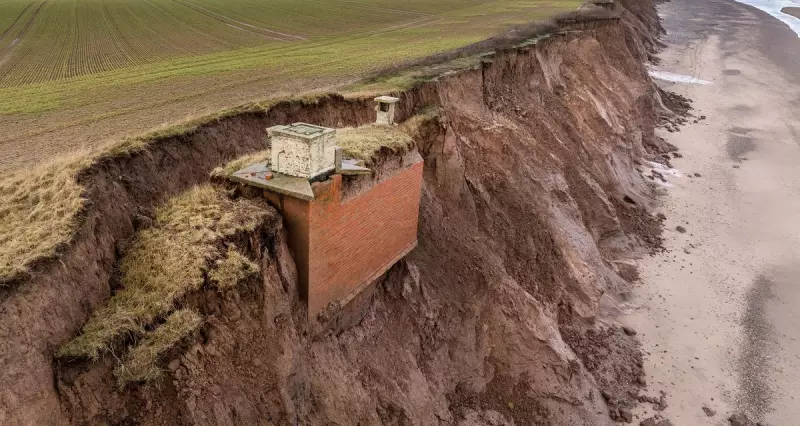
A historic Cold War nuclear bunker on the Yorkshire coast is on the verge of a dramatic collapse, with experts warning it could tumble into the sea within a matter of days.
Precarious Perch on a Crumbling Cliff
The concrete structure, built in 1959 as a lookout post in the event of a nuclear attack, now clings to the edge of a rapidly eroding cliff above Tunstall Beach. It was decommissioned in the 1990s but has become a stark symbol of the UK's fastest-eroding coastlines. The relentless forces of the North Sea have left the bunker teetering roughly 25 feet above the beach, with photographs showing very little of the cliff face remaining to support it.
Amateur historian Davey Robinson, who is documenting the bunker's final days, told the BBC: "We live on one of the most eroded coastlines in Europe and this bunker hasn't got long left, perhaps just a few days."

Council Warns Public to Stay Away
East Riding of Yorkshire Council has issued a clear warning for people to avoid the area, both at the cliff top and on the beach below. A council spokesperson confirmed that as the bunker sits on privately owned land, the authority has no statutory responsibility for it. The coastline here is subject to a 'no active intervention' management policy, meaning it is undefended and natural coastal processes are allowed to continue.
The spokesperson stated: "Recognising the risk posed by the structure, the council would ask that people avoid the area... The council would also remind visitors and residents to always maintain a safe distance to the base of eroding cliffs due to the risks associated."
Climate Change Accelerating Erosion Crisis
The dramatic loss of land in this area is part of a wider environmental challenge. According to the Yorkshire Marine Nature Partnership, the cliff line here is retreating by an average of four metres every year. While coastal change is a natural process, scientists confirm it is being significantly accelerated by climate change.
The key factors intensifying the erosion include:
- Rising sea levels
- More frequent and severe storms
- Warmer sea surface temperatures
These conditions increase the likelihood of landslips and dramatic cliff collapses, threatening not only historic structures but also homes and infrastructure along the East Yorkshire coast. The imminent loss of this Cold War relic serves as a visible, tangible marker of the ongoing and accelerating impact of coastal erosion.