Java Landslide Tragedy: 11 Dead, Dozens Missing as Rescue Teams Battle Mud
Rescue teams in Indonesia are engaged in a desperate and perilous operation to locate dozens of people feared buried alive after a catastrophic landslide devastated a village on the island of Java. The disaster, which struck in the early hours of Saturday morning, has already claimed at least 11 lives, with a staggering 79 individuals still reported missing.
Village Engulfed by Torrent of Mud and Debris
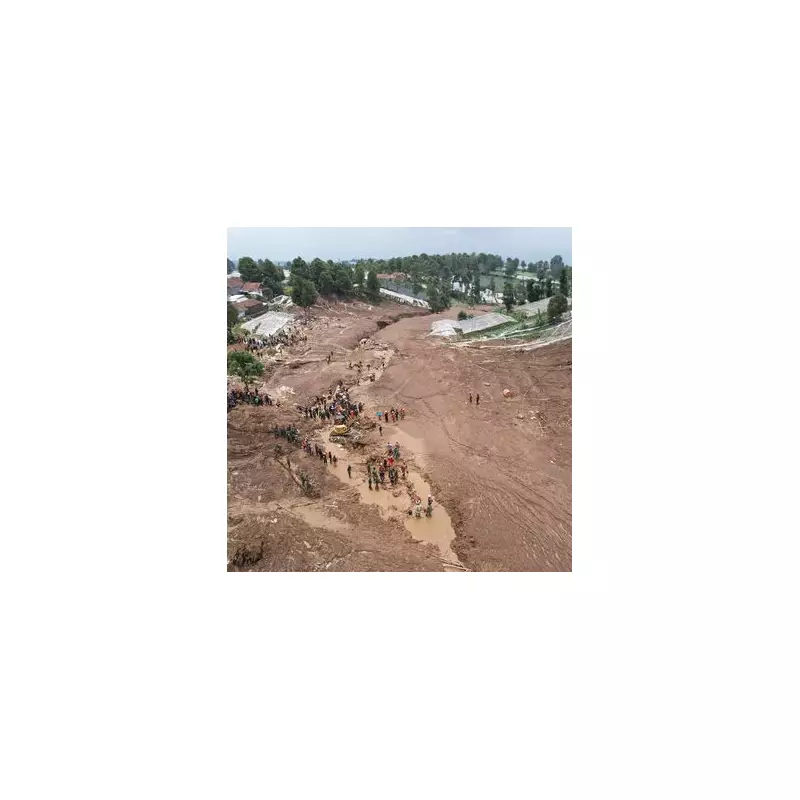
The landslide tore through the slopes of Mount Burangrang in West Java, specifically targeting Pasir Langu village. According to terrified survivors, the calamity was triggered by days of relentless torrential rain, which unleashed a terrifying cascade of mud, rocks, and uprooted trees down the mountainside.
The force was so immense that it completely flattened 34 homes, swallowing structures whole and leaving families with nothing but the clothes on their backs. More than 230 residents from the immediate area have now been evacuated to temporary government shelters as authorities brace for the grim possibility that the death toll may rise significantly.

Rescue Efforts Hampered by Treacherous Conditions
The search and rescue operation, led by the national agency Basarnas, is facing extreme challenges. The ground remains dangerously soft and unstable, rendering heavy machinery and excavators largely ineffective. This has forced emergency workers to resort to painstaking manual labour, using farm tools and even their bare hands to claw through mountains of thick sludge.
Shocking footage from the scene shows the grim reality of these efforts, with responders carefully extracting a mud-caked body before placing it into an orange body bag. Ade Dian Permana from the local search and rescue office confirmed that two more victims were recovered on Sunday morning, bringing the official death count to 11.
"Some homes are buried up to the roof level," Mr Permana stated, noting that mud piles in certain areas reach heights of up to five metres. He emphasised the ongoing risks, adding, "If the slope does not stabilise, crews are prepared to continue manually."
Official Response and Broader Context
Indonesia's Vice President, Gibran Rakabuming Raka, visited the devastated village on Sunday, offering condolences and pledging future action. He urged local officials in West Java and the West Bandung region to address critical issues such as land conversion in disaster-prone areas and to implement stronger risk-reduction measures.
Basarnas chief Mohammad Syafii highlighted the compounding difficulties posed by the weather and terrain. "We are at the mercy of the weather, and the slide is still mud flowing and unstable," he told reporters. The operation is utilising every available asset, including drones, K-9 teams, and ground units, but Syafii stressed that safety remains the paramount concern.
This tragedy underscores a recurring seasonal threat in Indonesia. The country, an archipelago of over 17,000 islands, experiences regular floods and landslides during its rainy season, which typically spans from October to April. Millions of citizens reside in mountainous regions or on fertile flood plains, areas that are particularly vulnerable to such natural disasters.