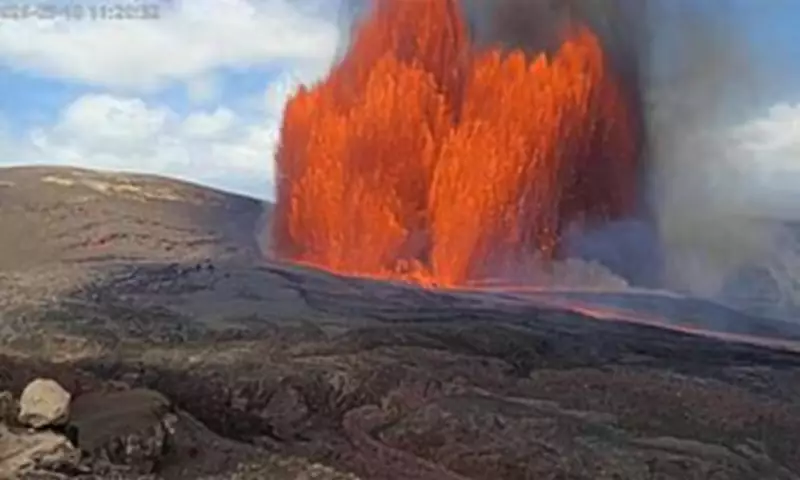
The Kilauea volcano on Hawaii's Big Island erupted violently on Tuesday morning, unleashing a spectacular and dangerous display of natural power. The Halemaʻumaʻu Crater, situated within the larger Kilauea Caldera, roared to life at precisely 9:17 am local time, according to the Hawaiian Volcano Observatory.
Eruption Details and Immediate Impacts
The initial eruption produced a towering plume of molten lava that soared to an astonishing height of 250,000 feet into the atmosphere. This dramatic event was quickly followed by reports of fallout described as 'football-sized' debris raining down across the Hawaii Volcanoes National Park. The U.S. Geological Survey has confirmed these hazardous conditions, noting that the large debris poses significant risks to ground safety.
Park Closures and Public Safety Measures
In response to the escalating volcanic activity, Hawaii Volcanoes National Park authorities have implemented an immediate closure to all public access. Visitors present in the area have been urgently instructed to seek shelter indoors to avoid the falling debris and potential volcanic gases. The park will remain closed indefinitely as officials assess the ongoing eruption and associated dangers.

Ashfall Warnings for Northwest Communities
Meanwhile, communities located to the northwest of the eruption site are under an official ashfall warning that remains in effect until 5 pm local time. Government officials have issued detailed precautionary guidelines for residents in these affected areas, warning of elevated levels of tephra fallout and potentially harmful volcanic gases.
Official Safety Recommendations
The National Weather Service has provided comprehensive safety instructions for those in the impacted regions:
- Seal all windows and doors to prevent ash infiltration
- Protect electronic equipment from ash damage
- Cover air intakes and secure open water sources
- Avoid unnecessary driving during ashfall conditions
- Remain indoors unless absolutely essential to venture outside
- Exercise extreme caution when clearing accumulated ash from rooftops
The advisory further notes that utility services including electricity, water, and communications may experience disruptions due to the volcanic activity. Residents should prepare for potential service interruptions and have emergency supplies readily available.
Geological Context and Monitoring
The Halemaʻumaʻu Crater has a long history of volcanic activity as part of the Kilauea Caldera system, one of the world's most active volcanoes. The current eruption represents a significant escalation in activity, with the 250,000-foot lava plume marking one of the more substantial eruptions in recent memory. Volcanologists continue to monitor the situation closely, with the Hawaiian Volcano Observatory providing regular updates as the event develops.
This remains a breaking news situation with ongoing developments. Authorities emphasize that volcanic conditions can change rapidly and unpredictably, requiring continued vigilance from both residents and visitors throughout the affected regions of Hawaii's largest island.